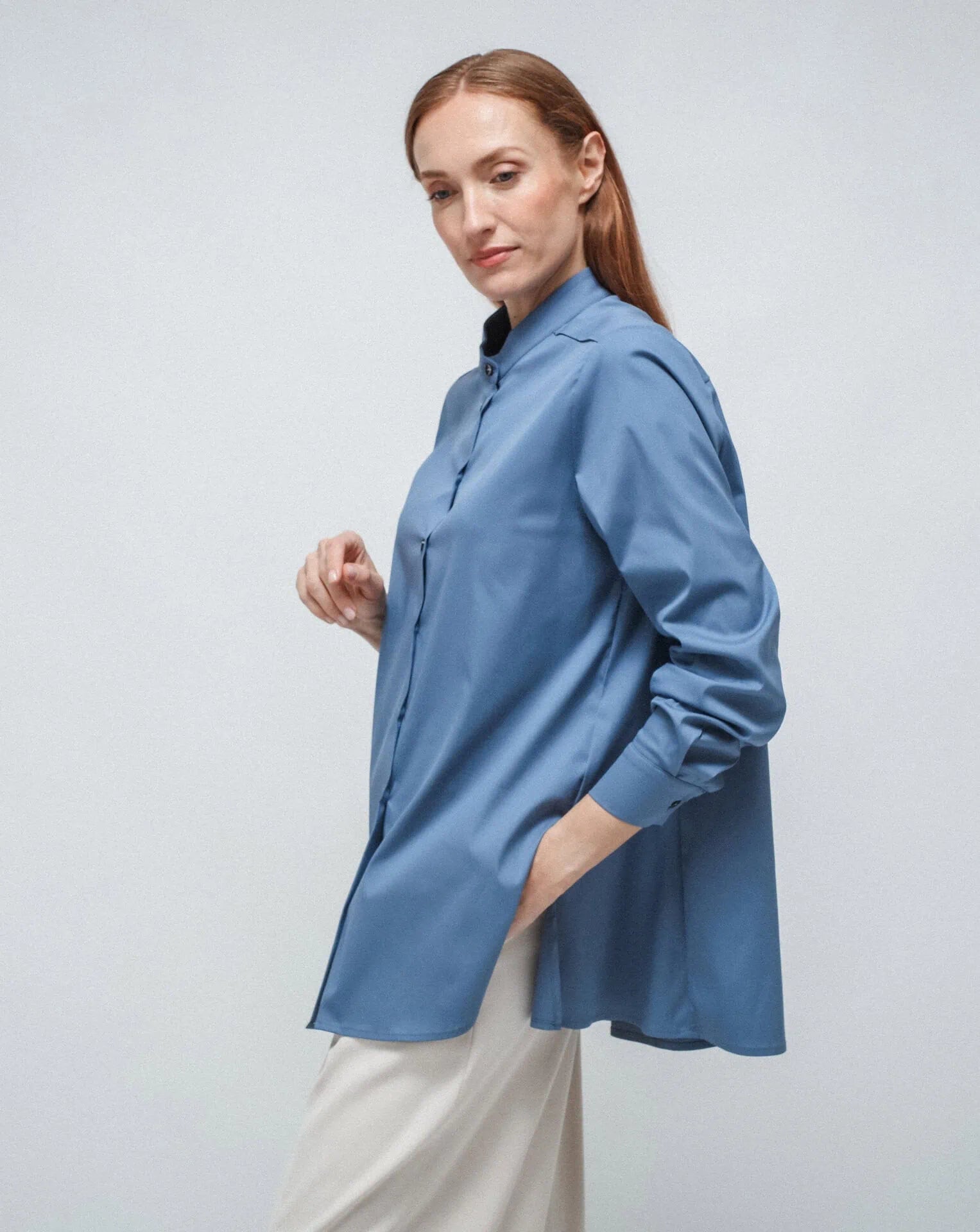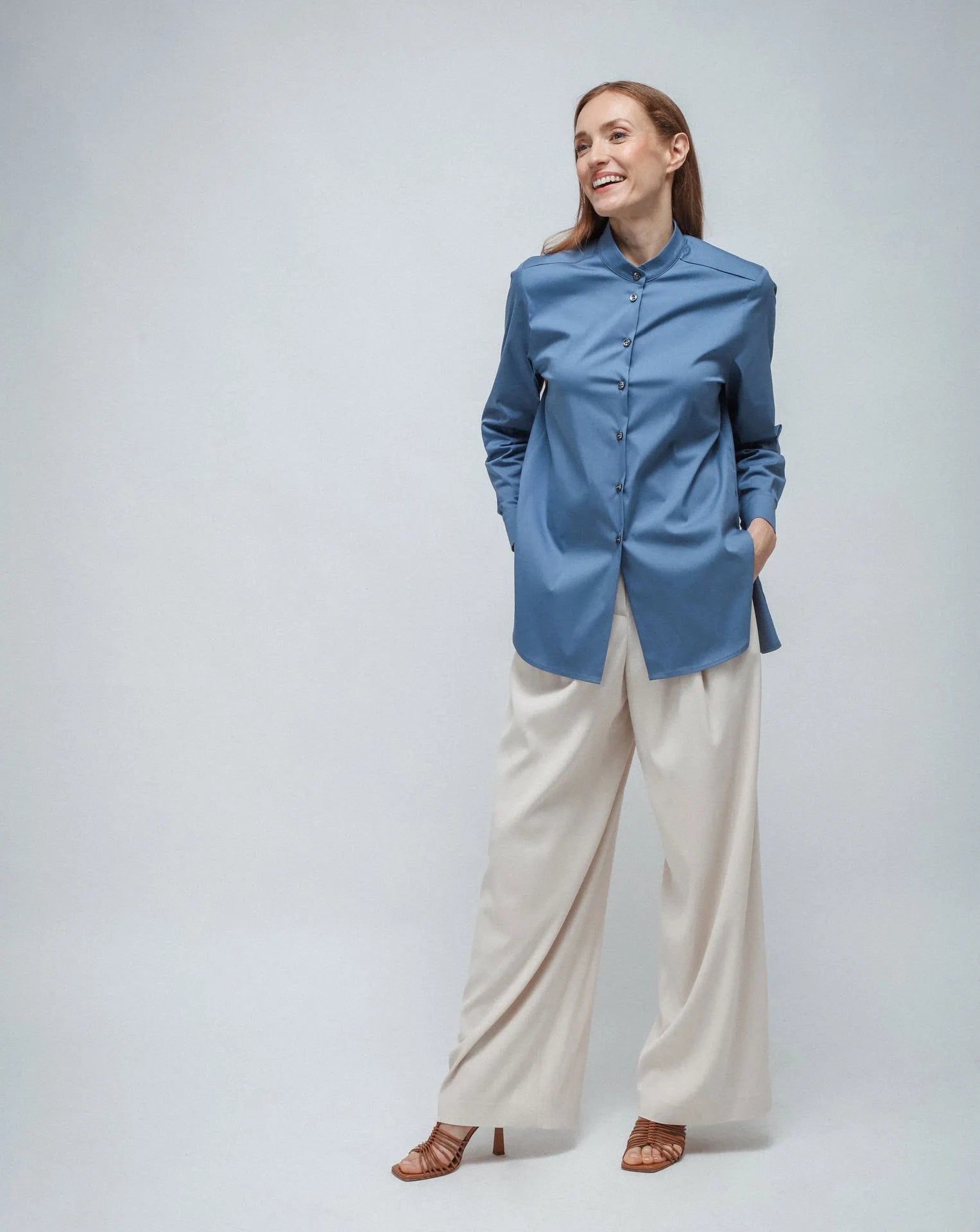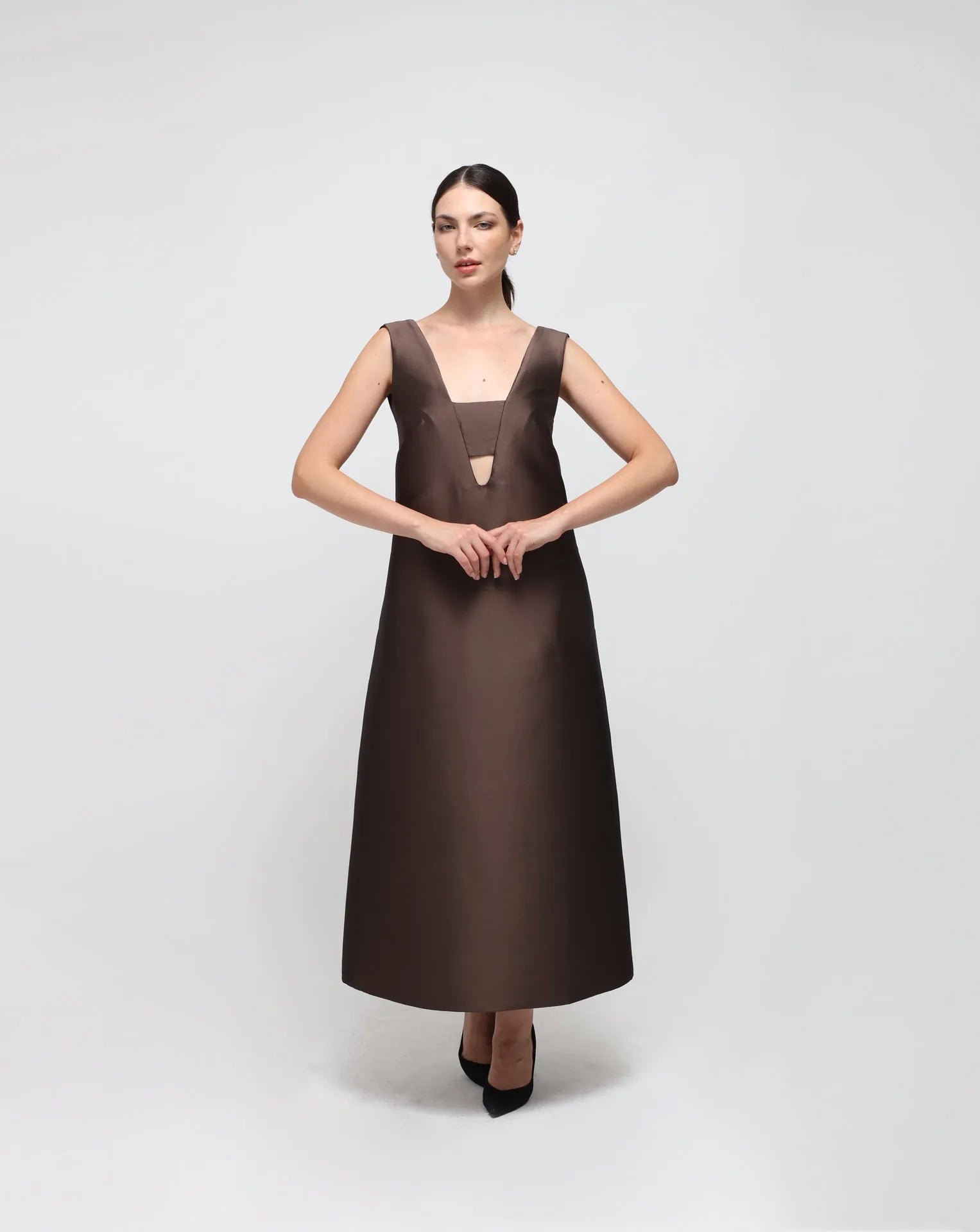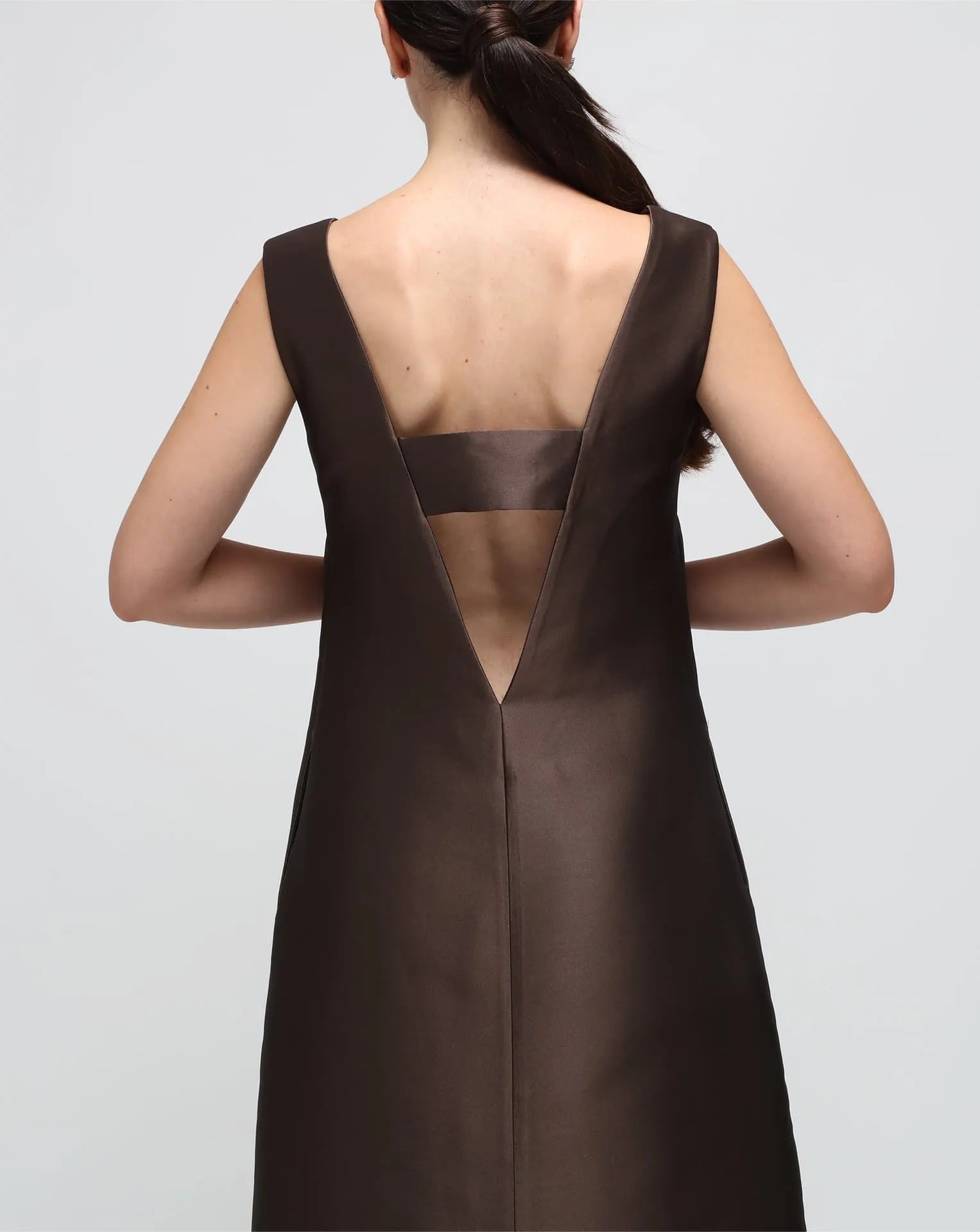

How to Choose Elegant Travel Jackets
Airports are full of compromises - overdressed and uncomfortable, or practical and forgettable. Elegant travel jackets solve that tension. The right one keeps its shape after hours in transit, layers easily, and still looks considered when you step into a meeting, dinner, or a long city walk.
For a style-conscious traveler, a jacket is not an accessory. It is the piece that does the most work. It frames everything underneath, absorbs the pressure of repeat wear, and often decides whether your travel wardrobe feels elevated or improvised. Choosing well means thinking beyond trend and focusing on movement, fabric, and longevity.
What makes elegant travel jackets different
Not every polished jacket is good for travel, and not every practical jacket feels refined. Elegant travel jackets sit in the middle with precision. They are designed, or at least selected, to hold visual structure without demanding delicate handling at every step.
That usually starts with fabric. A travel-ready jacket should resist obvious wrinkling, recover well after being folded, and remain comfortable across changing temperatures. Deadstock wool blends, compact cotton twills, textured crepes, and softly structured technical fabrics often perform better than stiff materials that crease sharply or flimsy ones that lose shape by midday.
Construction matters just as much. A heavily padded shoulder can look sharp when you leave home, but it may feel restrictive on a flight and awkward in a carry-on. On the other hand, a jacket with no shape at all can read casual too quickly. The sweet spot is light structure - enough tailoring to look intentional, enough flexibility to move with ease.
The best silhouettes for elegant travel jackets
The most useful silhouette depends on how you travel and what the rest of your wardrobe looks like. There is no single perfect answer, only a better match for your habits.
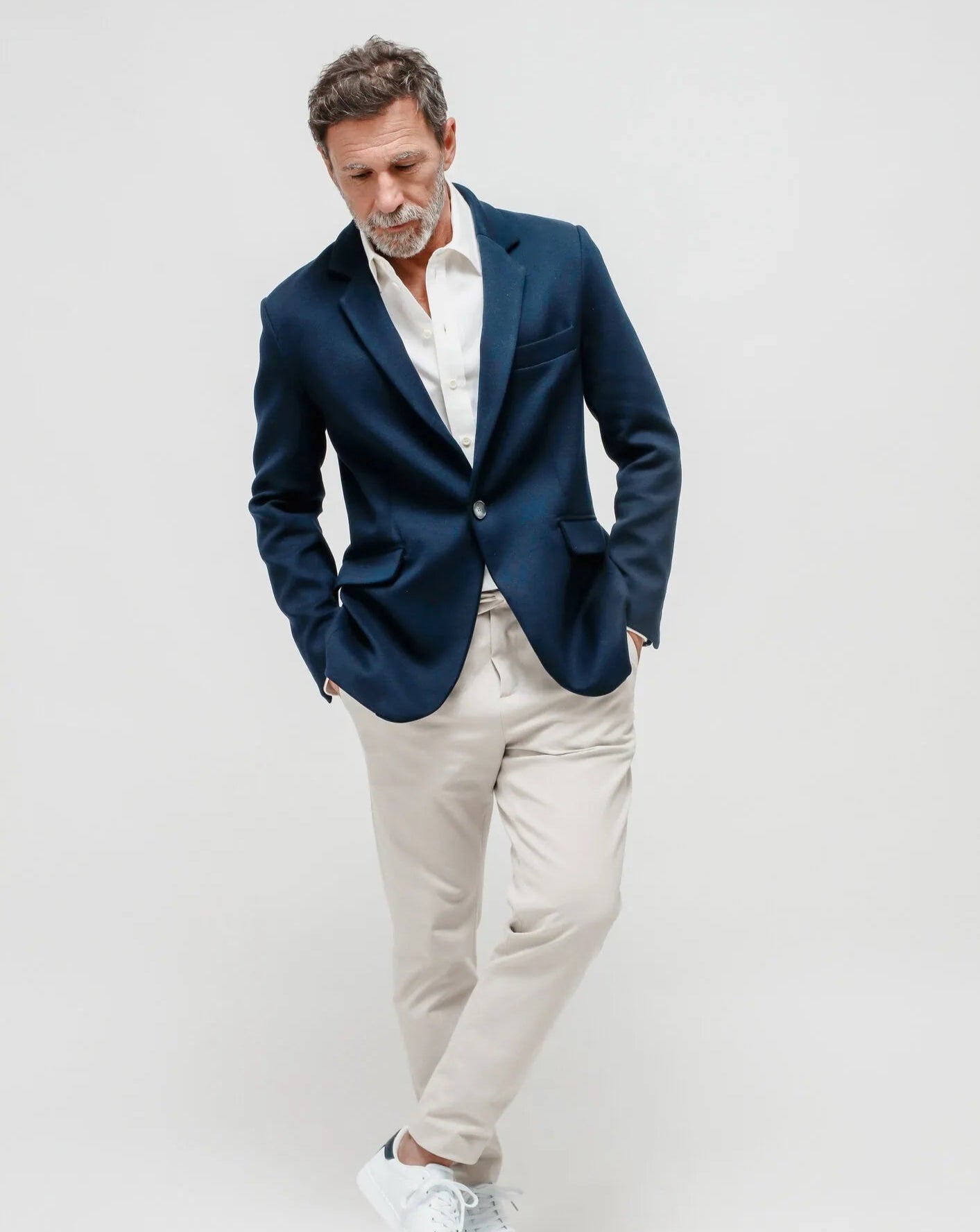
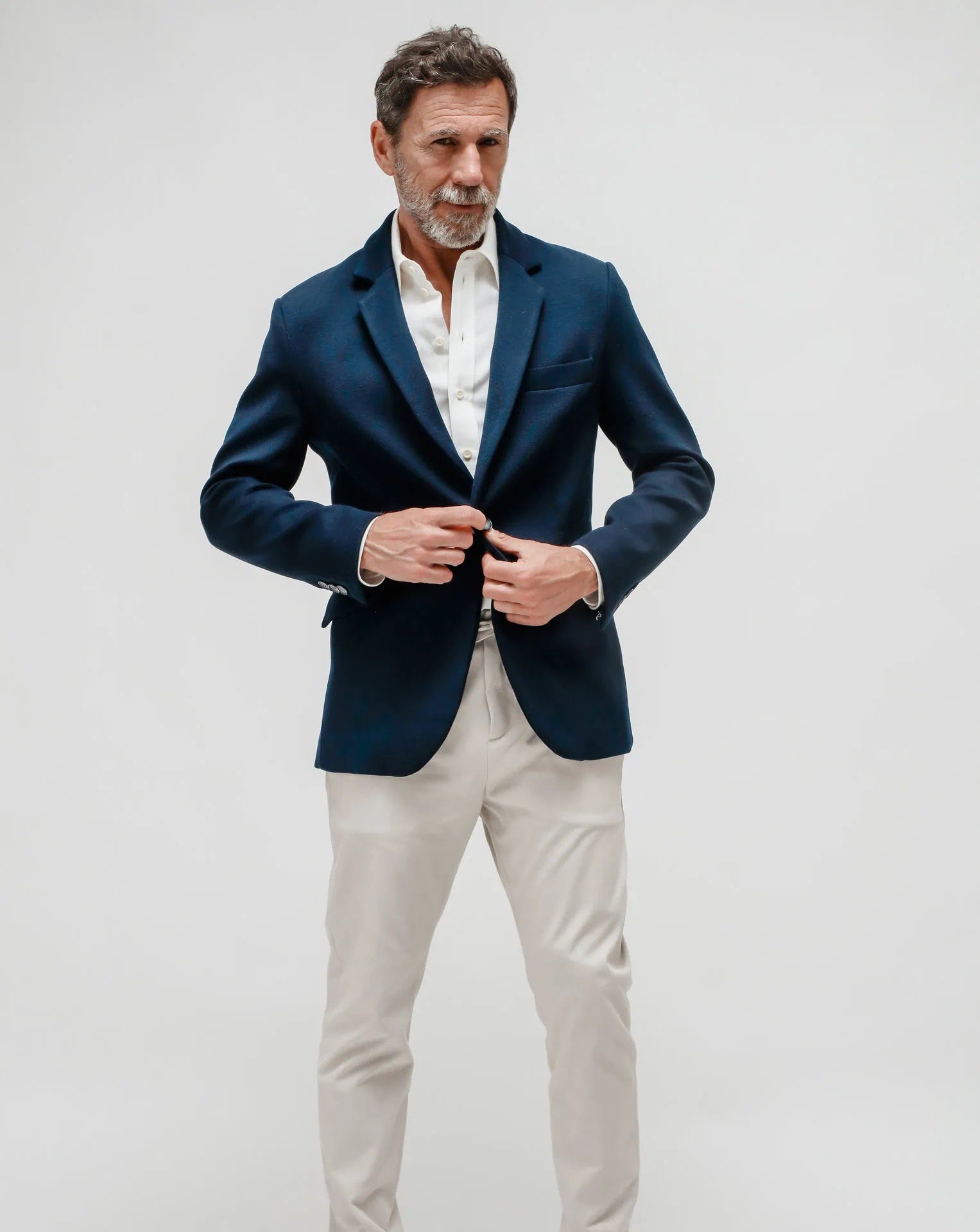
The relaxed blazer
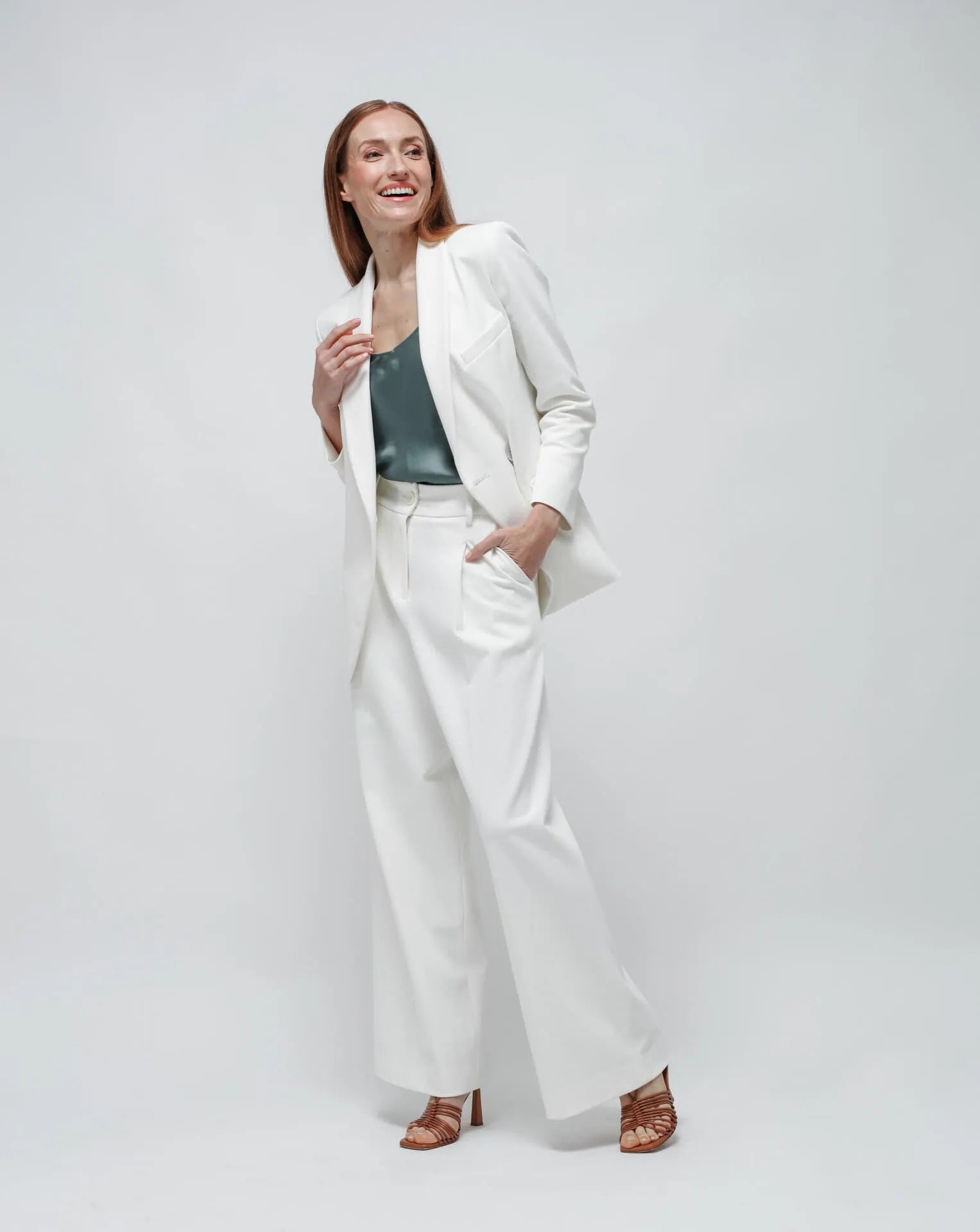
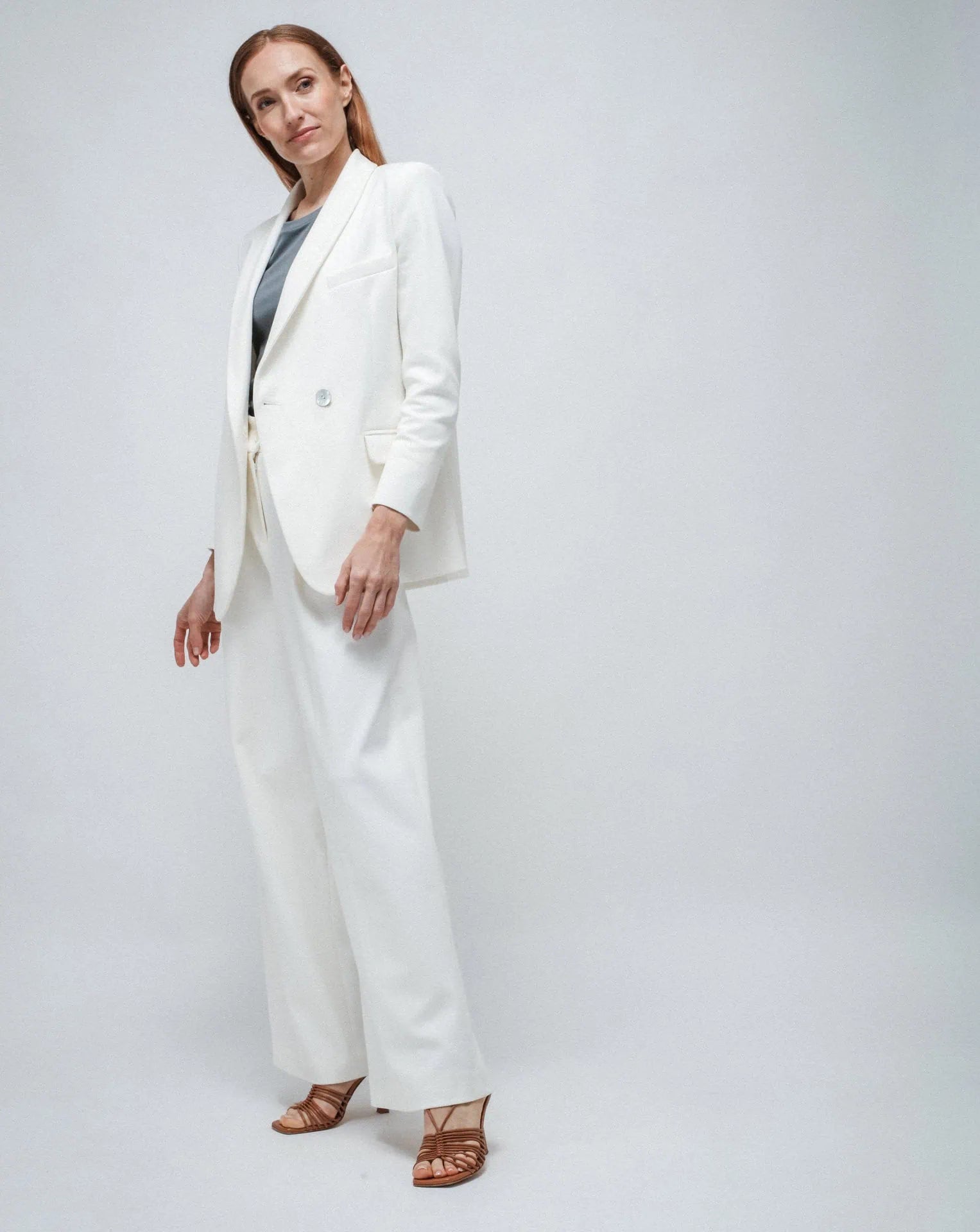
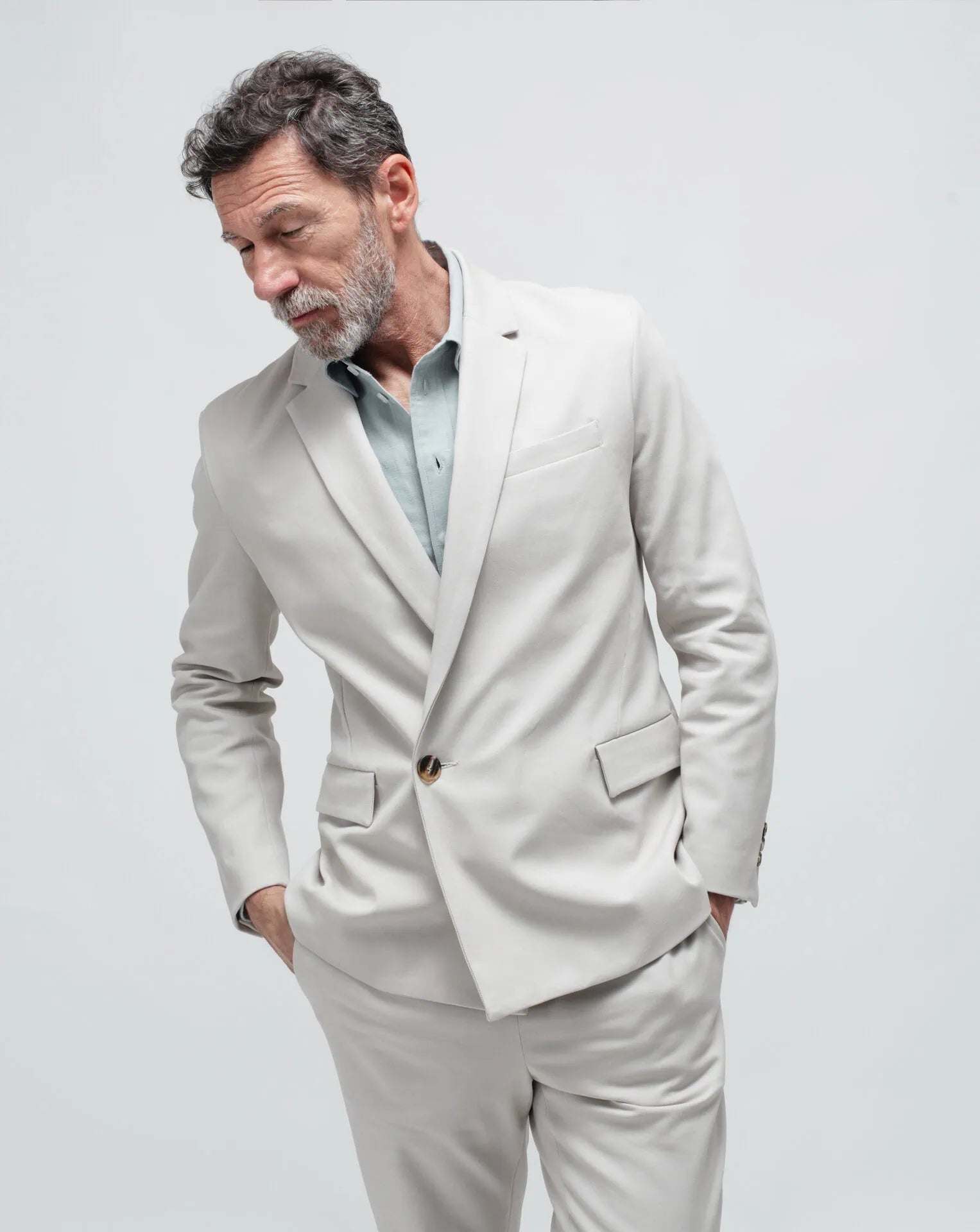
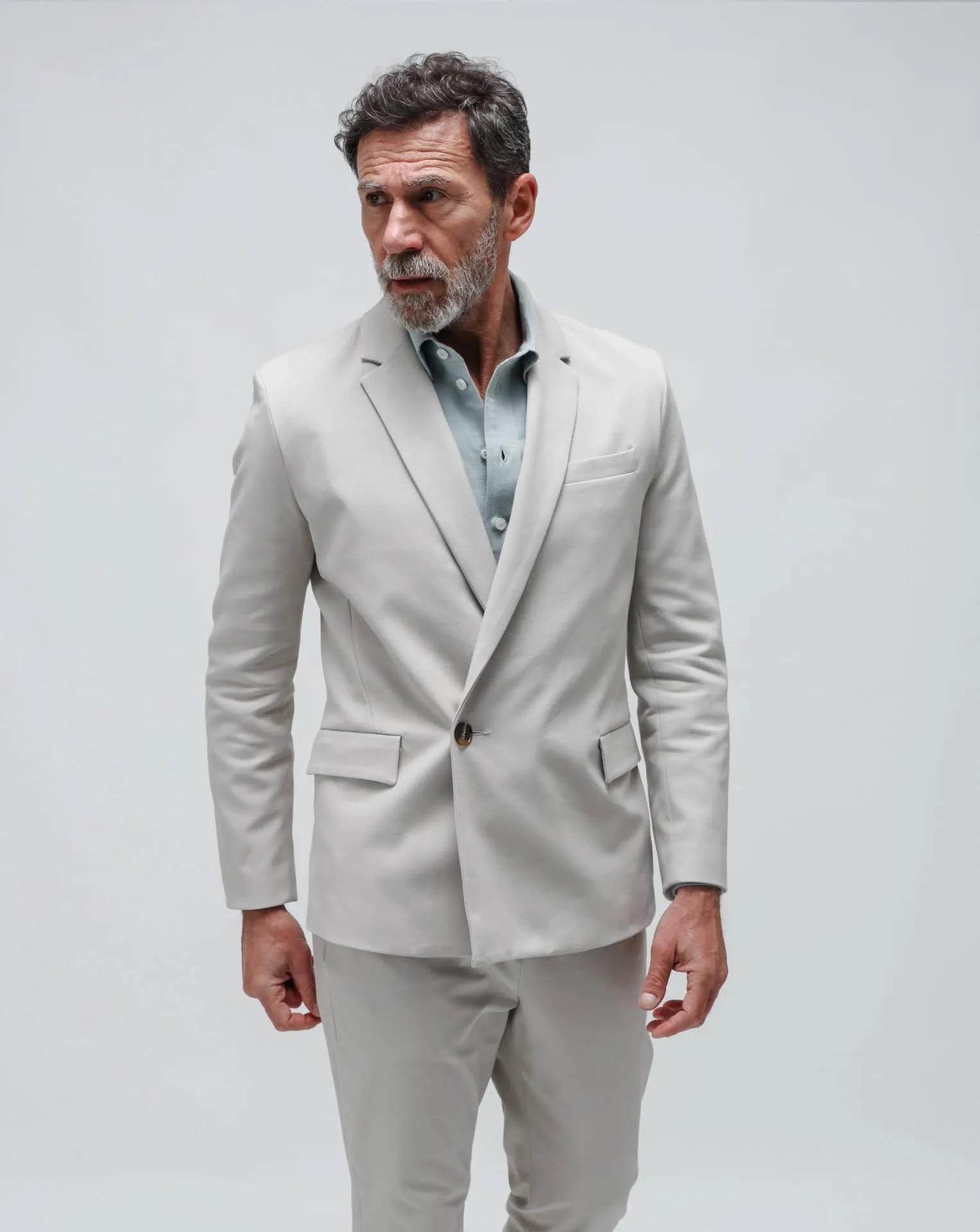
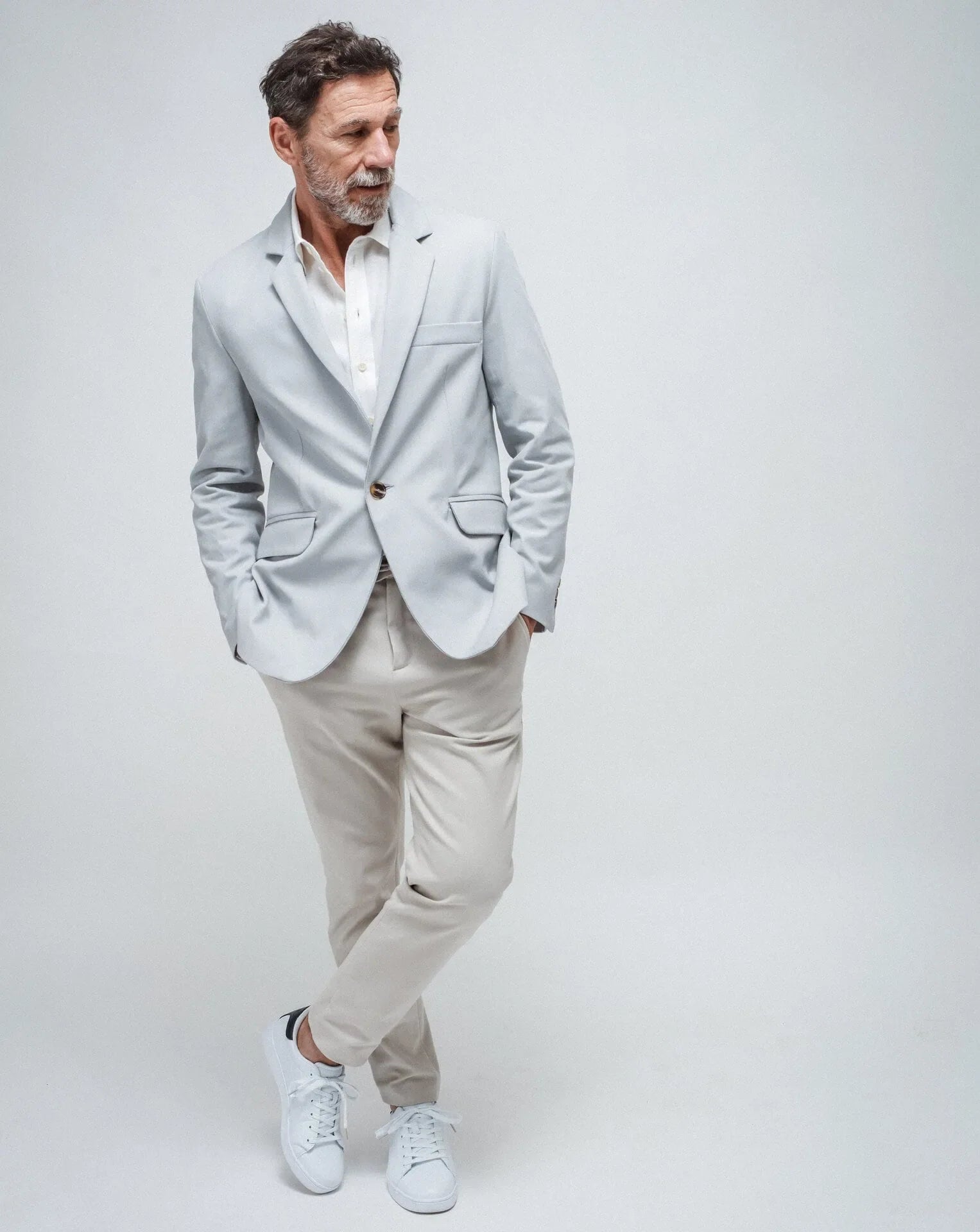
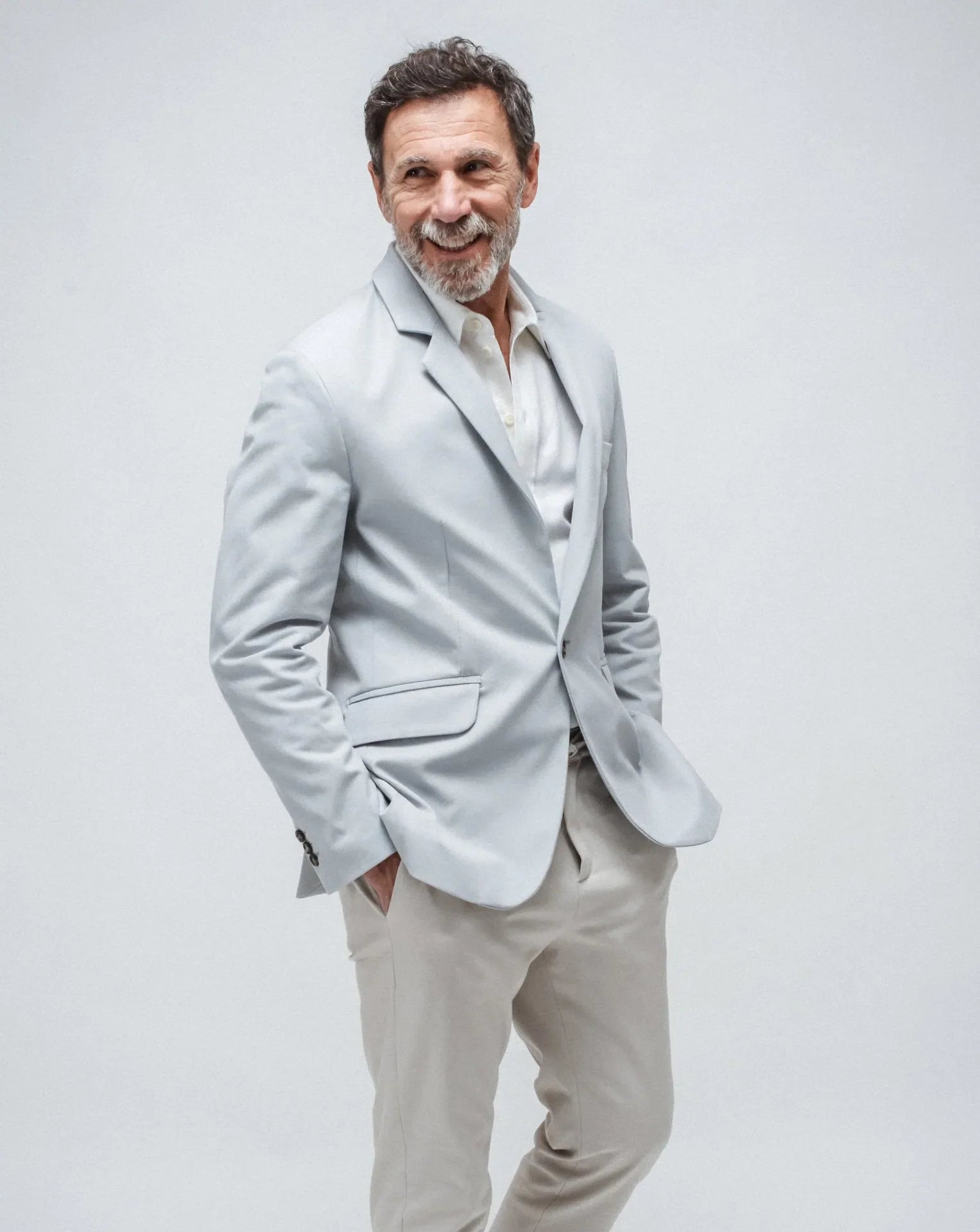
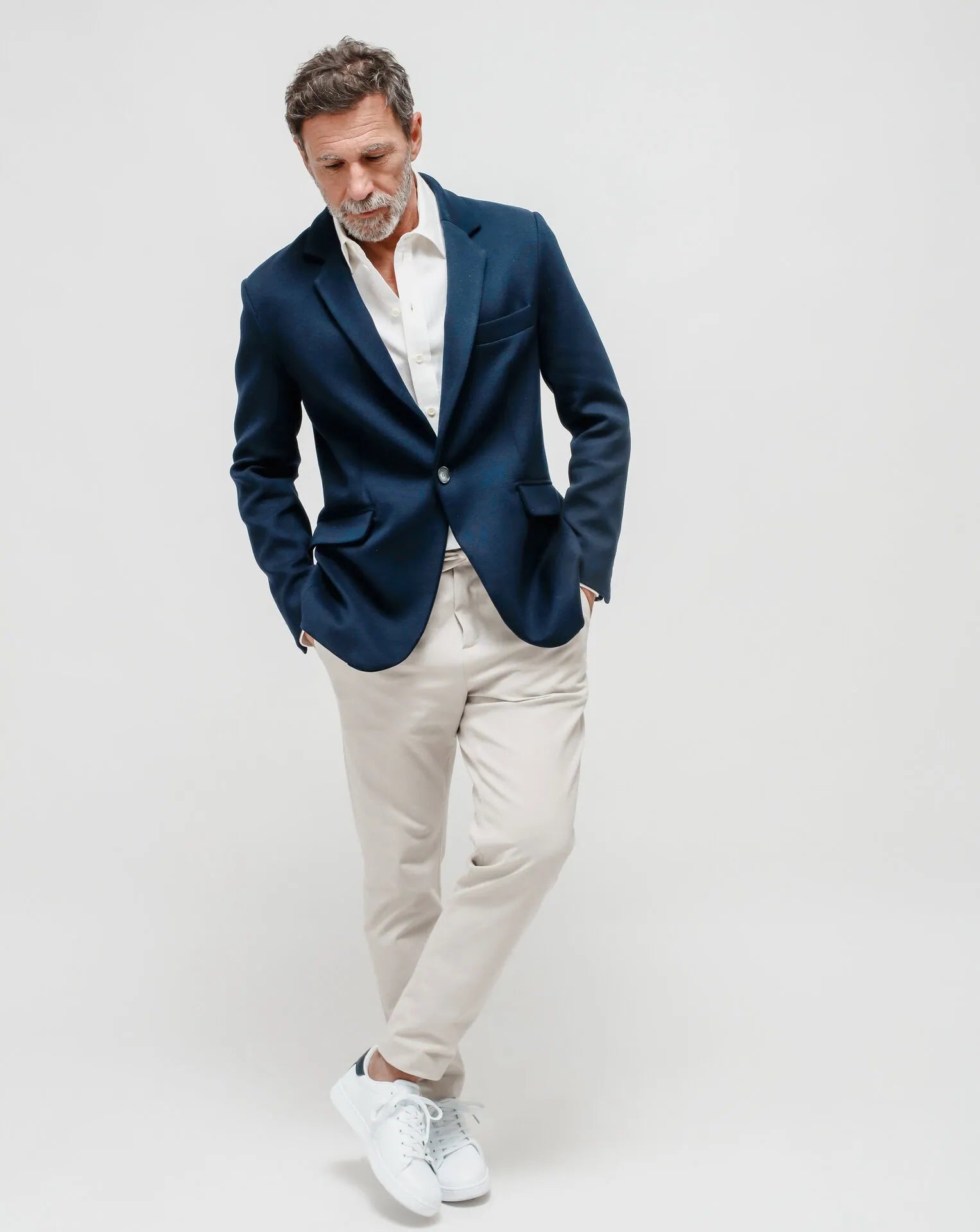
For most travelers, this is the smartest place to start. A relaxed blazer gives polish without stiffness and works across the widest range of settings. It can sit over a knit top and trousers for daytime, then shift over a slip dress or fine shirt for evening. If your trips mix work, dining, and walking, this is often the strongest investment.
Look for a slightly elongated shape, soft shoulder line, and enough room to layer a lightweight sweater underneath. A blazer that is too fitted tends to feel limiting after a few hours and can wrinkle more noticeably at tension points.
The belted jacket
A belted jacket offers definition without formal tailoring. It is especially effective for travelers who want one outer layer that can feel clean during the day and more dressed at night. The belt gives shape when you want it and can be loosened for comfort in transit.
This style works best in fluid yet substantial fabrics. If the material is too thin, the effect can feel more like a robe than a jacket. If it is too rigid, the belt creates bulk instead of elegance.
The chore-inspired jacket, refined
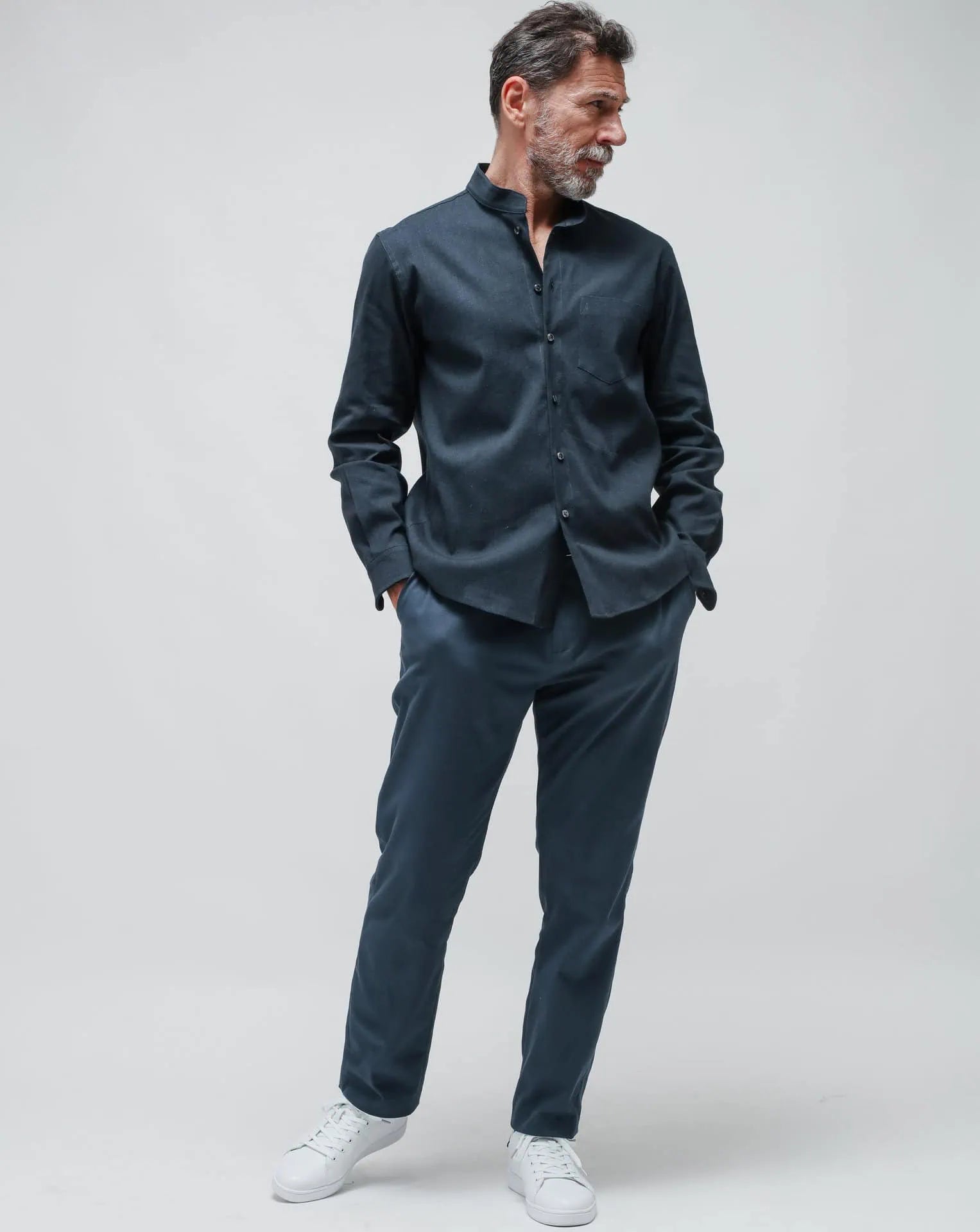
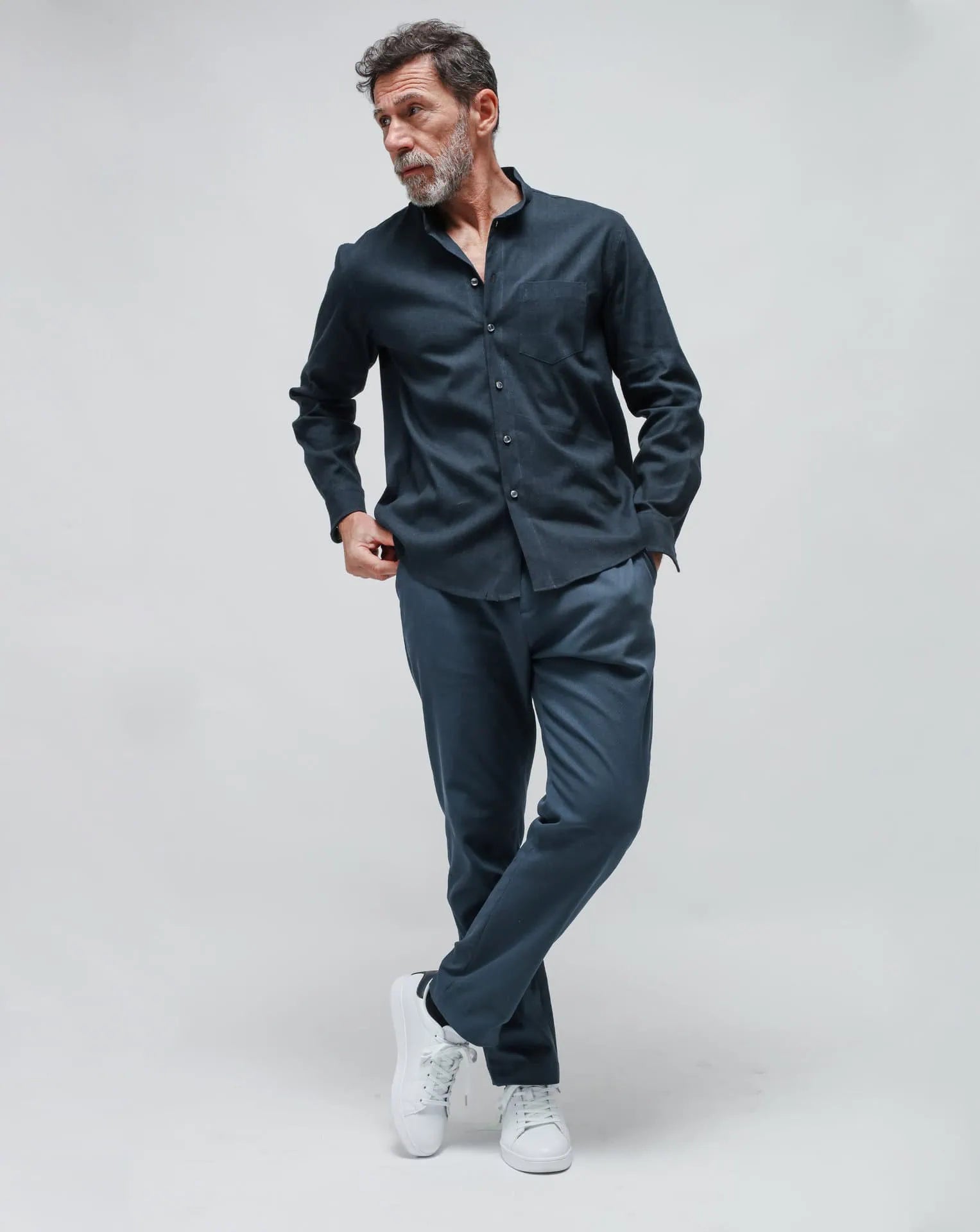
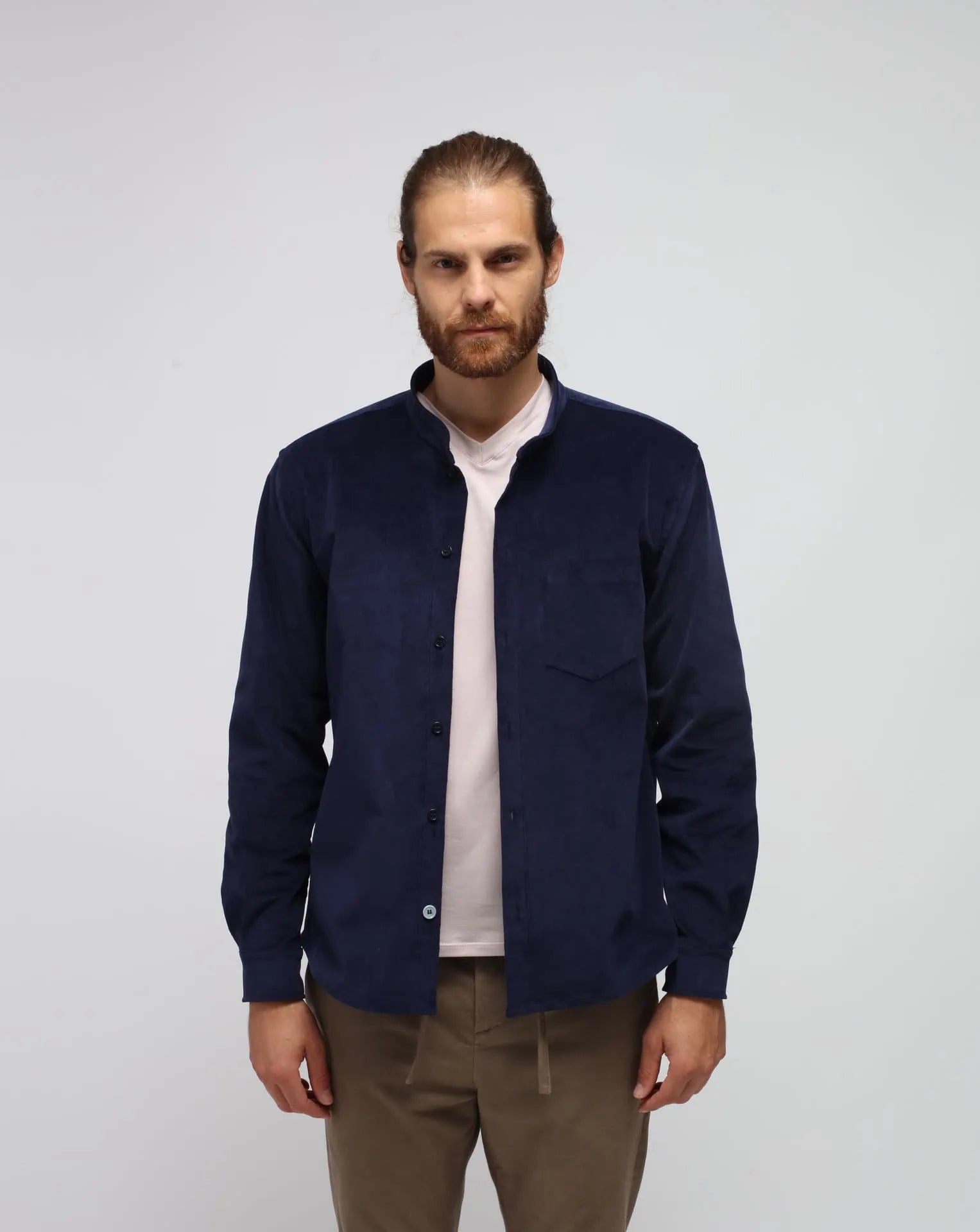
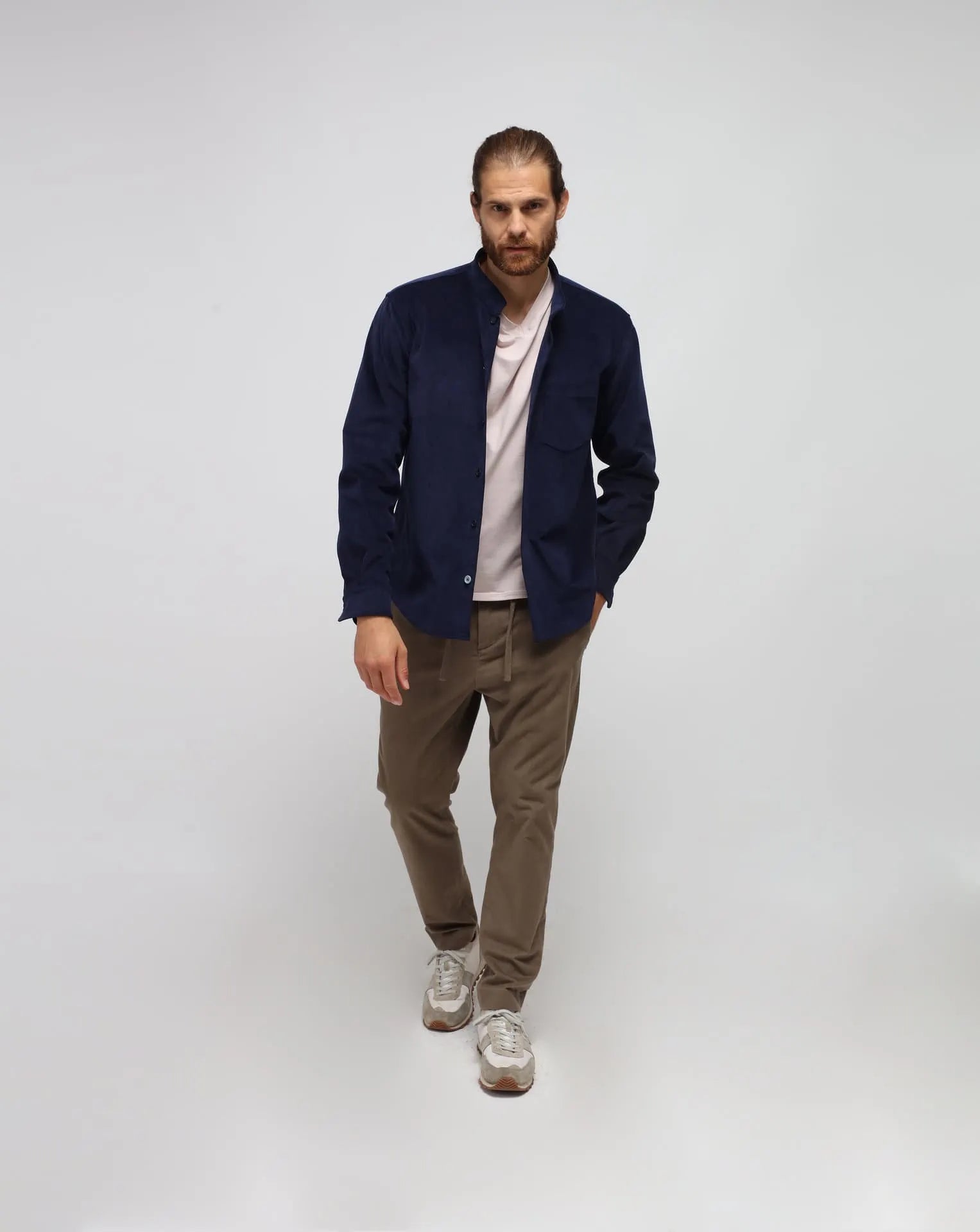
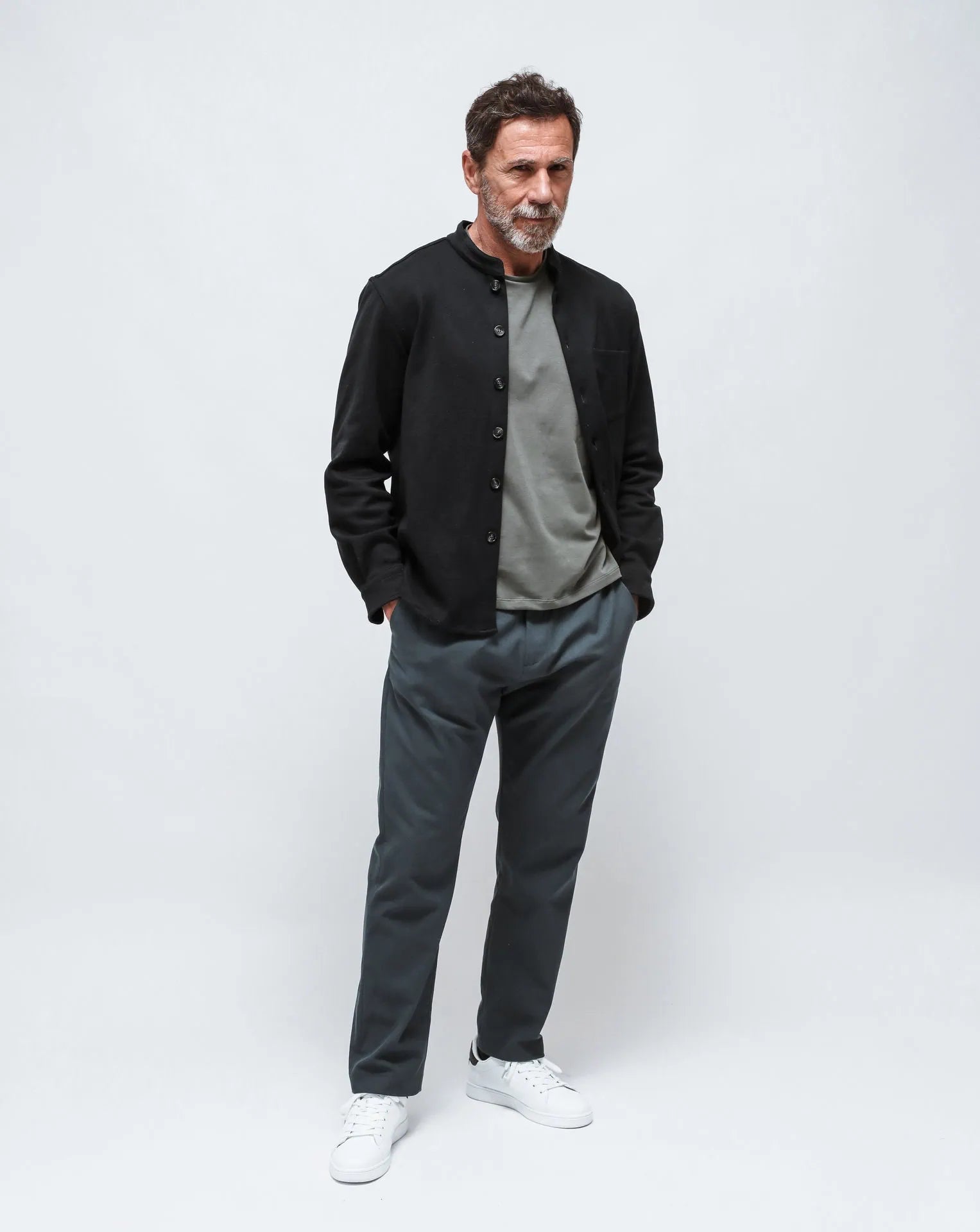
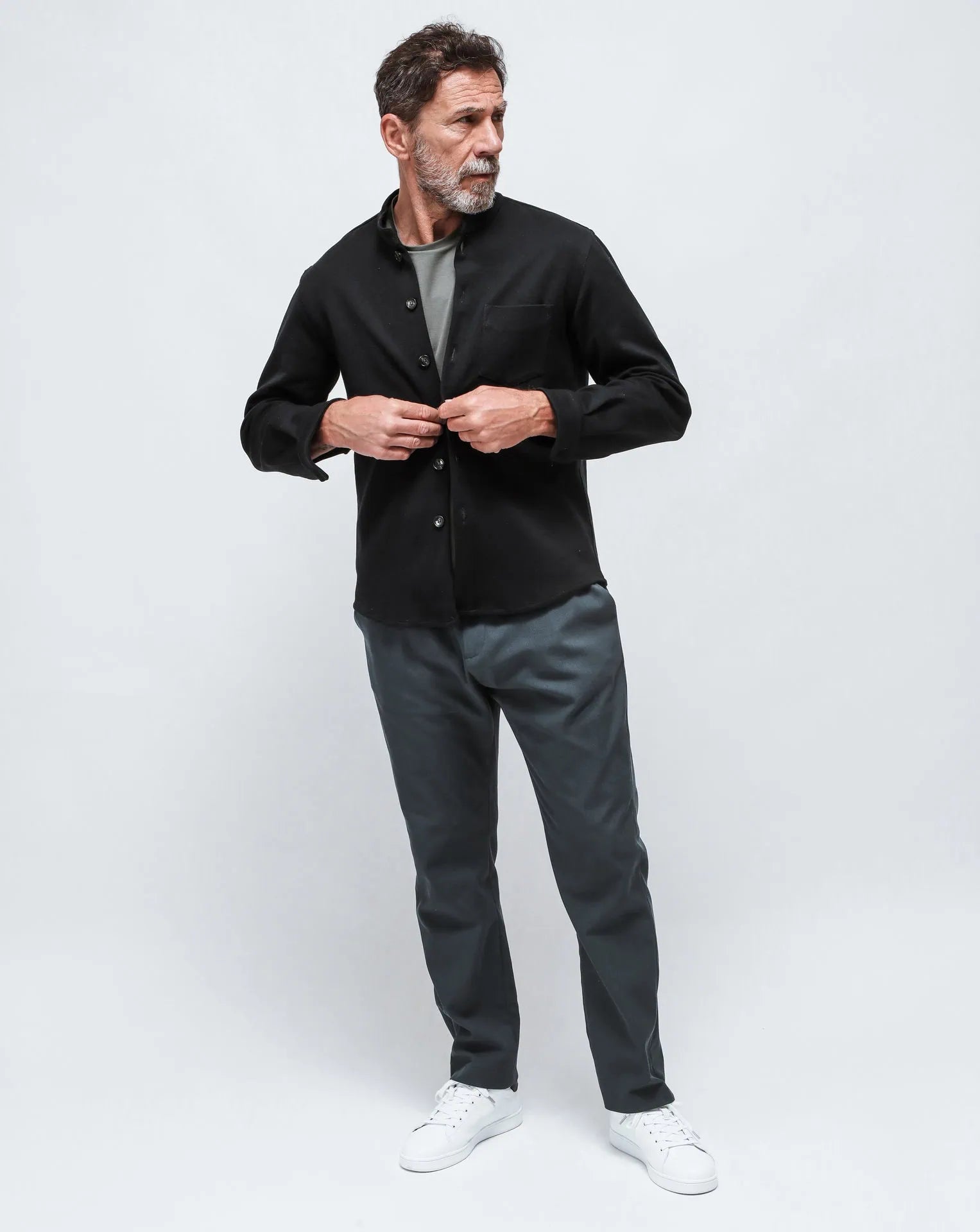
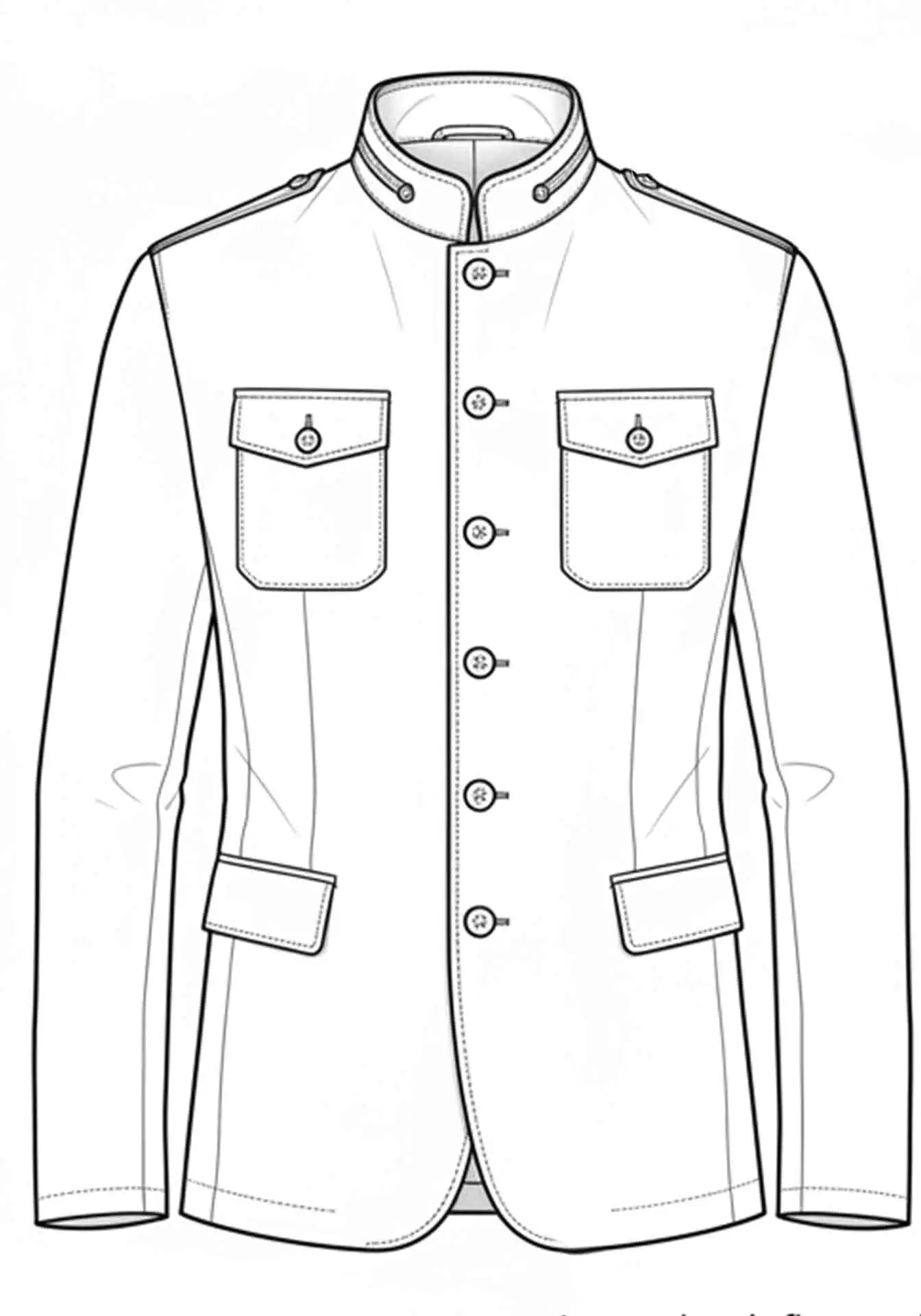
A utility jacket in a premium fabric can be an underrated travel piece. The key is refinement. Clean lines, tonal buttons, and a cropped or slightly boxy cut make it feel urban and modern rather than rugged. It is ideal for trips built around galleries, trains, cafés, and long afternoons on foot.
This silhouette is less formal than a blazer, so it depends on your itinerary. For a creative work trip or city weekend, it can be exactly right. For more corporate settings, it may not carry enough authority.
Fabric decides everything
A beautiful silhouette can fail quickly if the fabric is wrong. Travel exposes clothing to pressure, repetition, and unpredictability. A jacket that performs well in a dressing room may not perform well after being folded into an overhead bin.
Wool blends are often among the best options because they regulate temperature, resist odor, and hold structure. A touch of stretch can make them even more useful, especially for long-haul travel. Cotton twill is another strong choice when you want something breathable and substantial, though pure cotton may wrinkle more than a blended fabric.
Textured fabrics have a quiet advantage. A subtle weave, brushed finish, or crepe surface disguises minor creasing better than flat, smooth materials. That means less maintenance and a cleaner look after hours in motion.
Lining deserves attention too. Fully lined jackets can feel more luxurious and glide on easily over layers, but they may run warm in milder climates. Partial lining or unlined construction can make a jacket lighter and easier to pack. It depends on whether your priority is structure, breathability, or year-round use.
Fit should allow movement, not just look good standing still
Many jackets look elegant only when you are perfectly still. Travel demands more. You are reaching for luggage, sitting for long stretches, crossing terminals, and layering up or down throughout the day.
When trying on a jacket for travel, assess it in motion. Sit down. Cross your arms. Zip or button it fully. Wear it over the kind of knit or shirt you would actually pack. If it pulls across the back, strains at the button, or rides up when seated, it will become frustrating quickly.
Sleeve length also matters more than people expect. Slightly shorter sleeves can feel cleaner and more versatile, especially if you want to show a cuff or stack a watch and knitwear underneath. Too-long sleeves, by contrast, can make an otherwise elegant jacket feel heavy and less precise.
The colors that travel best
Elegant travel jackets do not need to be limited to black, but they should integrate easily with the rest of your wardrobe. Neutrals earn their place because they reduce decision fatigue and make repeat wear look intentional.
Deep navy, soft black, green stone, chocolate, olive, and warm gray all travel exceptionally well. They hide minor wear, pair easily with tonal basics, and feel grounded rather than trend-led. If you want more distinction, a muted check or subtle texture can add depth without making the jacket harder to style.
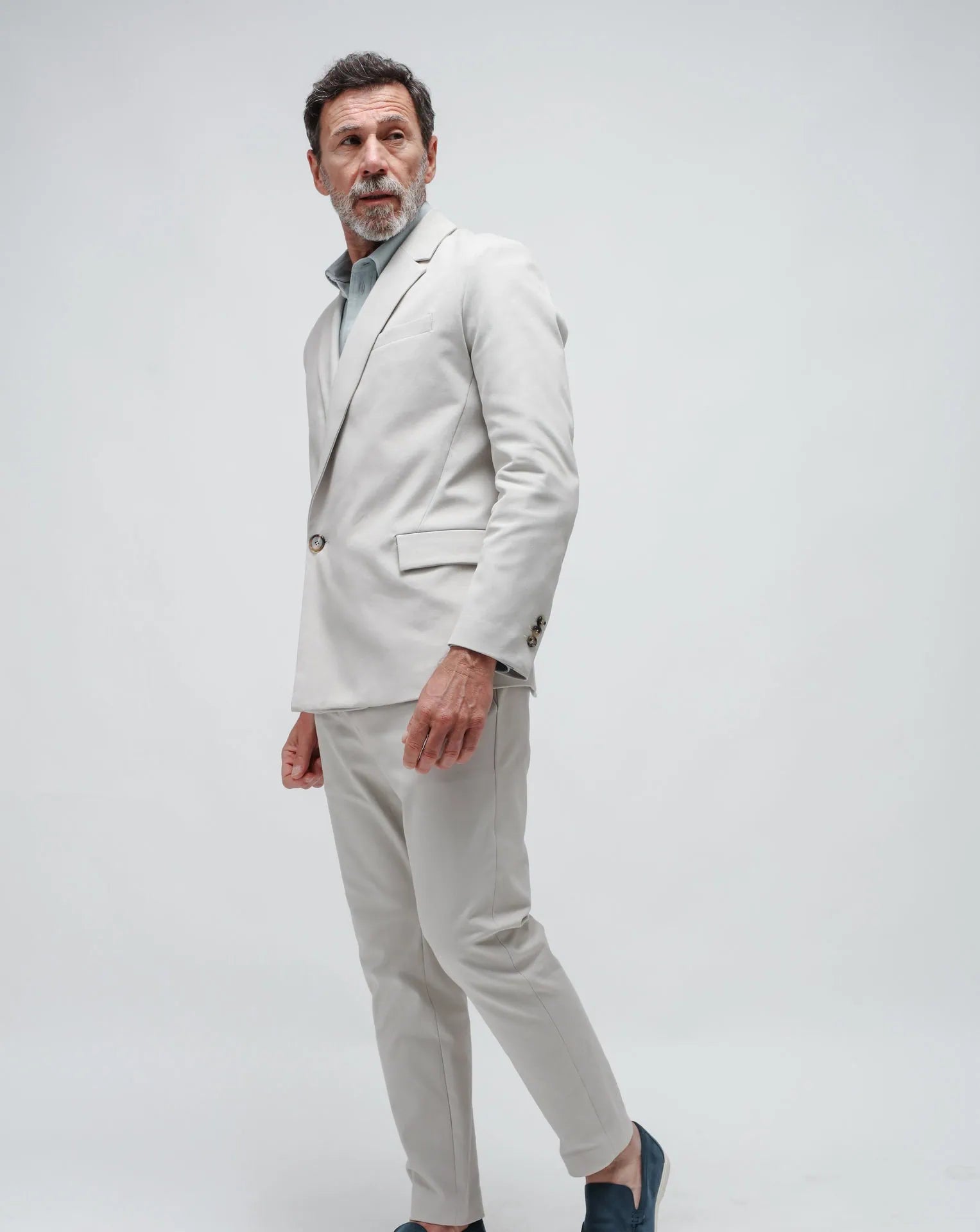
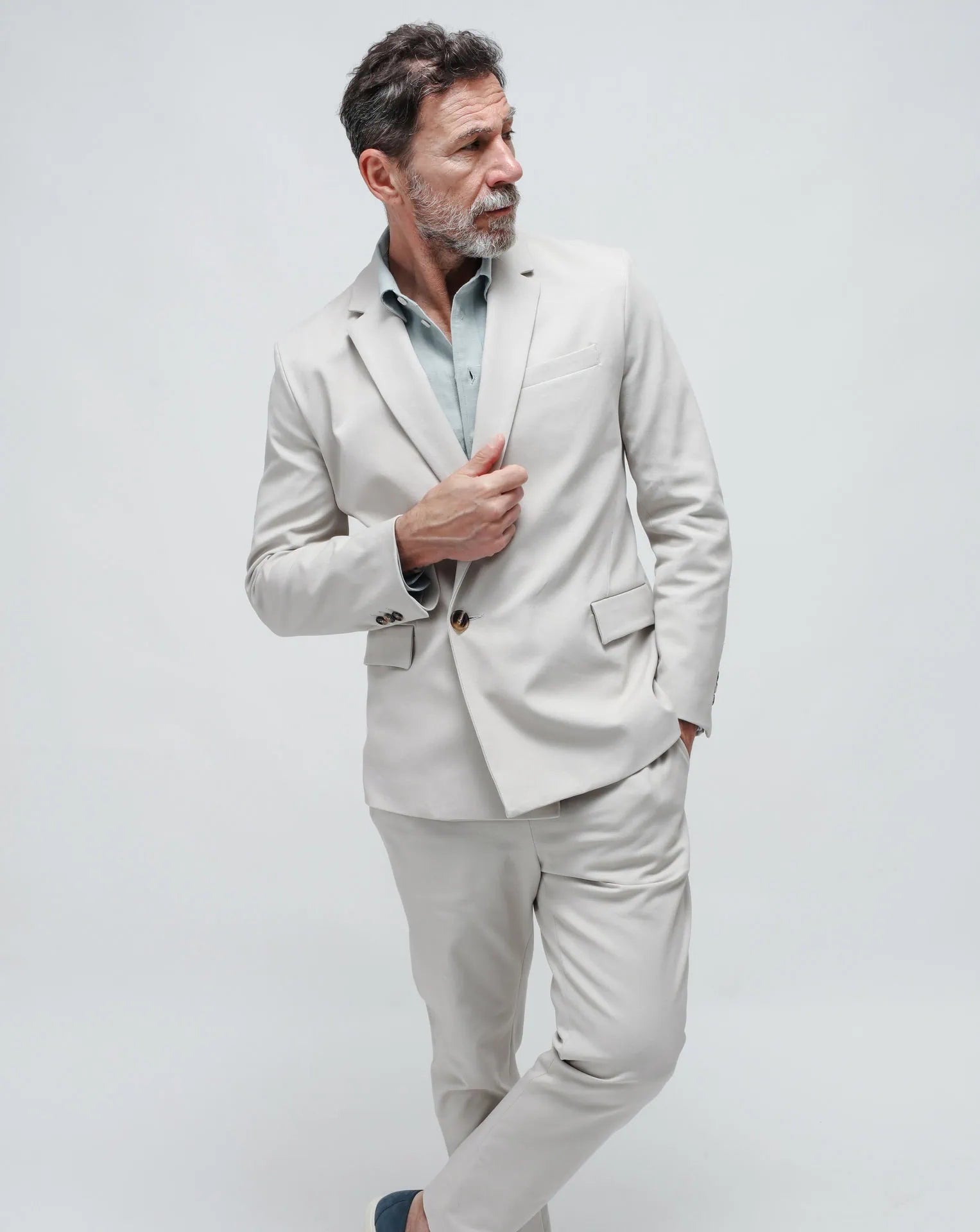
Cream and very light beige can look striking, but they ask more of the traveler. They show wear faster and may create more anxiety around transit, coffee, weather, and repeated use. If you prefer light tones, choose a fabric with visible texture and enough weight to maintain composure.
One jacket, multiple roles
The strongest travel purchase is not the most dramatic piece. It is the one that can cover the most situations while still feeling like you. That is where intentional wardrobe building matters.
A well-made jacket should work in at least three ways: as outerwear for transit, as a finishing layer for day, and as a polished top layer for dinner or meetings. If a jacket only works with one pair of pants or one specific shoe, it may be beautiful but not especially useful for travel.
This is also where craftsmanship justifies itself. Better construction, better fabric, and small-batch attention often show up in the details you feel after the third wear, not just the first. A collar that stays crisp, a lining that breathes, a cut that layers without bulk - these are not extras. They are what make a jacket dependable.
Why sustainability matters in a travel jacket
Travel wardrobes should be edited by design. You pack less, wear pieces harder, and rely on each item to perform across contexts. That logic aligns naturally with responsible fashion.
Elegant travel jackets made in small batches from premium deadstock fabrics offer a stronger model than disposable outerwear bought for one trip and forgotten. They use existing materials, reduce waste, and tend to be produced with more discipline and care. For the customer who wants style with conviction, that matters.
At Humans & Land, that philosophy feels especially relevant to travel. Limited-edition design, European production, and elevated essentials support the kind of wardrobe that moves well and lasts. You are not packing more. You are packing better.
A final standard worth keeping
The best elegant travel jackets do not ask you to choose between beauty and function. They prove that discipline in design creates both. When a jacket travels well, wears beautifully, and reflects your values, it becomes more than a practical layer. It becomes the reason the rest of your suitcase makes sense.
FAQ
Q: What is the best fabric for elegant travel jackets?
A: Wool blends, textured crepes, and compact cotton blends tend to perform best. They hold shape, resist visible wrinkling, and adapt well to repeated wear.
Q: Are blazers good travel jackets?
A: Yes, if the blazer has soft structure and enough room to layer. A relaxed blazer is often the most versatile option for work trips, city travel, and dinners.
Q: How many jackets should I pack for a trip?
A: Usually one is enough if it is versatile. For longer trips or changing climates, two can make sense - one polished option and one lighter casual layer.
Q: Which color travel jacket is most versatile?
A: Navy, black, olive, stone, and warm gray are among the easiest to wear. They pair well with most wardrobes and hide the signs of travel better than very light shades.
Q: How should a travel jacket fit?
A: It should allow movement while keeping a clean silhouette. You should be able to sit, reach, and layer underneath without pulling, tightness, or bulk.
the World of H&L