
Article: How to Wear a Kimono Jacket: 7 Refined Ways

How to Wear a Kimono Jacket: 7 Refined Ways
A kimono jacket changes the line of an outfit before it changes anything else. Its open front, easy sleeve, and relaxed shape bring movement to tailored pants, denim, dresses, and knitwear without the stiffness of a conventional blazer. Knowing how to wear a kimono jacket is less about following a costume formula and more about balancing proportion, fabric, and intention.
The name also deserves care. The kimono is a traditional Japanese garment with deep cultural meaning. A contemporary kimono jacket borrows an open, wrap-inspired silhouette rather than replicating traditional dress. Wear it as a considered modern layer, not as a costume, and let exceptional cut and fabric do the work.

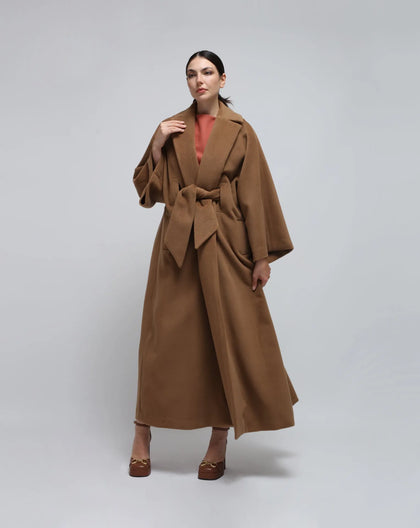
How to Wear a Kimono Jacket Starts With Proportion
A kimono jacket is naturally generous through the body, so the rest of the look needs a clear point of definition. That can be a fitted ribbed top, a tucked-in shirt, a high-rise waistband, or a long, column-like base layer. The goal is not to make the outfit tight. It is to give the eye a deliberate shape beneath the jacket.
Length matters. A cropped kimono jacket works well with high-waisted trousers, skirts, or wide-leg jeans because it defines the waist and keeps the leg line long. A hip-length style is an effortless partner for straight-leg pants and slip dresses. Longer cuts create a striking, coat-like effect over tonal tailoring or narrow knit layers, especially in colder months.
Fabric determines how formal the piece feels. Fluid cupro, silk blends, or lightweight deadstock viscose suit evenings and warm-weather travel. Structured cotton, wool, or brushed wool blends hold their form and make a kimono jacket feel appropriate for the office or winter city dressing. Choose a fabric with enough weight for the season rather than forcing a light layer over heavy clothing.
1. Wear It With Tailored Trousers for Work
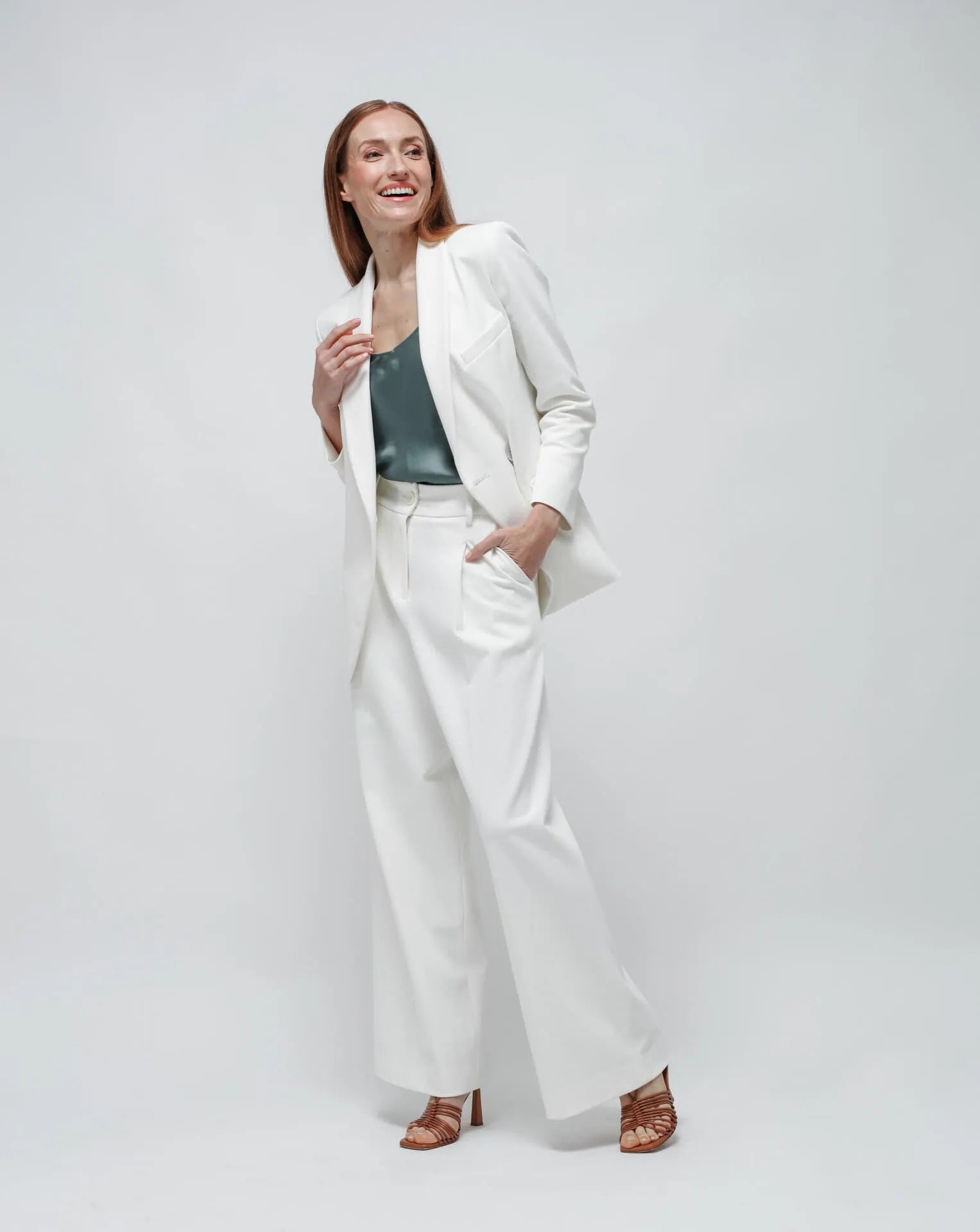
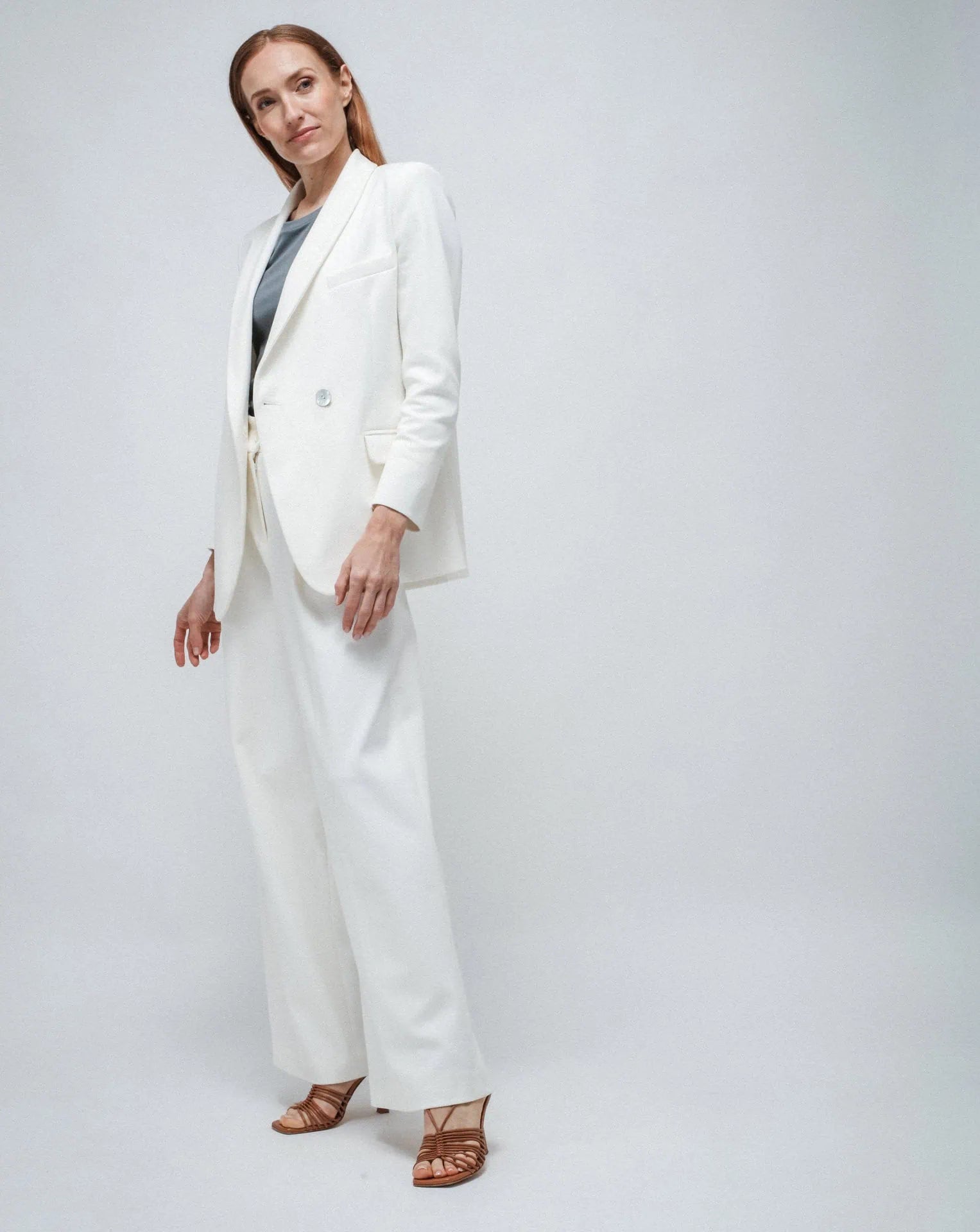
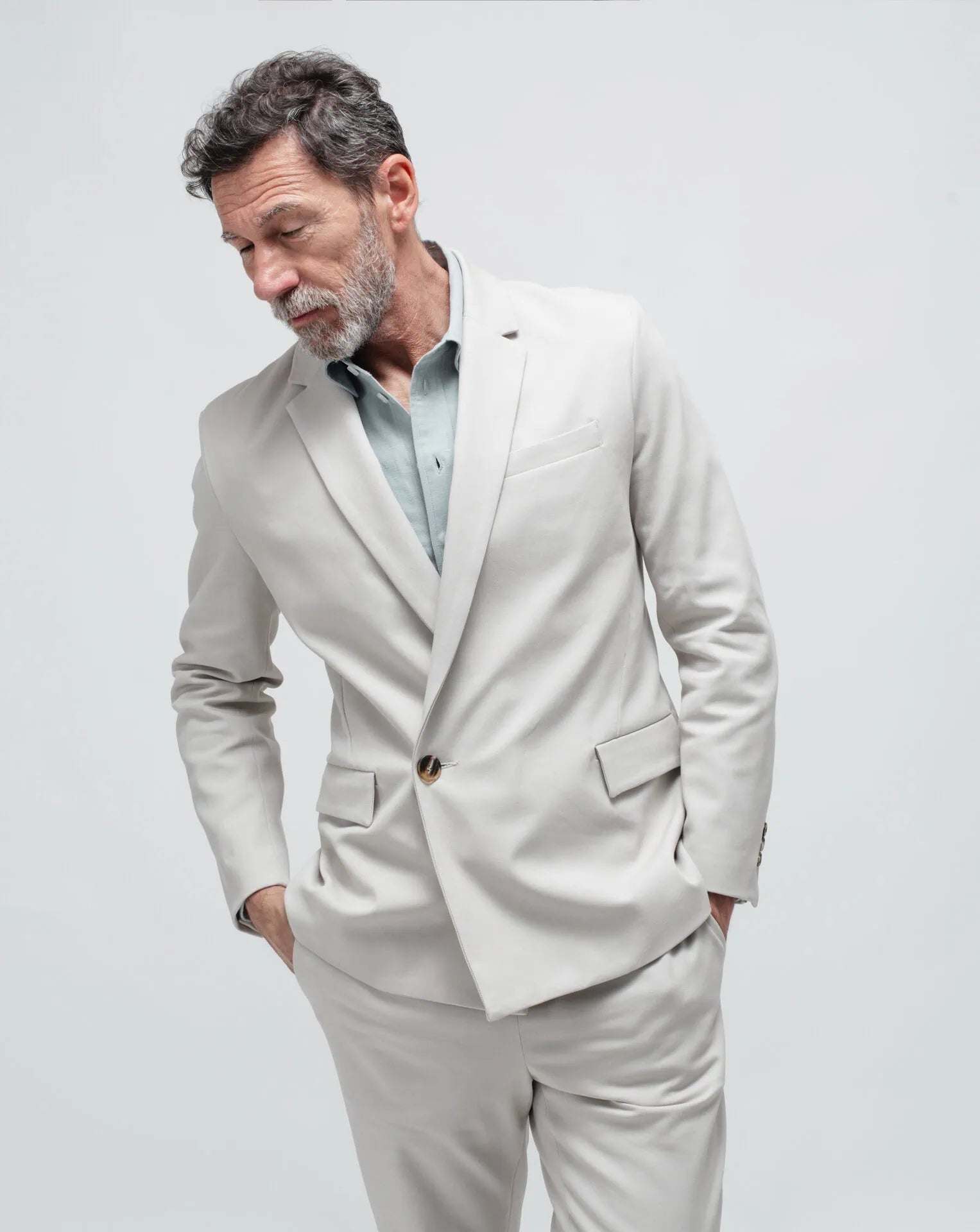
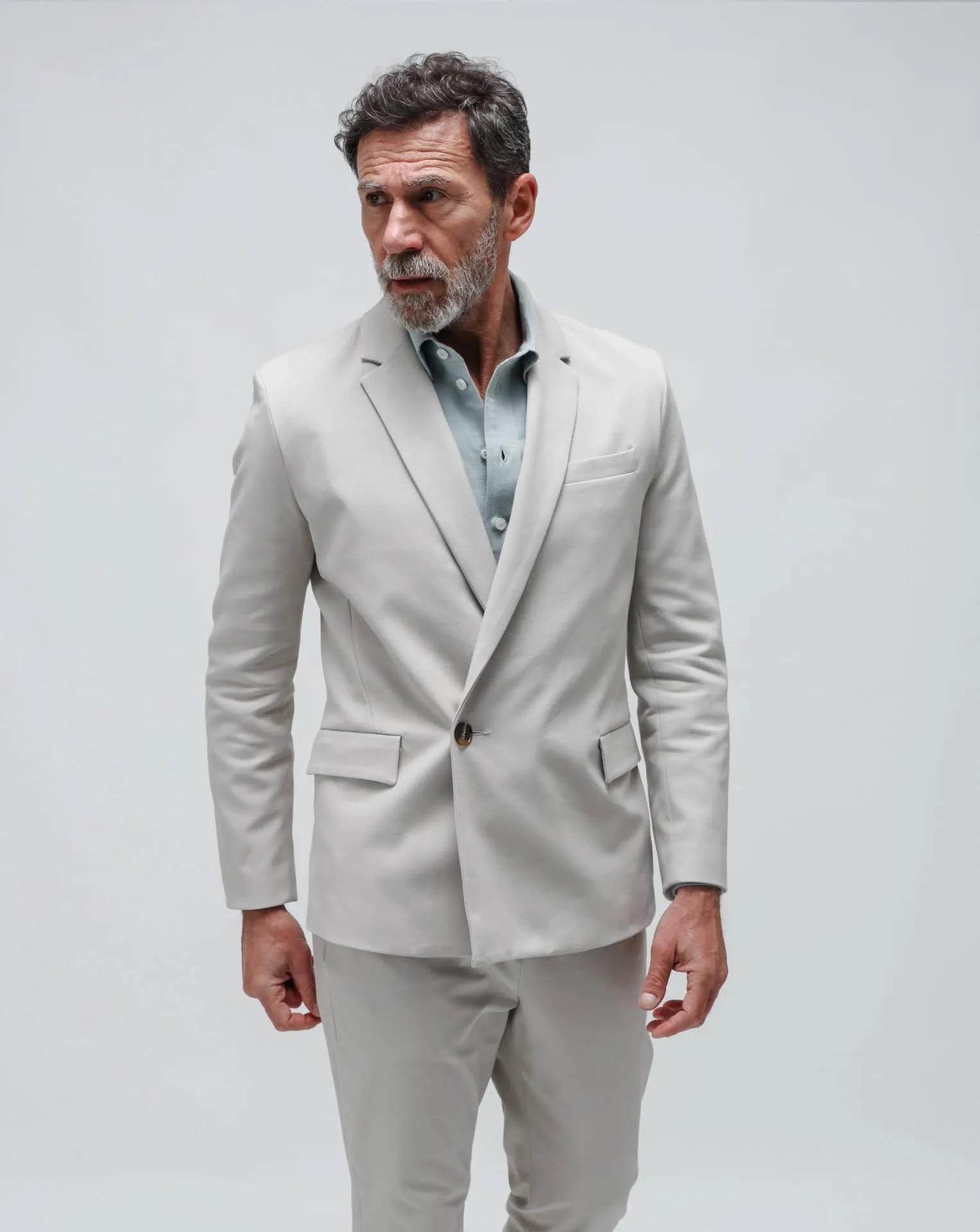
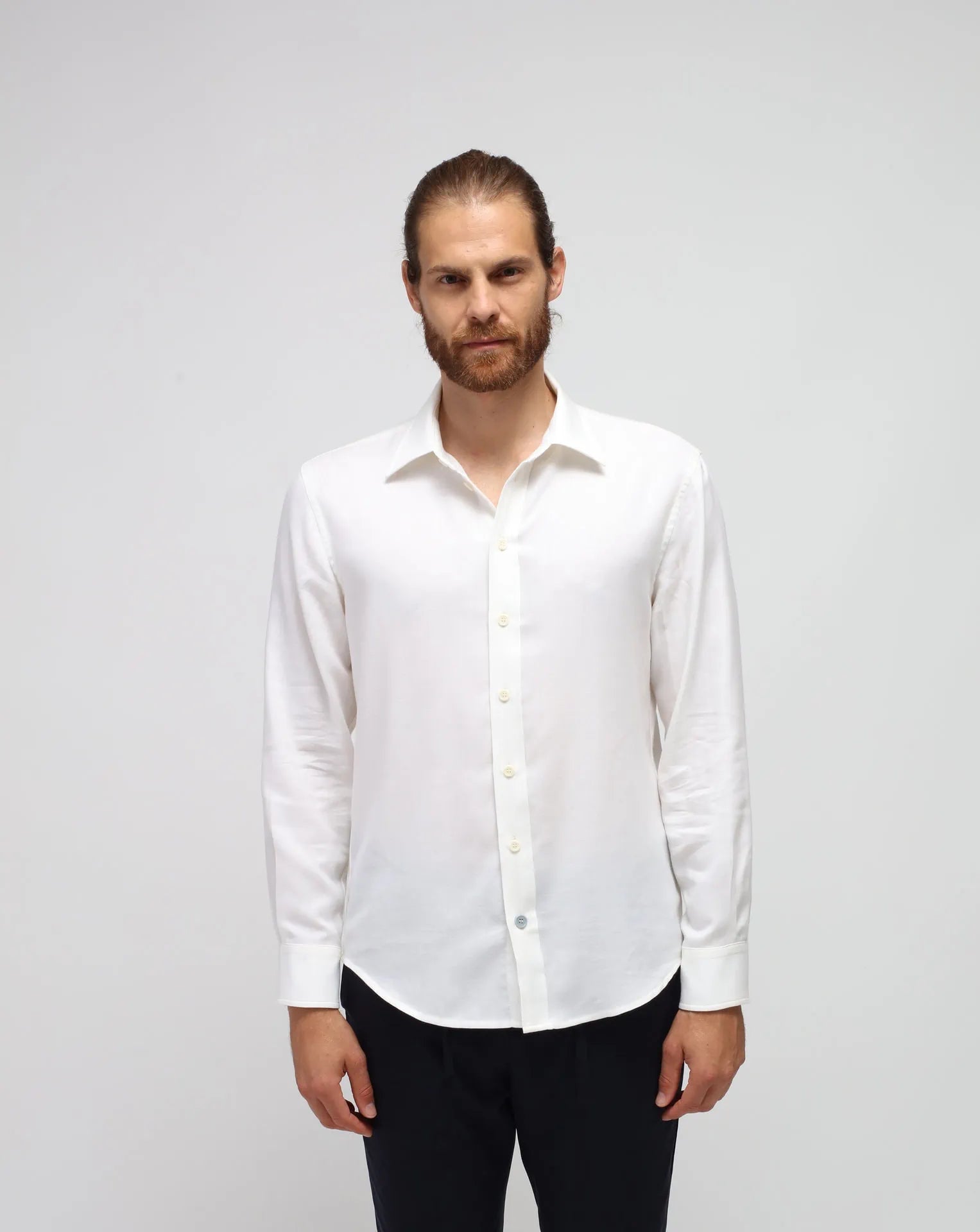
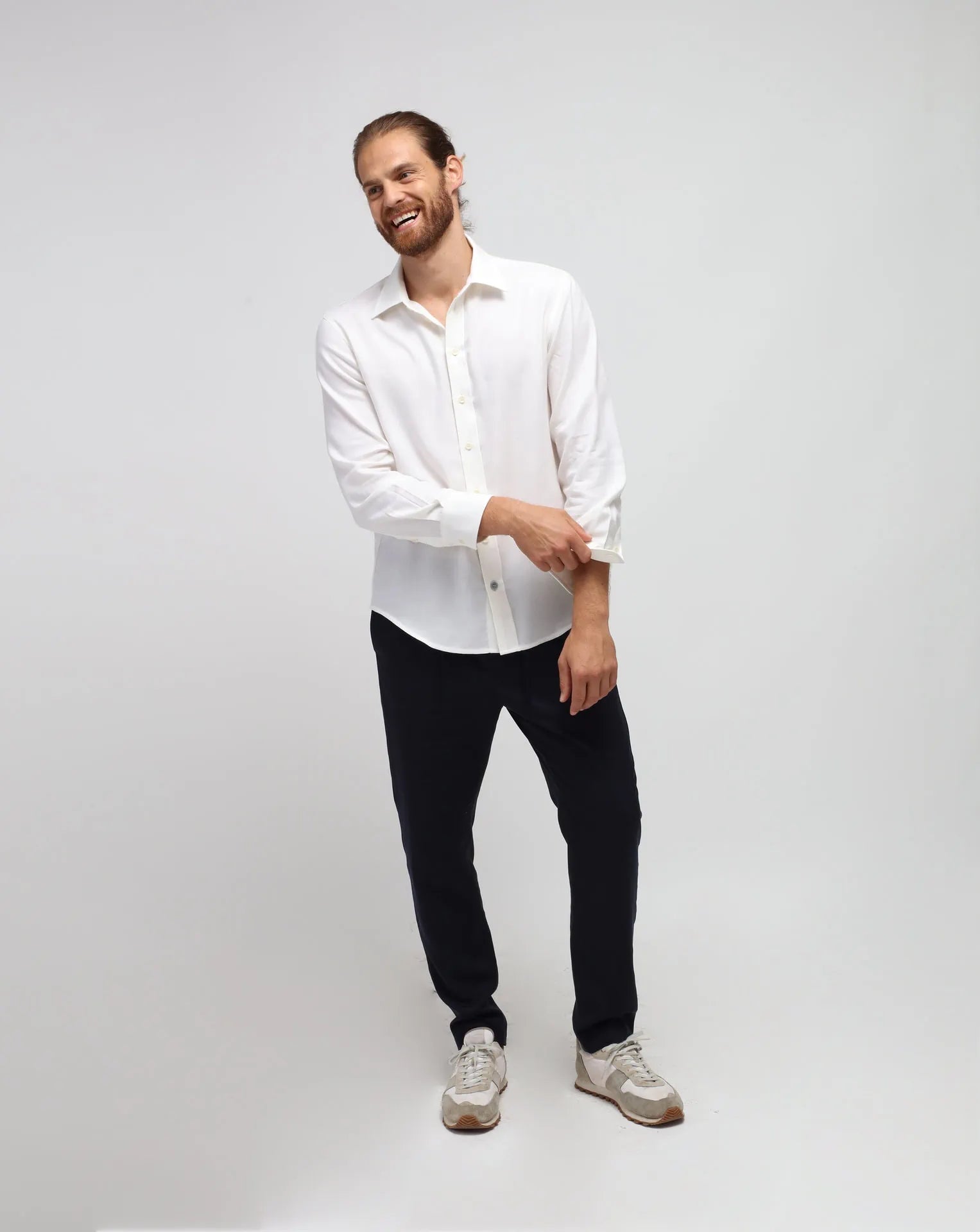
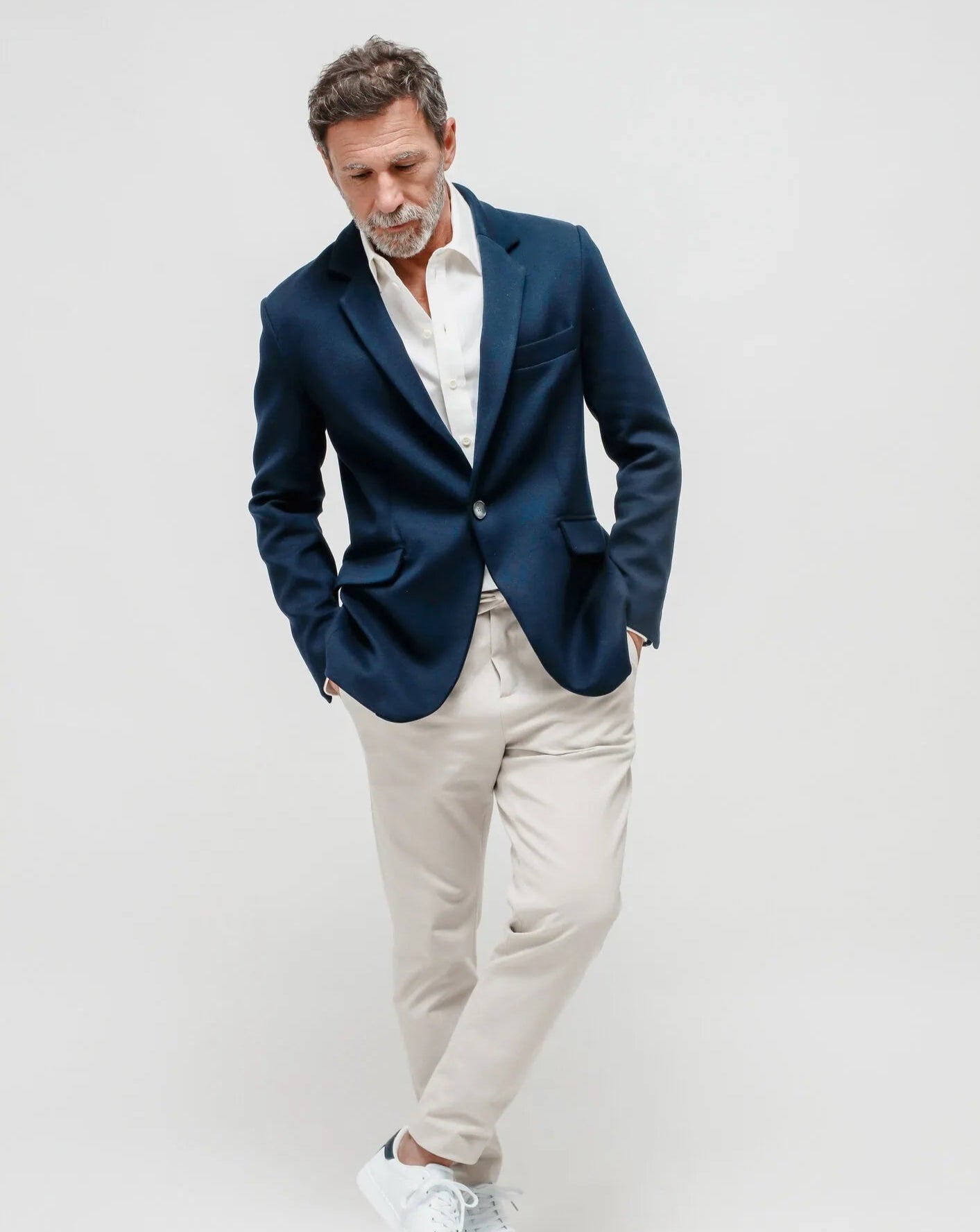
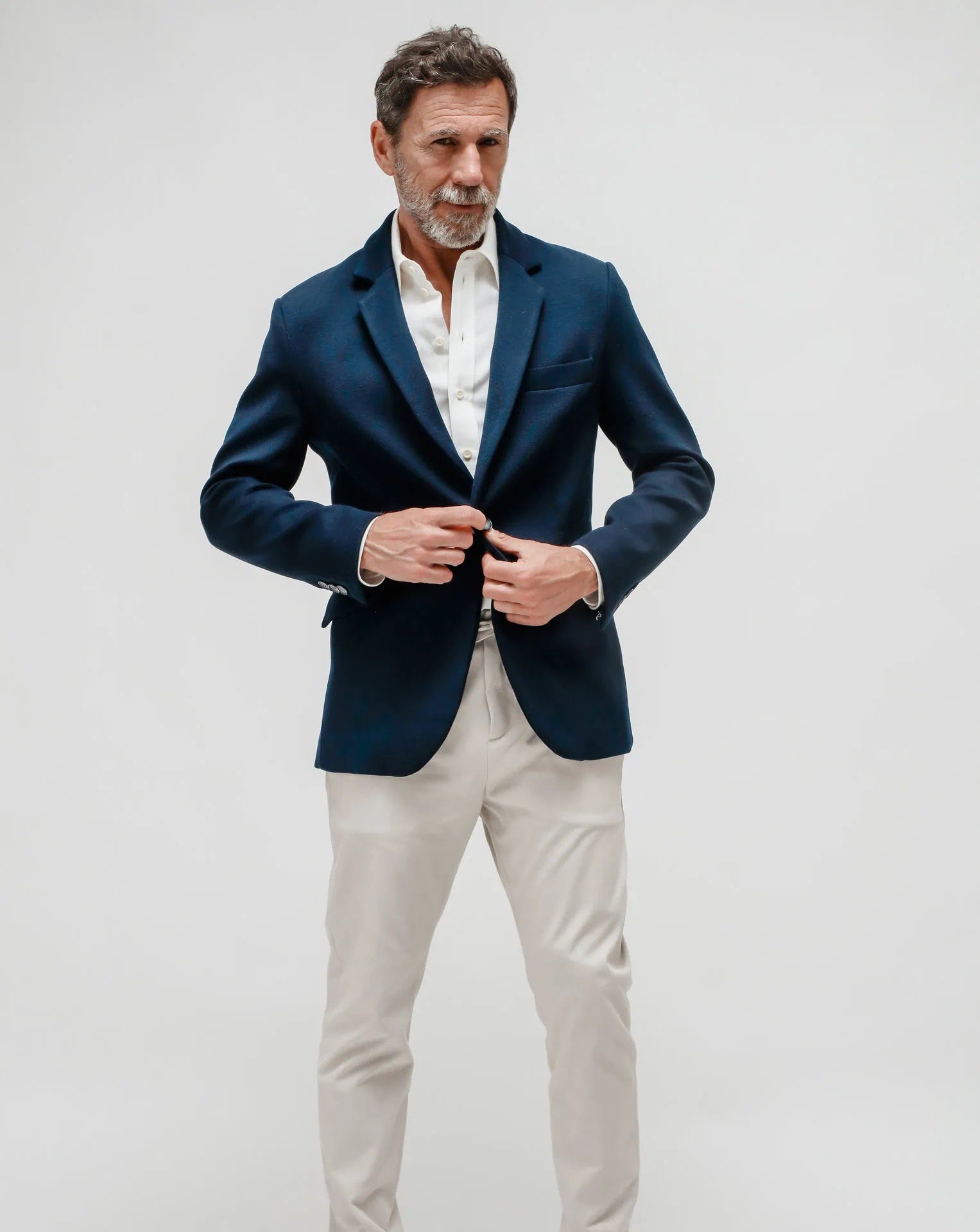
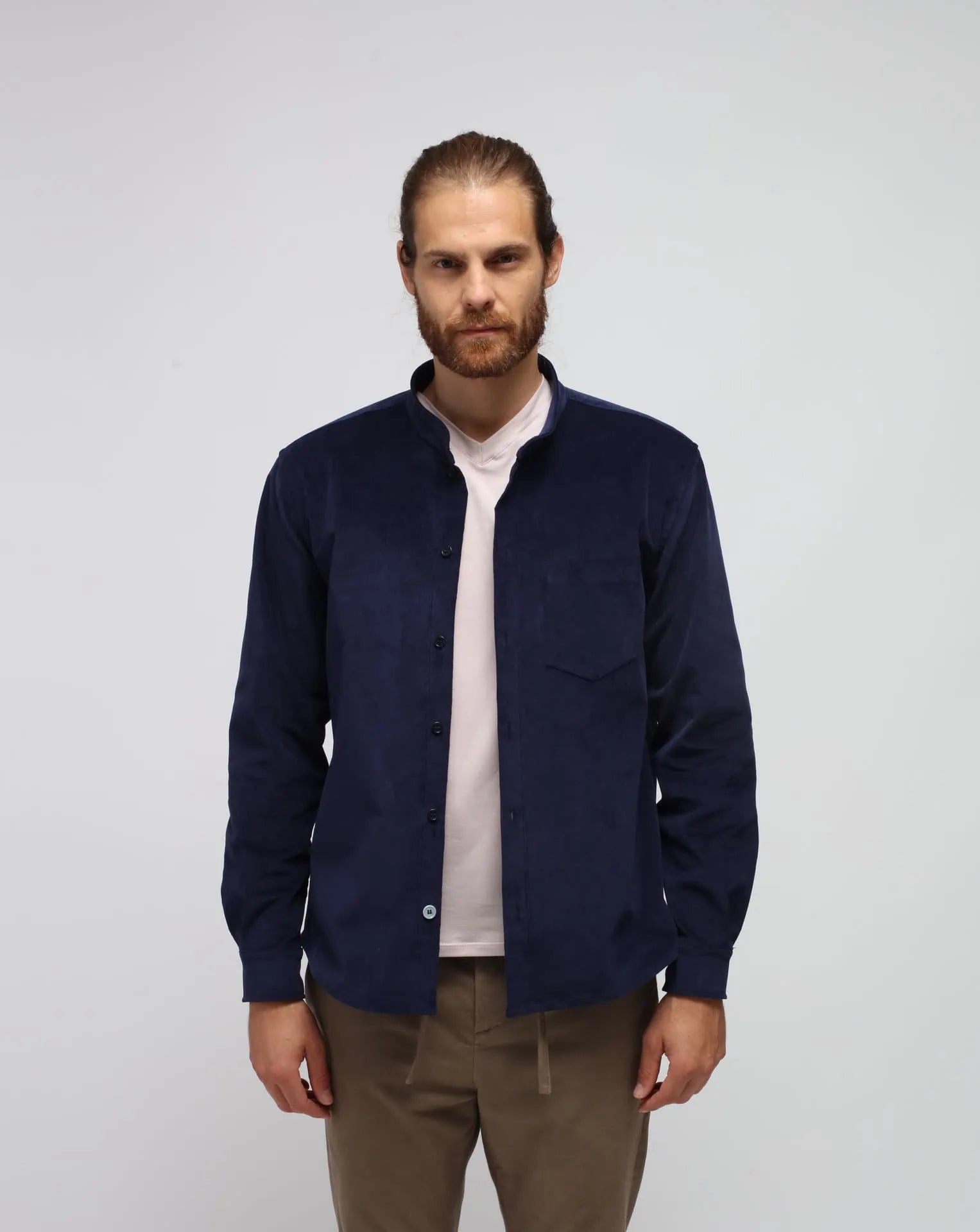
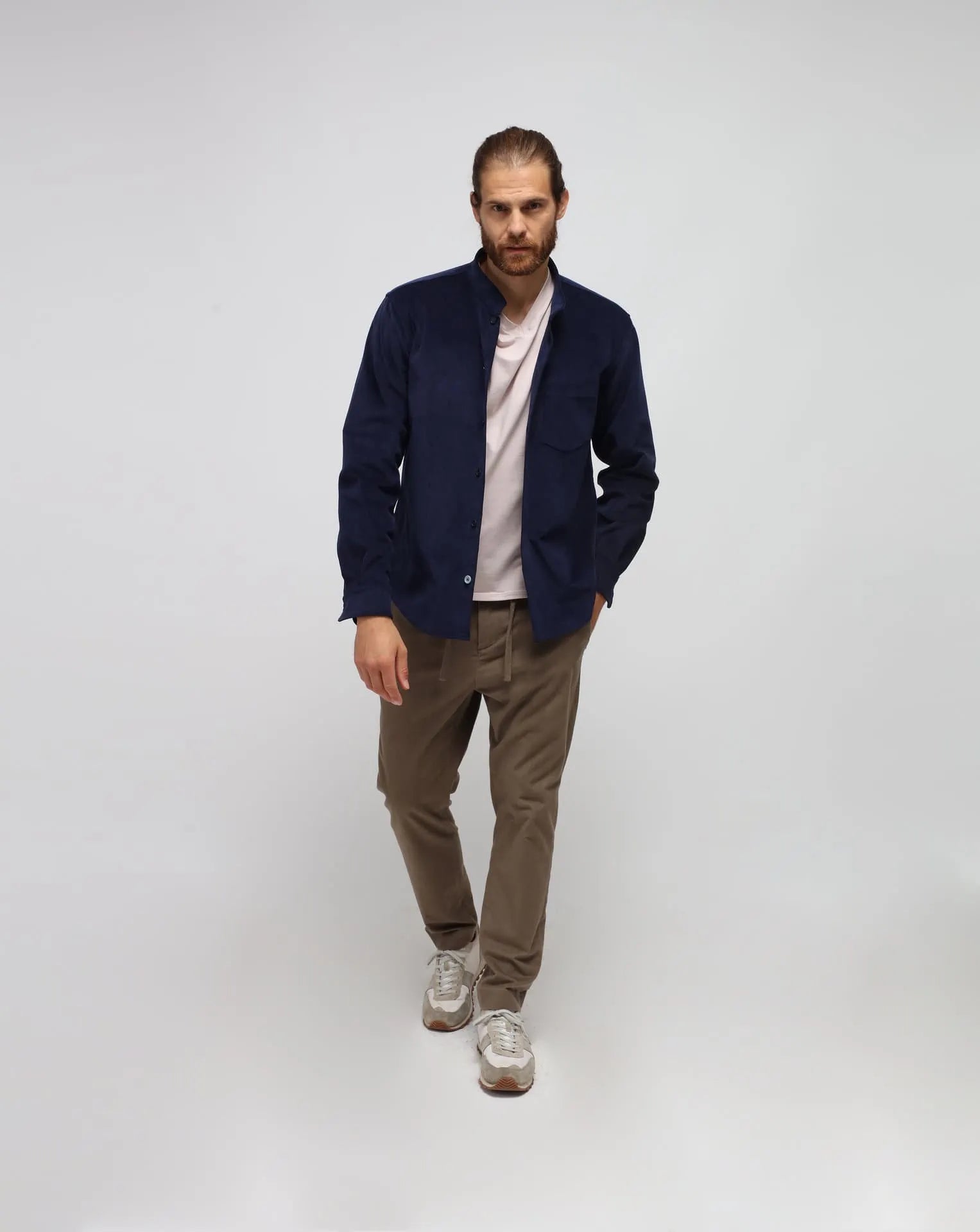
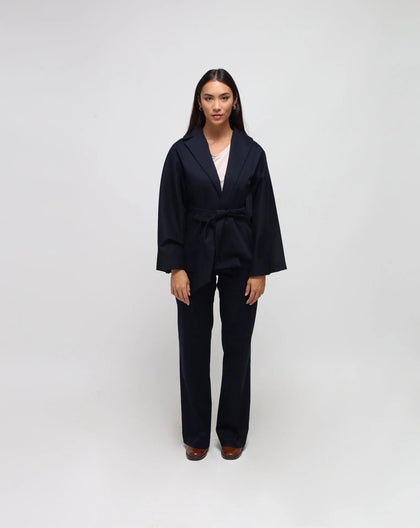
For a polished alternative to a blazer, pair a structured kimono jacket with tailored trousers and a fine-gauge knit or clean cotton shirt. Keep the palette restrained: black with charcoal, chocolate with cream, deep navy with stone. The jacket should feel intentional, not like an afterthought thrown over office basics.
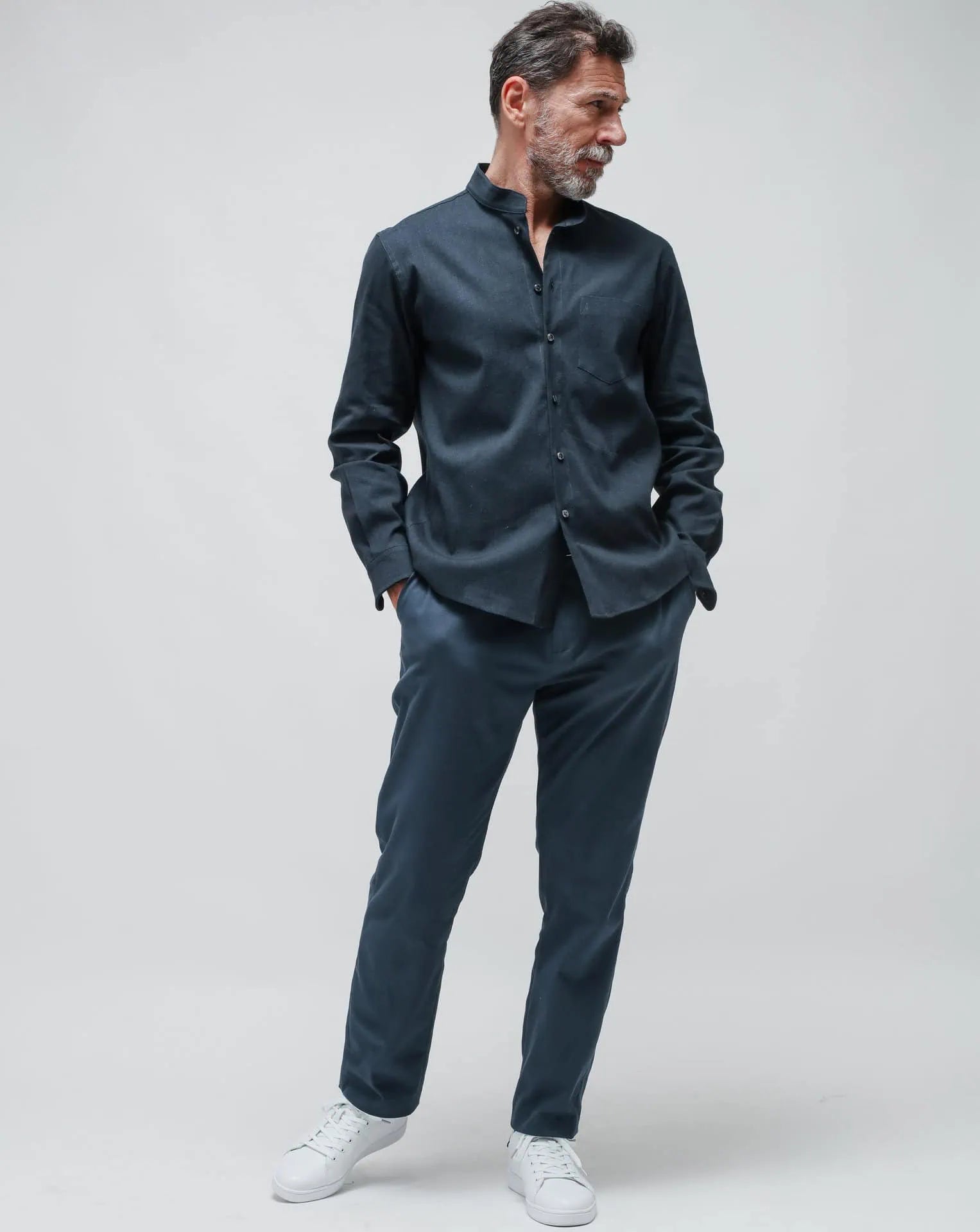
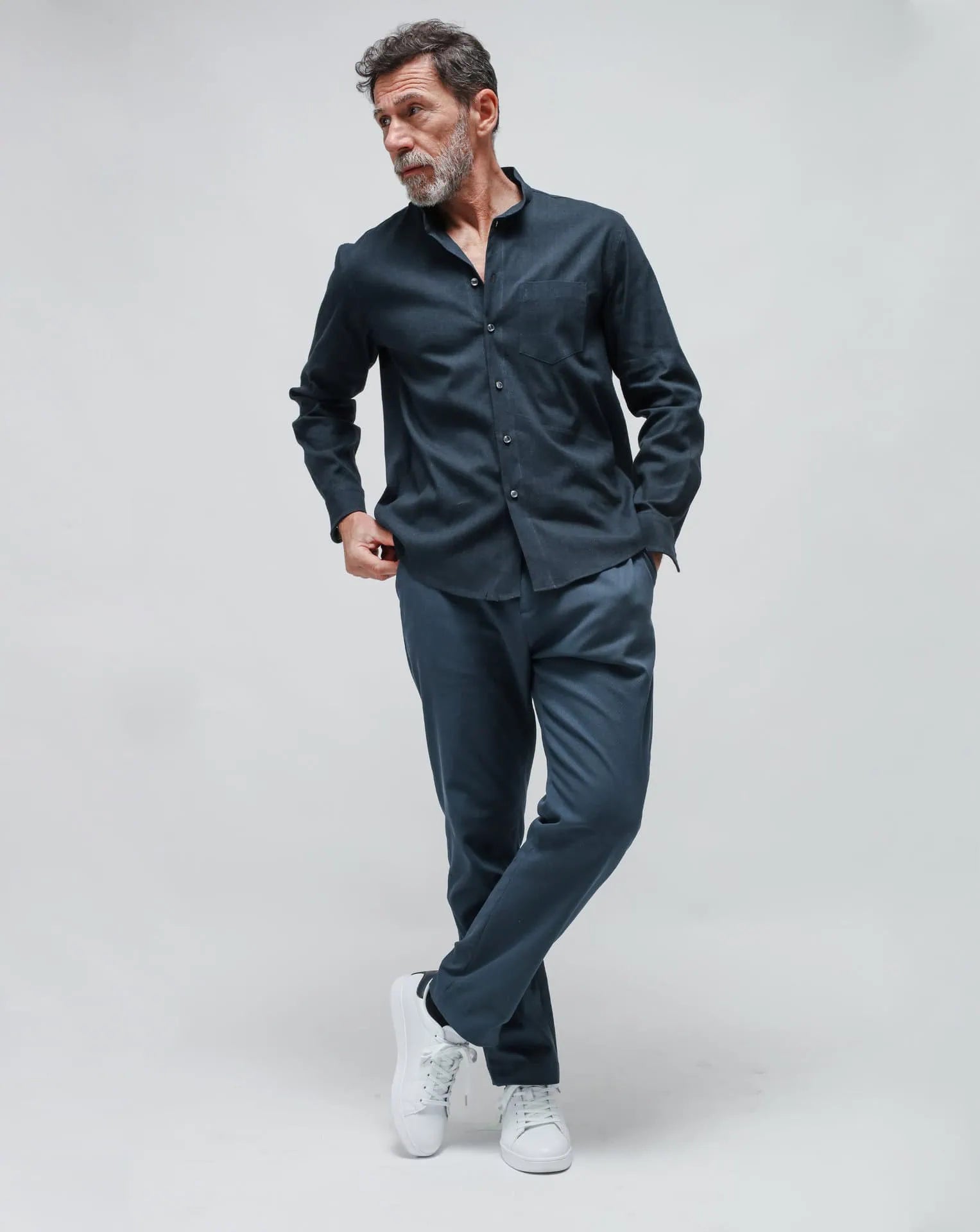
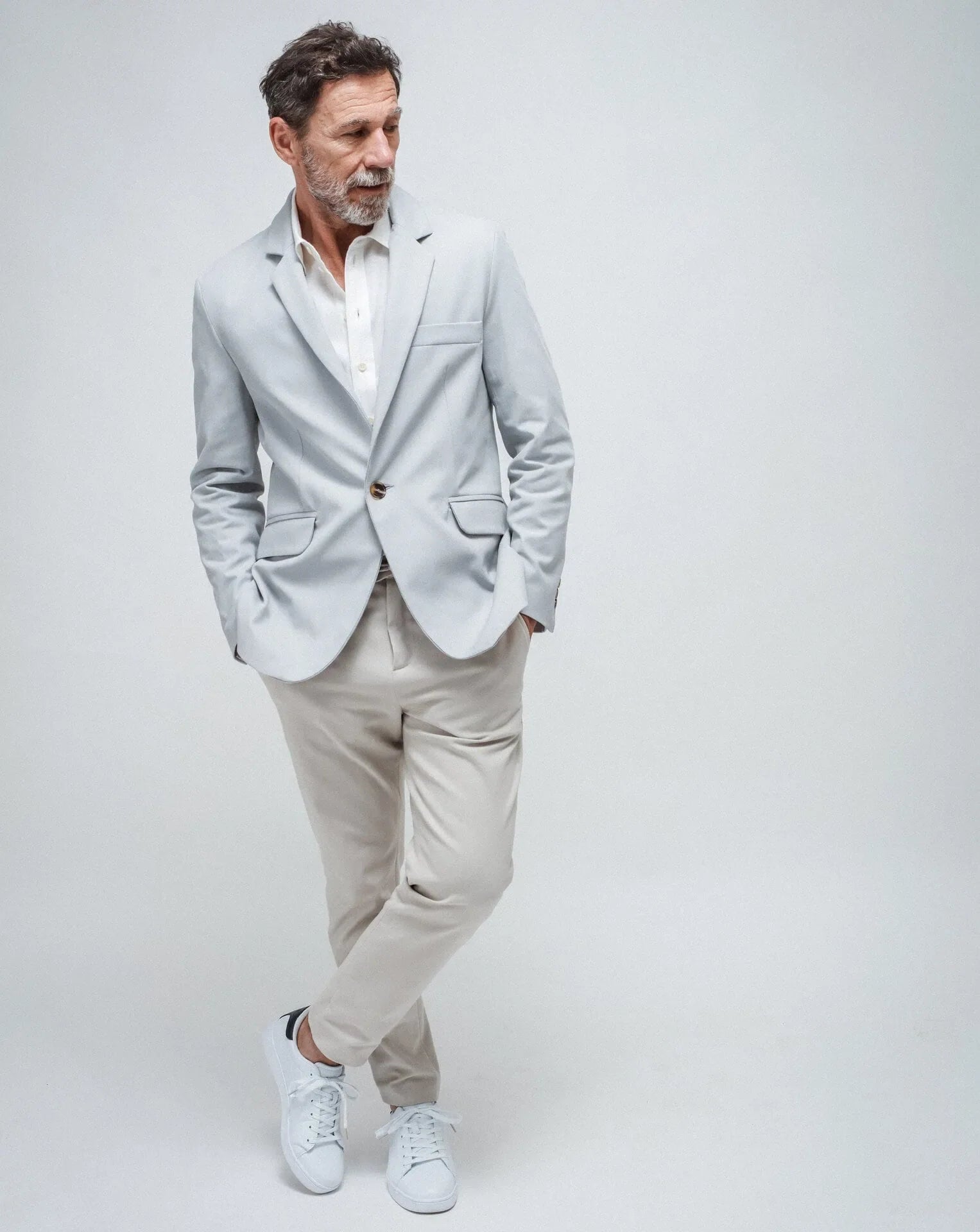
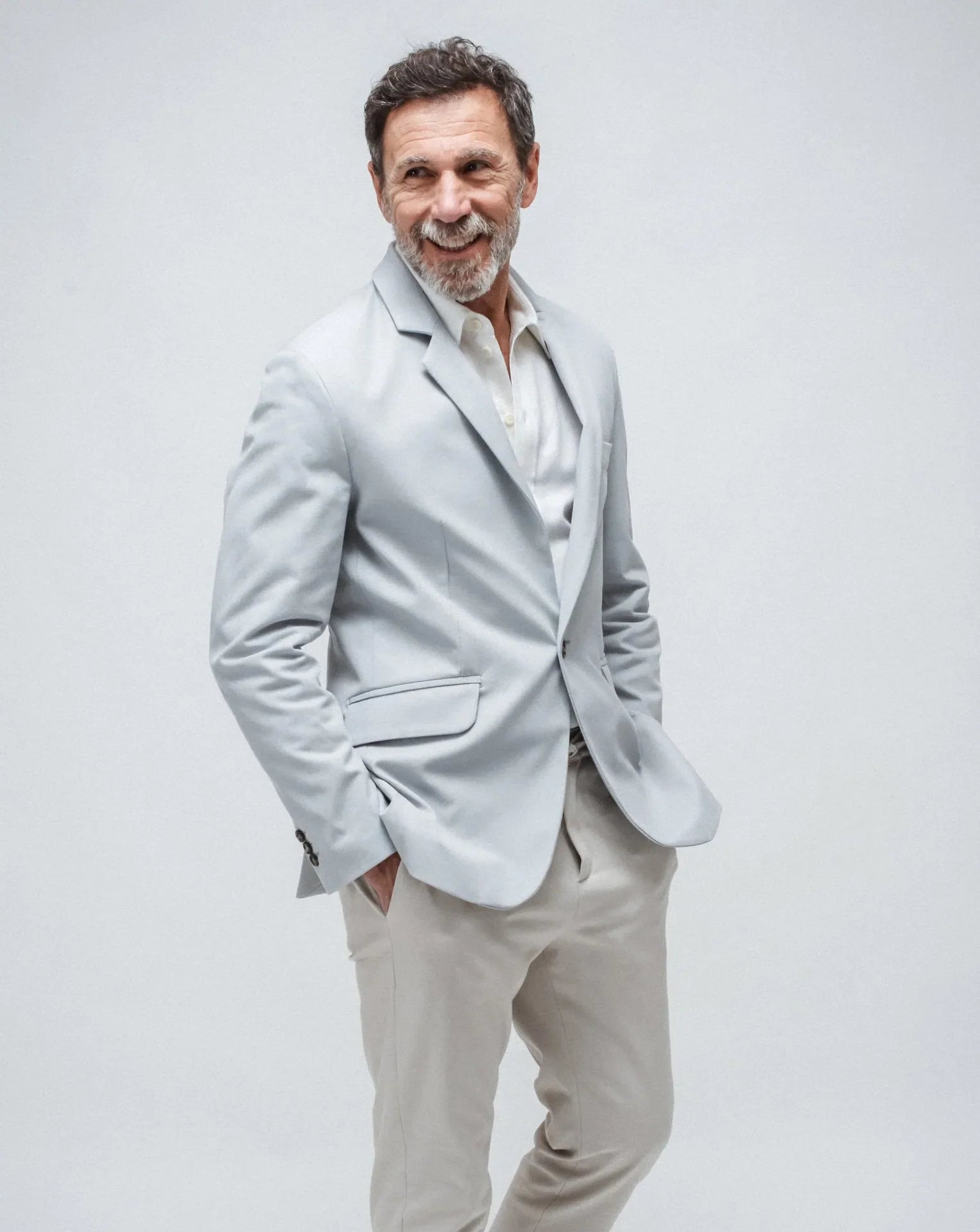
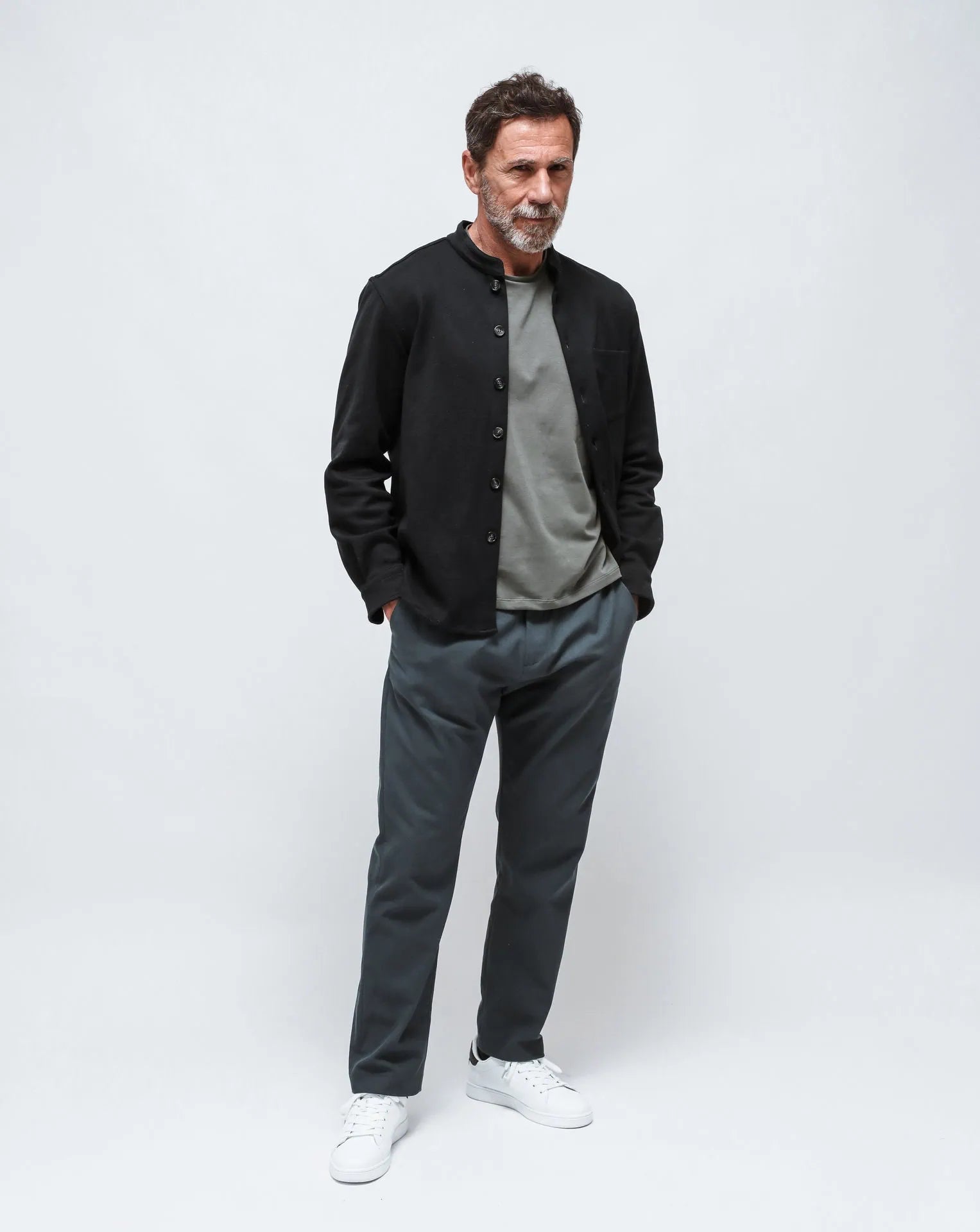
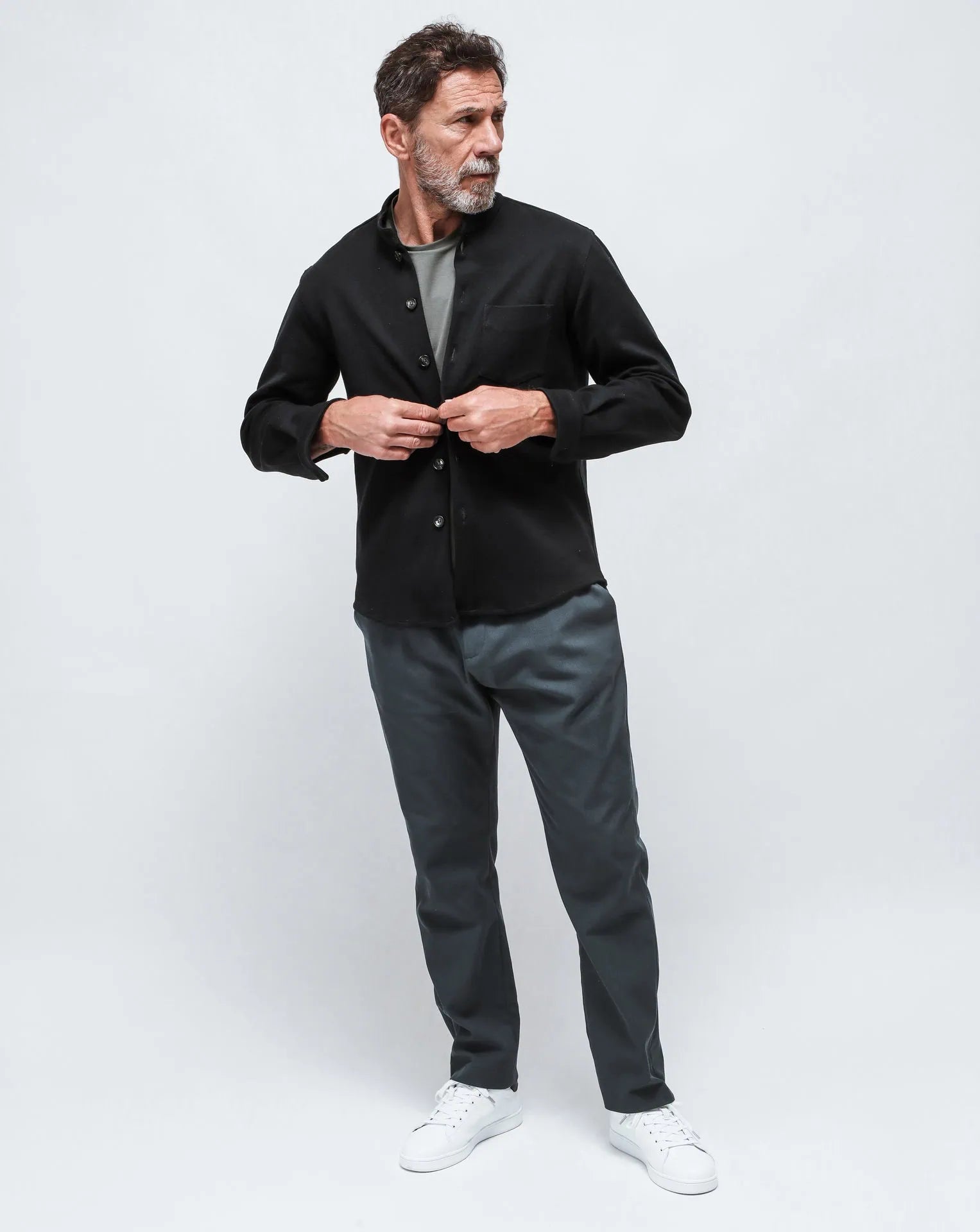
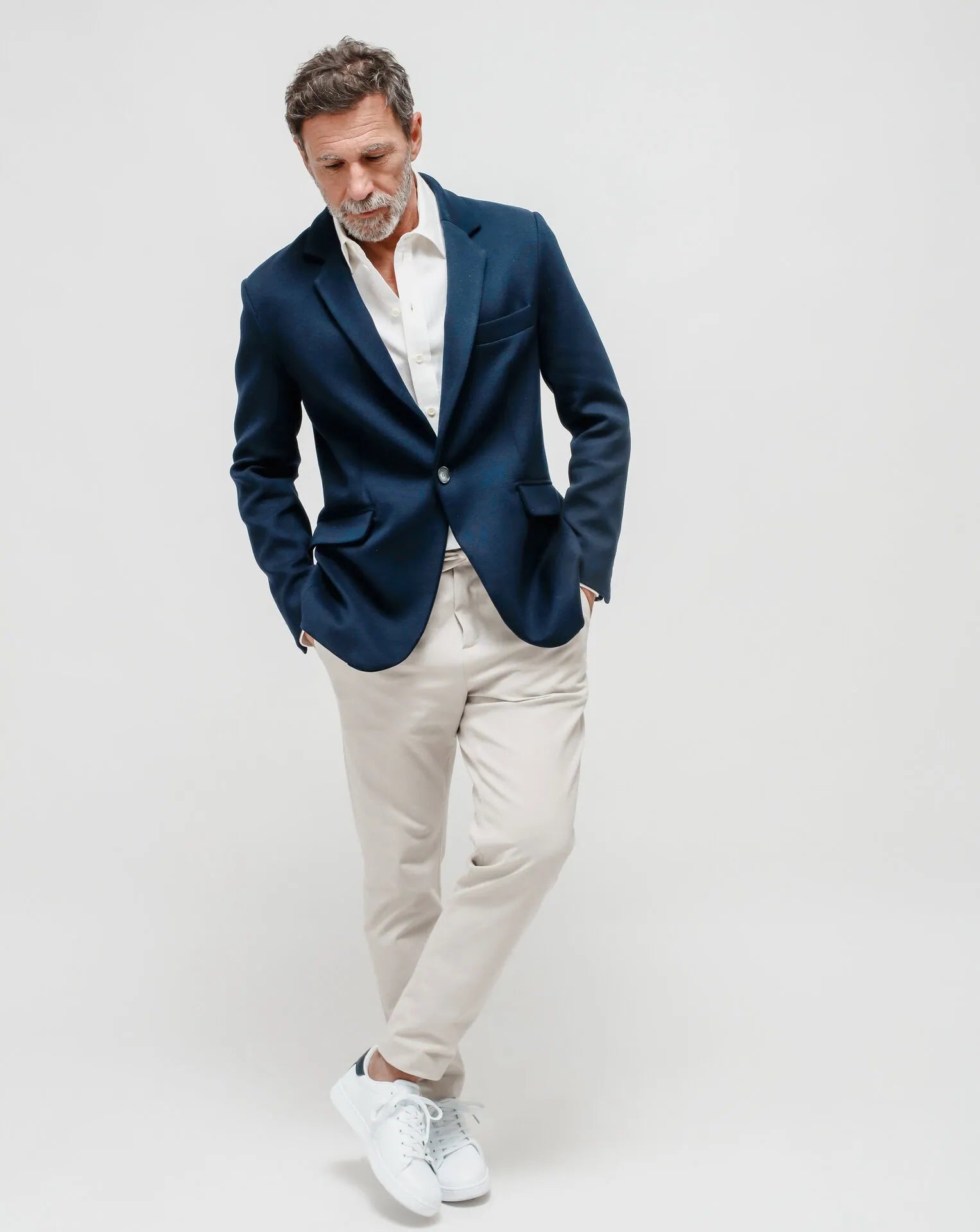
A women’s kimono jacket in a substantial deadstock wool can be worn with pleated pants and leather loafers. For men, a relaxed kimono-style jacket works over a merino crewneck with straight trousers and minimal sneakers or derbies. In both cases, a belt can be useful when the jacket has enough length and fabric to hold a soft wrap. If it does not, leave it open. Over-tightening a short or lightweight style can disrupt its drape.
2. Build a Tonal Look for Evenings
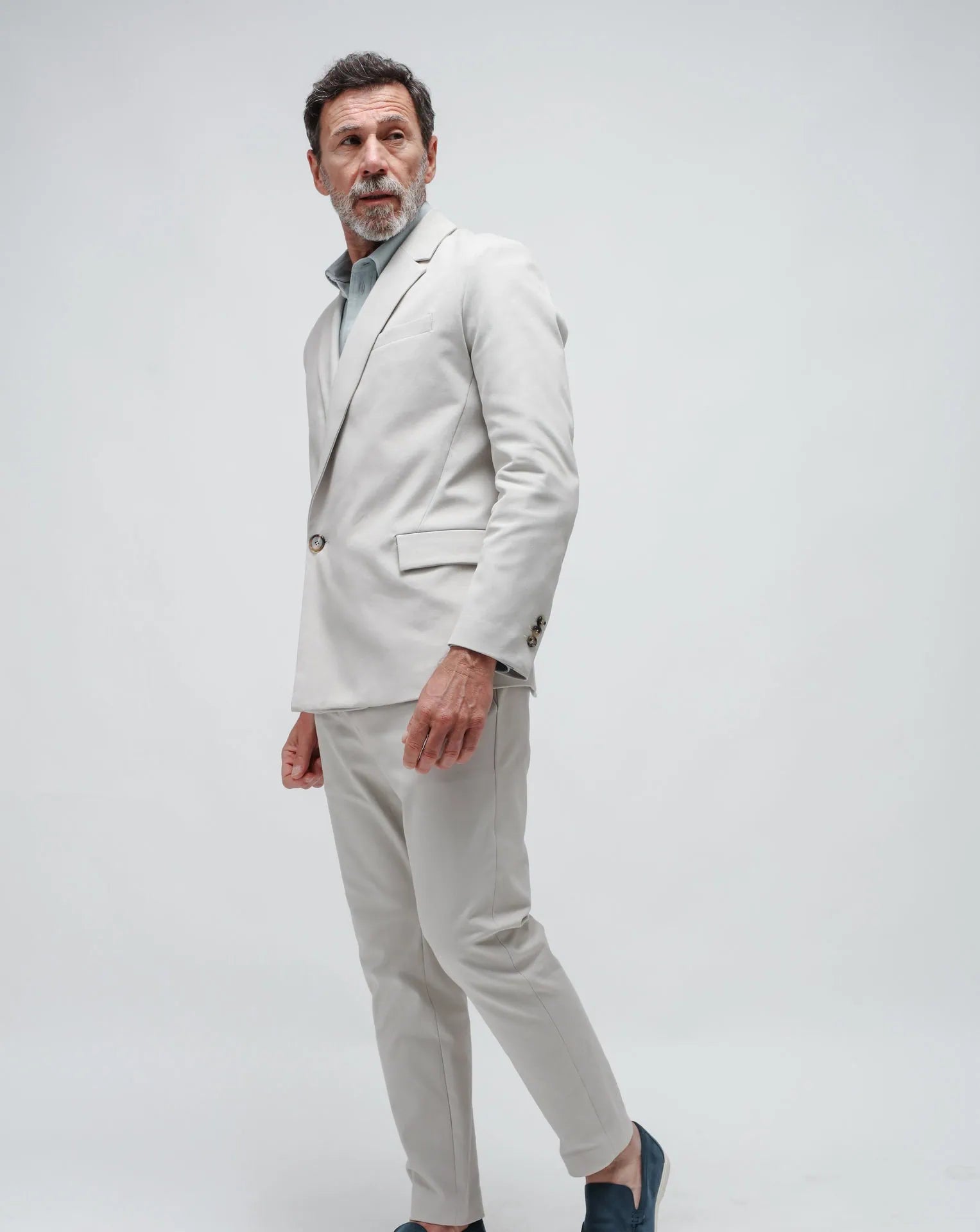
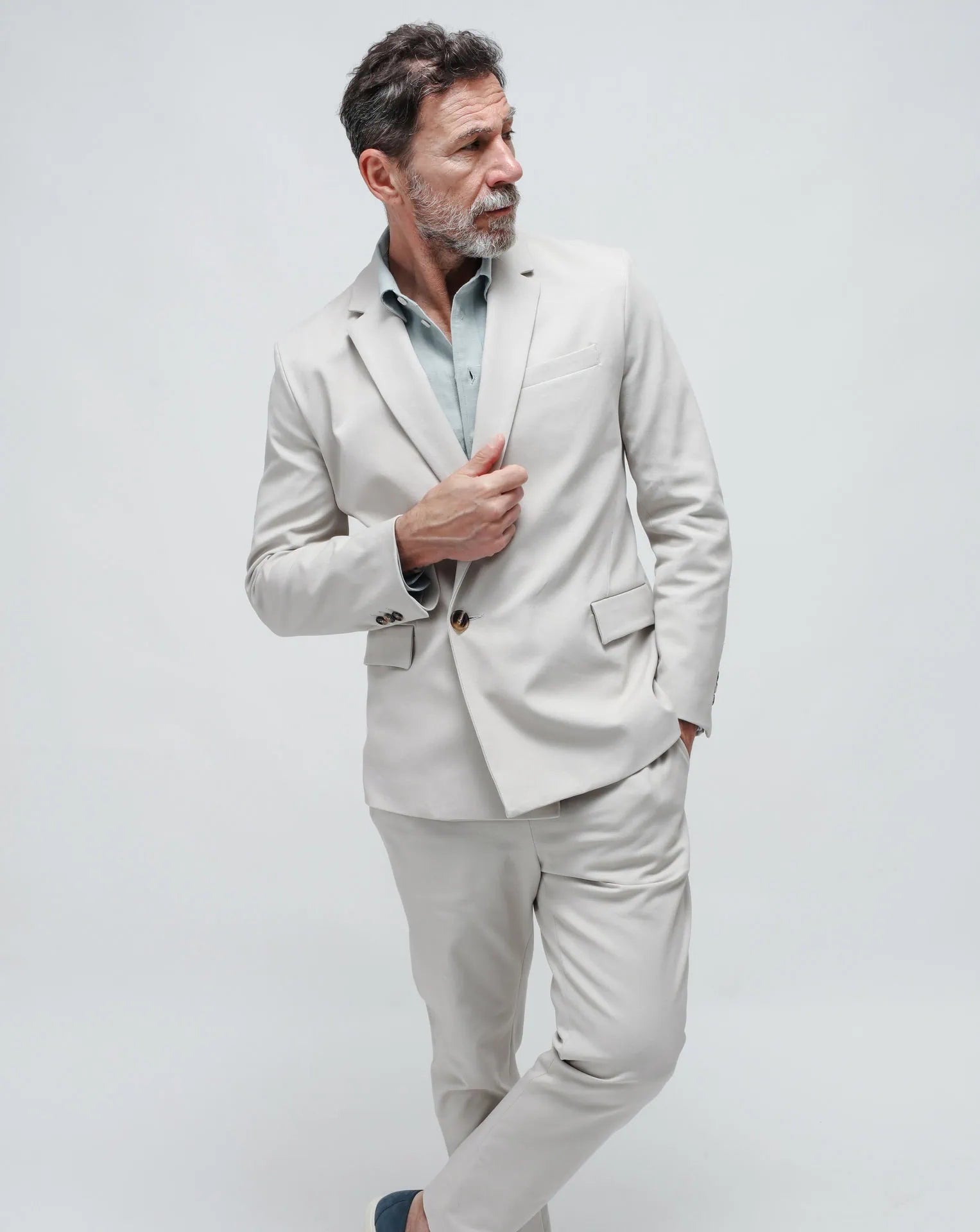
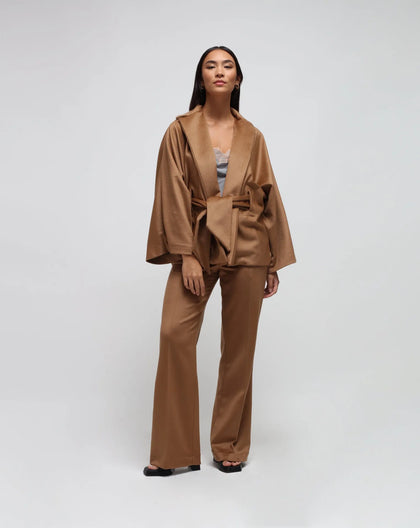
A tonal outfit makes the kimono jacket look quietly luxurious. Start with one color family, then add texture: a black jacket over a graphite knit and black trousers, or a tobacco jacket over a cinnamon tank and dark brown denim. The variation in material keeps the look dimensional without relying on loud contrast.
For dinner, gallery openings, or a winter event, let the jacket replace the expected blazer. Wear it over a slip skirt and boots, or over a crisp shirt with a relaxed suit pant. Keep jewelry sculptural but sparing. The jacket already brings visual interest through its sleeves and open neckline.
3. Use Denim to Make the Shape Feel Easy
Denim gives a kimono jacket daily relevance. The strongest pairing is usually straight or relaxed denim with a simple tee, tank, or knit underneath. Mid- or high-rise jeans provide a stable waistline that balances a loose jacket, while a tucked top prevents the outfit from becoming too voluminous.
This combination works especially well for travel days and weekends in cities like New York, Copenhagen, or Amsterdam, where an outfit needs to move between coffee, meetings, and dinner without a wardrobe change. Add refined leather boots for structure, or clean low-profile sneakers when comfort is the priority. Distressed denim can work, but a more polished wash will better match an elevated jacket in premium fabric.
4. Layer It Over a Dress Without Losing Shape
A kimono jacket gives dresses a grounded, less precious finish. Over a slip dress, it creates contrast between fluid lines and light structure. Over a knit dress, it adds warmth and a more architectural outline. Choose a jacket that ends at or above the widest part of the hip when wearing a midi dress, unless you are deliberately creating a long, layered silhouette.
For a winter wedding, dinner, or evening occasion, a wool kimono jacket over a long-sleeve column dress is a confident alternative to a cropped formal jacket. Avoid pairing a very oversized jacket with a dress that is equally full and heavily detailed. One piece should lead. If the dress has volume, choose a cleaner jacket. If the jacket has a bold weave or print, keep the dress simple.
5. Make It a Winter Layer, Not a Summer Cover-Up
Kimono jackets are often treated as warm-weather pieces, but the silhouette becomes more compelling in winter when built with weight. A wool or quilted version can sit between a shirt jacket and an indoor blazer. Layer it over a thin turtleneck, heavyweight tee, or fine merino sweater, then finish with tailored wool trousers or dark denim.
For outdoor wear, think of it as a middle layer. A longer overcoat should have enough room through the shoulders and sleeves to sit comfortably on top. This combination is practical in London, Paris, and Milan, where heated interiors make heavy outerwear impractical all day. Indoors, remove the coat and the kimono jacket remains composed.
A men’s kimono jacket in wool is especially useful here: worn with a roll-neck sweater, pleated trousers, and a substantial coat, it introduces ease to formal winter dressing. A women’s version can be styled with a narrow knit, wide-leg pants, and heeled ankle boots. The distinction lies in tailoring, not in restricting the silhouette by gender.
6. Let One Statement Element Lead
A printed or richly textured kimono jacket can carry an entire outfit. Give it a quiet foundation: solid trousers, a plain tee, understated shoes. If your jacket has embroidery, contrast piping, or a distinct jacquard weave, repeat no more than one color from it elsewhere in the look.
Conversely, a solid black, ivory, olive, or deep blue jacket is a wardrobe anchor. It can support a patterned scarf, striped shirt, textured bag, or bold shoe. Buying fewer pieces with this level of versatility is a more thoughtful response to the fashion cycle than collecting novelty layers that only work once.
7. Choose the Right Fit Before Styling It
The shoulder should sit comfortably, even when the cut is dropped. Sleeves should allow free movement without covering your hands, unless the design intentionally calls for an elongated proportion. When worn open, the jacket should skim rather than pull across the chest and back.
Pay close attention to fabric composition and construction. A small-batch piece made from deadstock fabric may have limited availability, but that scarcity reflects a more responsible production model: existing materials are given a future rather than left unused. It also means measurements matter. Check the garment dimensions, consider how you plan to layer it, and use a size exchange if the intended balance is not right.
The best kimono jacket is not reserved for an occasion. It is the layer that makes familiar clothes feel newly considered, then earns its place through years of wear rather than a single season.
FAQ
Q: What do you wear under a kimono jacket?
A: A fitted tank, fine knit, tee, button-down shirt, or slim dress all work well. Choose a base layer that gives definition beneath the jacket’s relaxed shape.
Q: Can you wear a kimono jacket in winter?
A: Yes. Choose wool, quilted, or heavier deadstock fabrics, layer over merino or a turtleneck, and wear a roomier overcoat outside when needed.
Q: Should a kimono jacket be worn open or belted?
A: Wear it open for the most natural drape. Belt it only when the jacket has enough length and fabric to create a soft, intentional wrap without pulling.
Q: Can men wear kimono jackets?
A: Absolutely. A contemporary kimono jacket is a versatile unisex silhouette. Men can pair it with straight trousers, knitwear, denim, and structured outerwear.
Q: Are kimono jackets appropriate for work?
A: They can be, particularly in solid, structured fabrics. Pair one with tailored pants, refined knitwear, and clean footwear for a modern office-ready look.
the World of H&L