


A Guide to Korean Collar Jackets for Winter
A Korean collar jacket changes the line of an outfit before you add a single accessory. Its upright neckline frames the face, clears the chest, and brings a quiet sense of structure to even the simplest knit and trouser pairing. This guide to Korean collar jackets explains how to recognize the silhouette, choose the right fit and fabric, and wear it through the colder months with intention.
What is a Korean collar jacket?
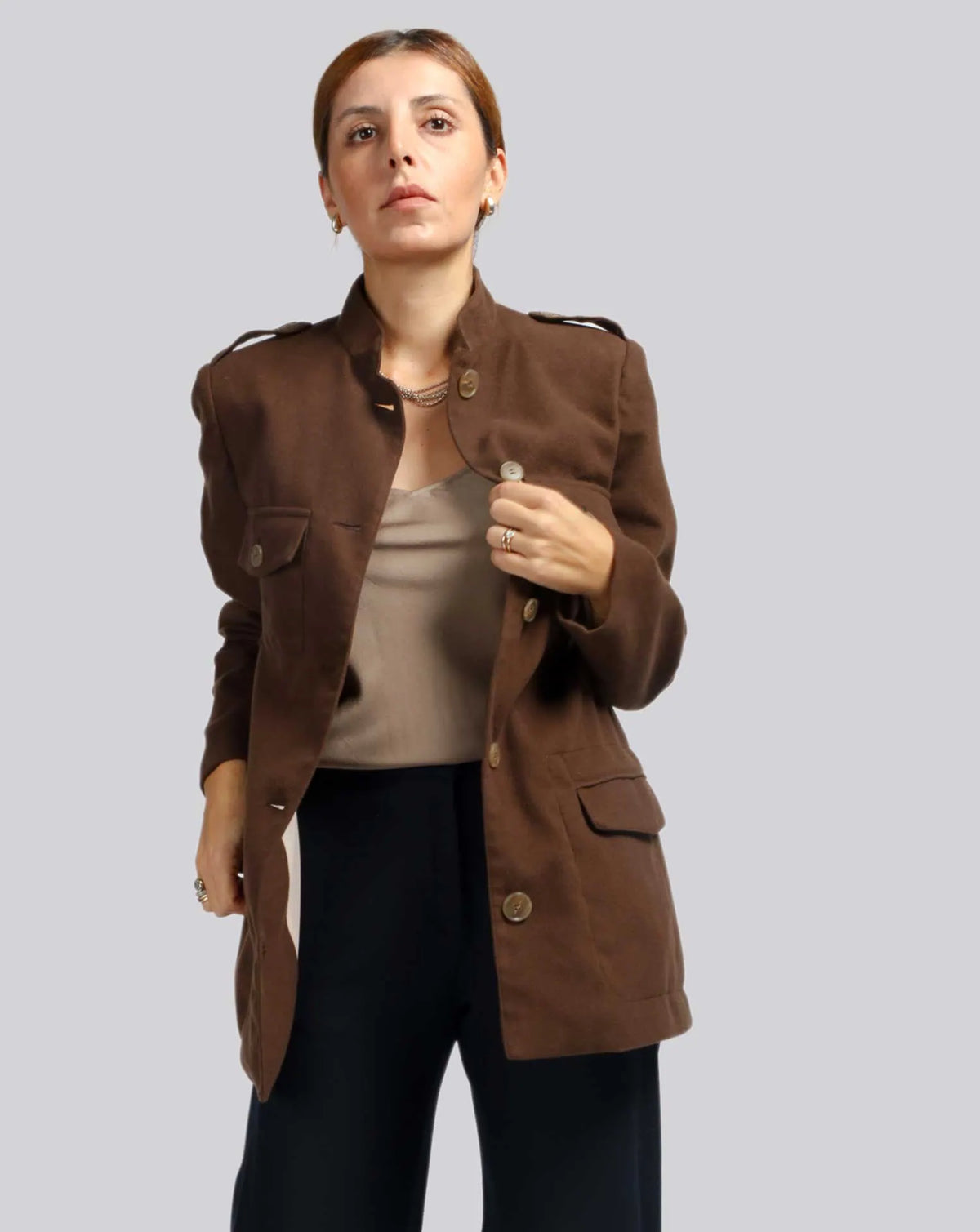
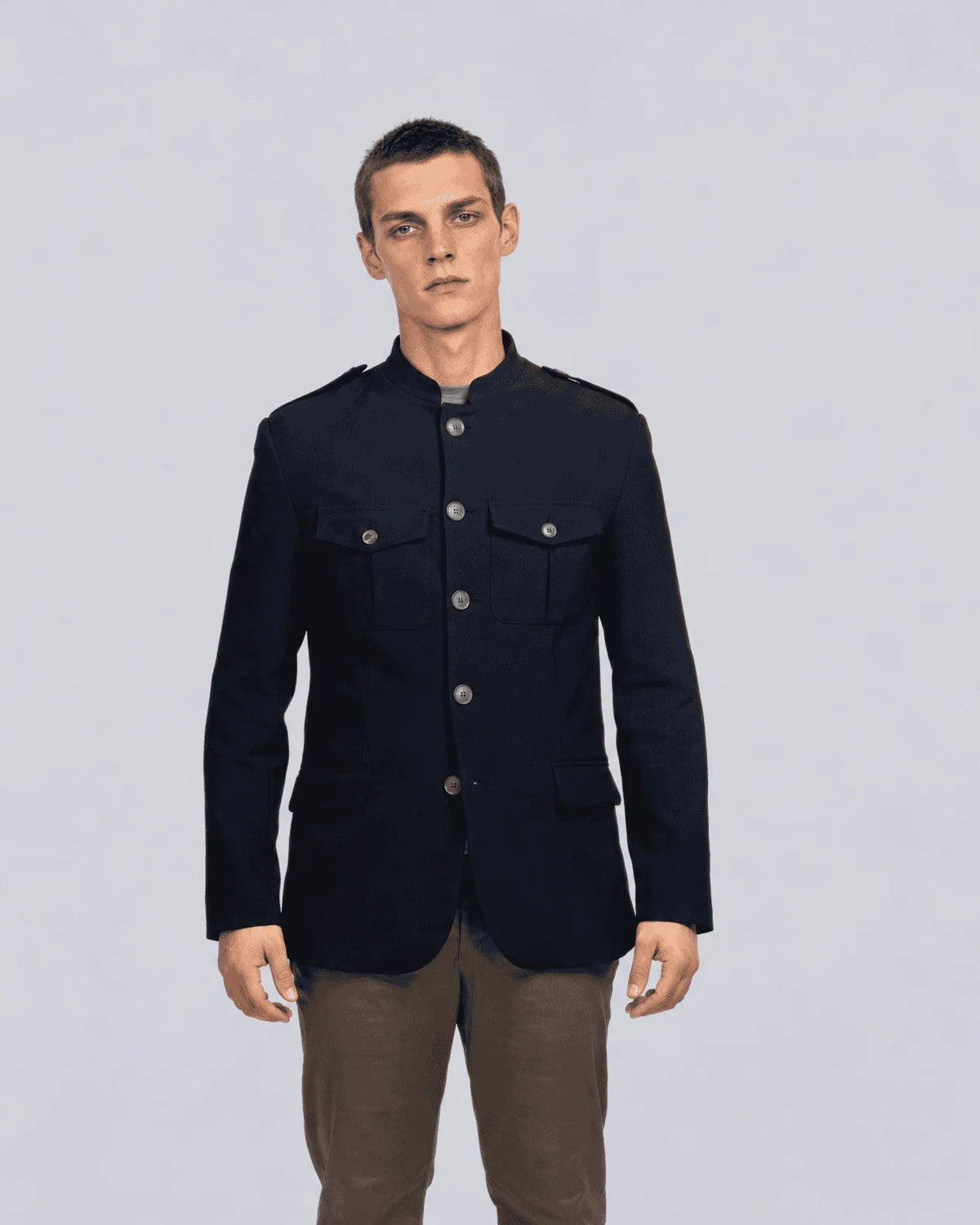
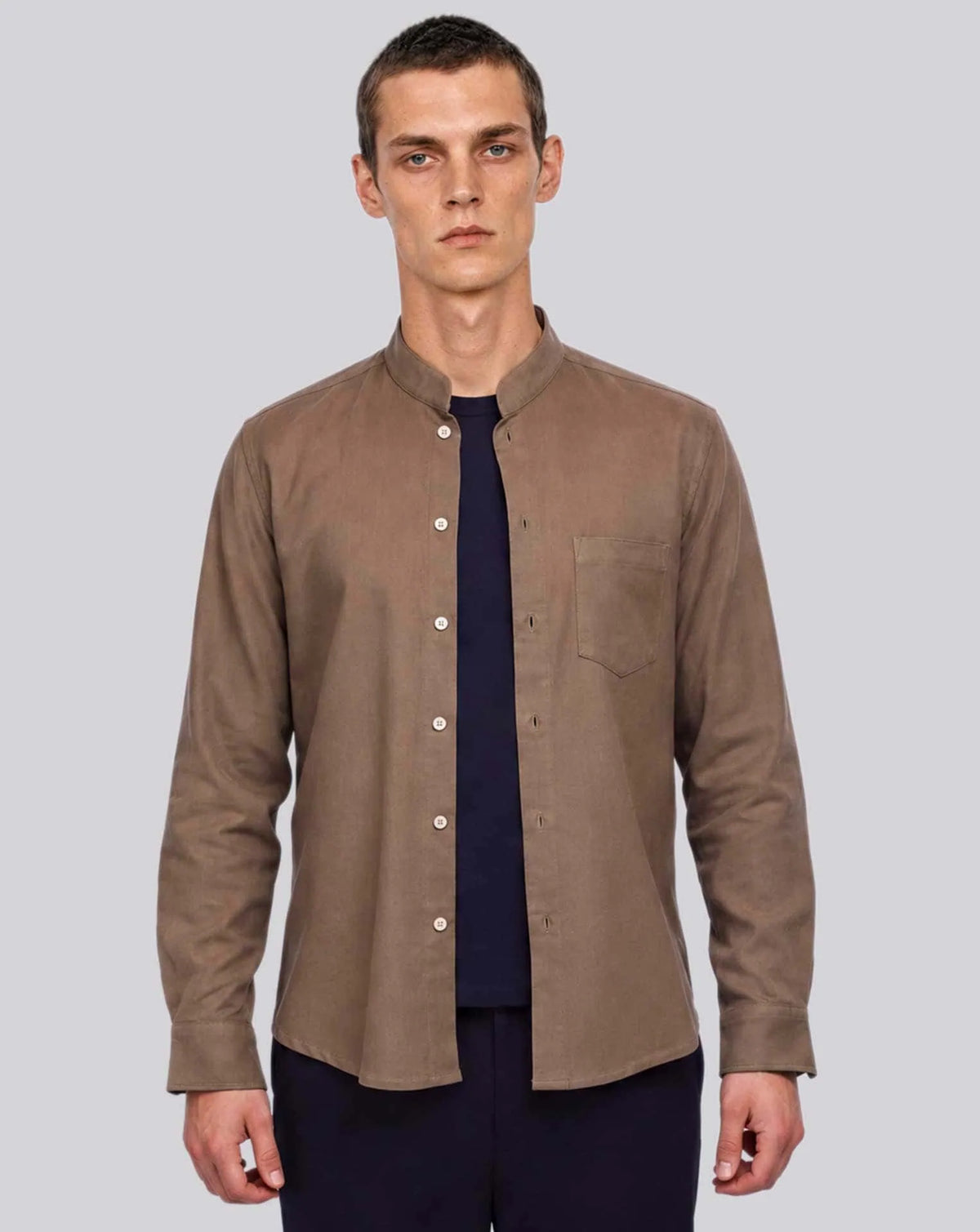
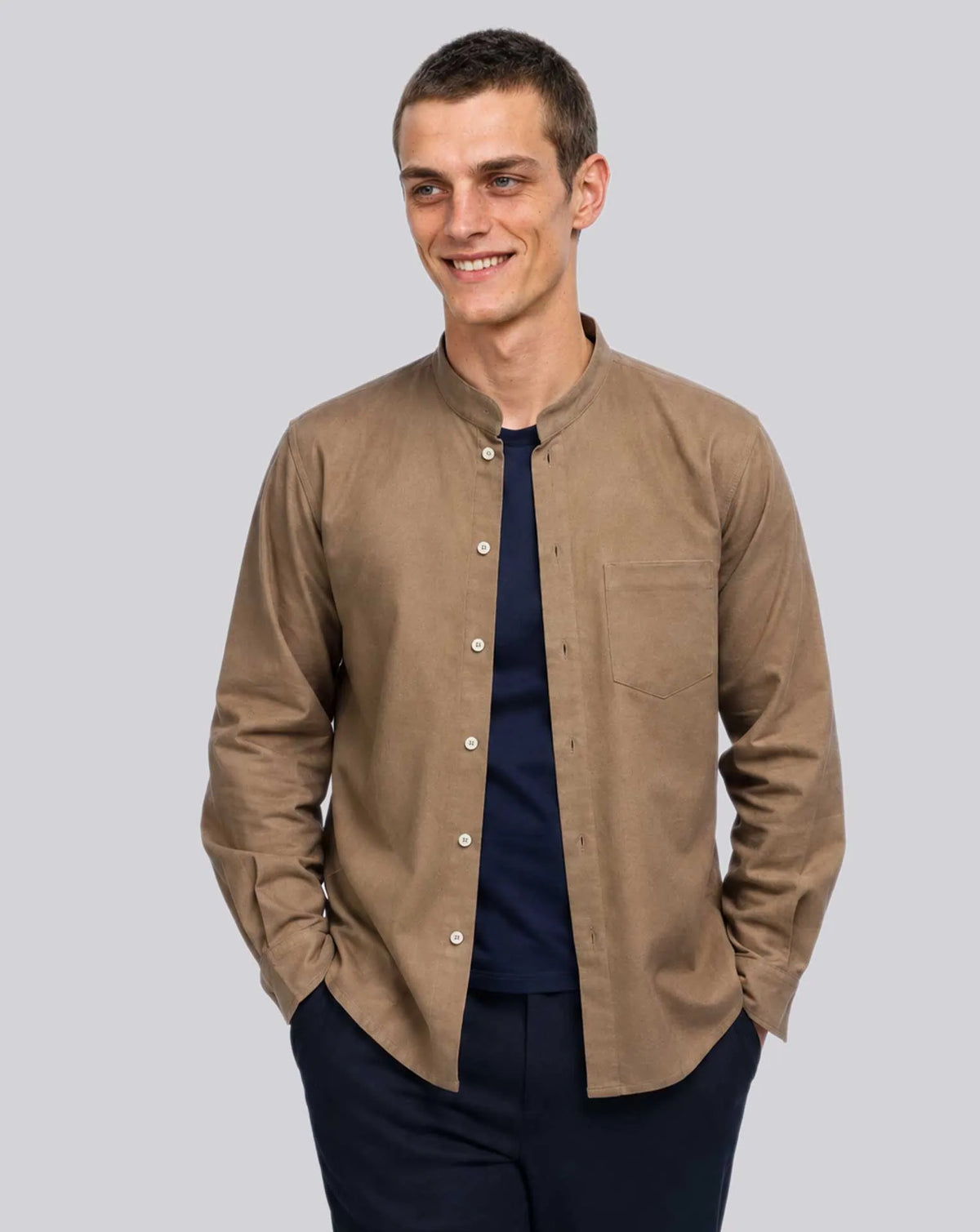
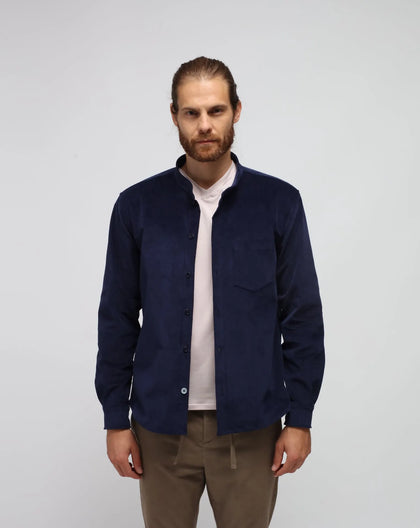
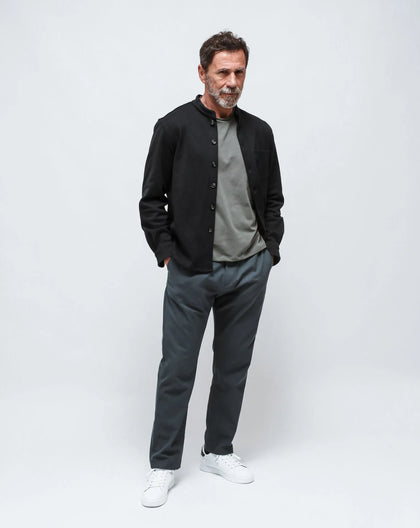
A Korean collar is a short, stand-up collar that sits close to the neck without folding over like a shirt collar or lapel. It is often called a band collar, standing collar, or Mandarin-style collar, though the details are not always identical. In modern tailoring, the Korean collar typically has a clean, minimal construction and a small opening at the front.
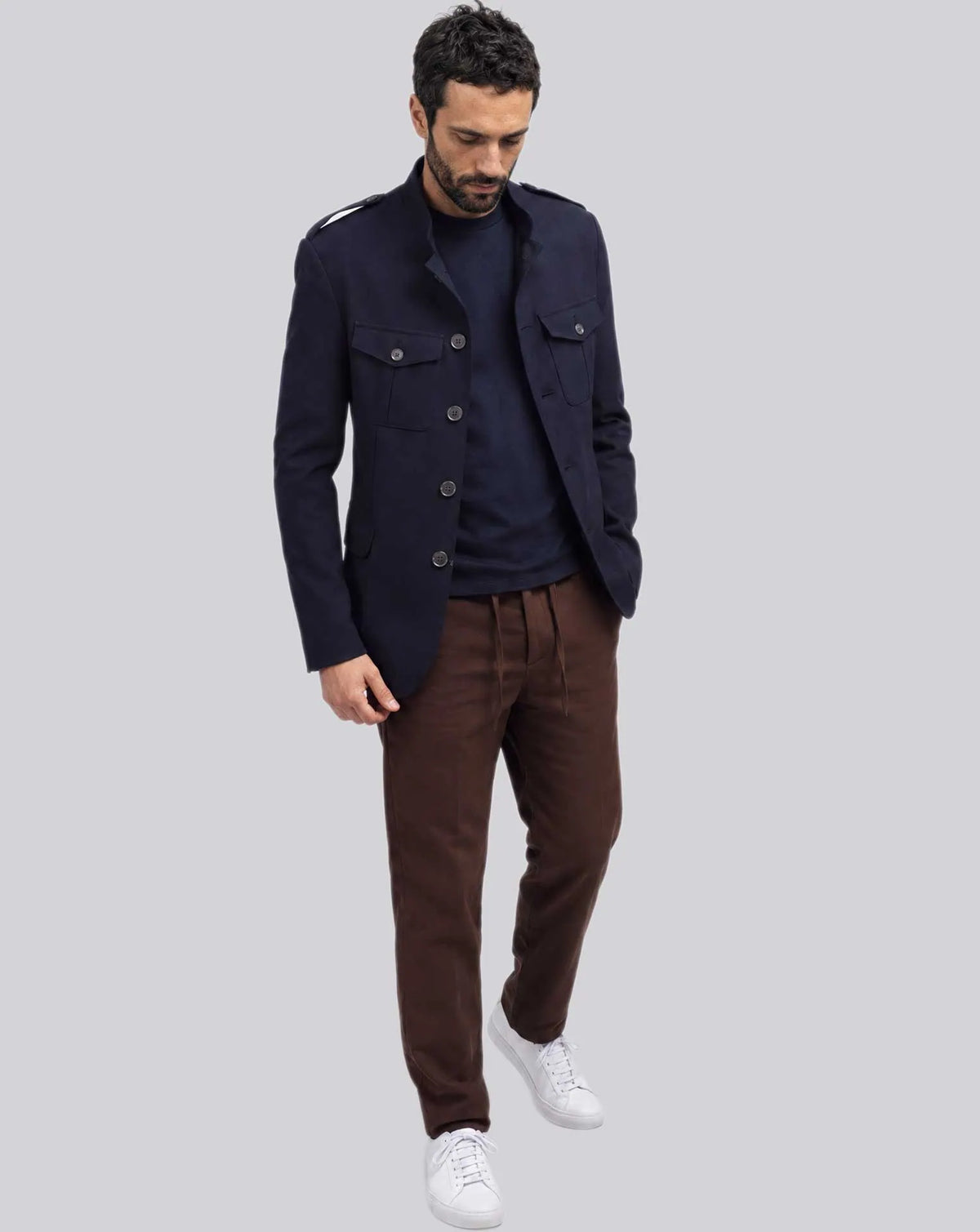
On a jacket, that detail creates a more architectural profile than a classic blazer. There are no broad lapels to compete with a scarf, crewneck, or statement earring. The focus stays on proportion, fabric, and the precision of the cut.
This is why the style works so well as an elevated essential. It can feel formal without appearing corporate, and relaxed without losing definition. A well-made Korean collar jacket has presence, but it does not need excess hardware or decoration to make its point.


Why this collar earns a place in a considered wardrobe
The strongest wardrobes rely on pieces that solve more than one dressing problem. A Korean collar jacket can act as a light outer layer in early fall, a polished indoor layer at the office, or an insulating mid-layer beneath a wool coat in winter. Its close neckline also makes it especially practical in cold weather, when open lapels can feel exposed.
The silhouette is versatile because it is neither strictly masculine nor feminine. On women, it can sharpen the softness of a slip skirt, wide-leg trouser, or fine-gauge knit dress. On men, it offers a refined alternative to a conventional blazer, working equally well with tailored pants, dark denim, or a merino turtleneck.
It also travels well. For a winter weekend in New York, London, Copenhagen, or Amsterdam, a stand-collar jacket keeps a compact visual line under a coat while still looking complete once you step indoors. Choose one in a neutral tone and it can carry multiple looks without overpacking.
The trade-off is that the collar is more distinctive than a standard lapel. If your wardrobe is built around traditional business suiting, it may not replace every blazer. Think of it instead as the jacket you reach for when you want tailoring with a cleaner, more modern point of view.
How a Korean collar jacket should fit
Fit determines whether this style feels intentional or restrictive. Begin at the neck. The collar should sit upright with a little breathing room, not press into the throat or bow away from it. You should be able to turn your head and layer a fine knit underneath without strain.
At the shoulders, look for a clean line that ends where your natural shoulder does. Dropped shoulders can work in an intentionally relaxed design, but too much excess can flatten the collar’s crisp effect. The sleeves should allow you to bend your arms easily, especially if you plan to wear the jacket as a winter layer.
The body should follow the intended silhouette. A cropped, boxier jacket pairs naturally with high-rise pants and skirts. A hip-length or longer style is often more adaptable for commuting and can create an elegant vertical line over straight-leg trousers. If the jacket closes at the front, make sure it does so without pulling across the chest, back, or hips.
When trying on a tailored piece online, use garment measurements rather than relying only on your usual size. Compare shoulder width, chest, and sleeve length with a jacket you already wear often. Free size exchanges make it easier to prioritize the correct fit rather than settling for what is merely close.
Choose fabric for the season, not just the look
A collar this clean places fabric under close inspection. Texture, weight, and drape become the design. For winter, choose materials with enough body to hold the stand collar while remaining comfortable indoors.
Wool and wool blends offer warmth, shape, and a naturally elevated finish. Brushed wool gives the style a softer, more relaxed character, while tightly woven wool feels sharper and more tailored. Cotton twill can be useful for mild winters or as a transitional layer, but it will not provide the same insulation on its own.
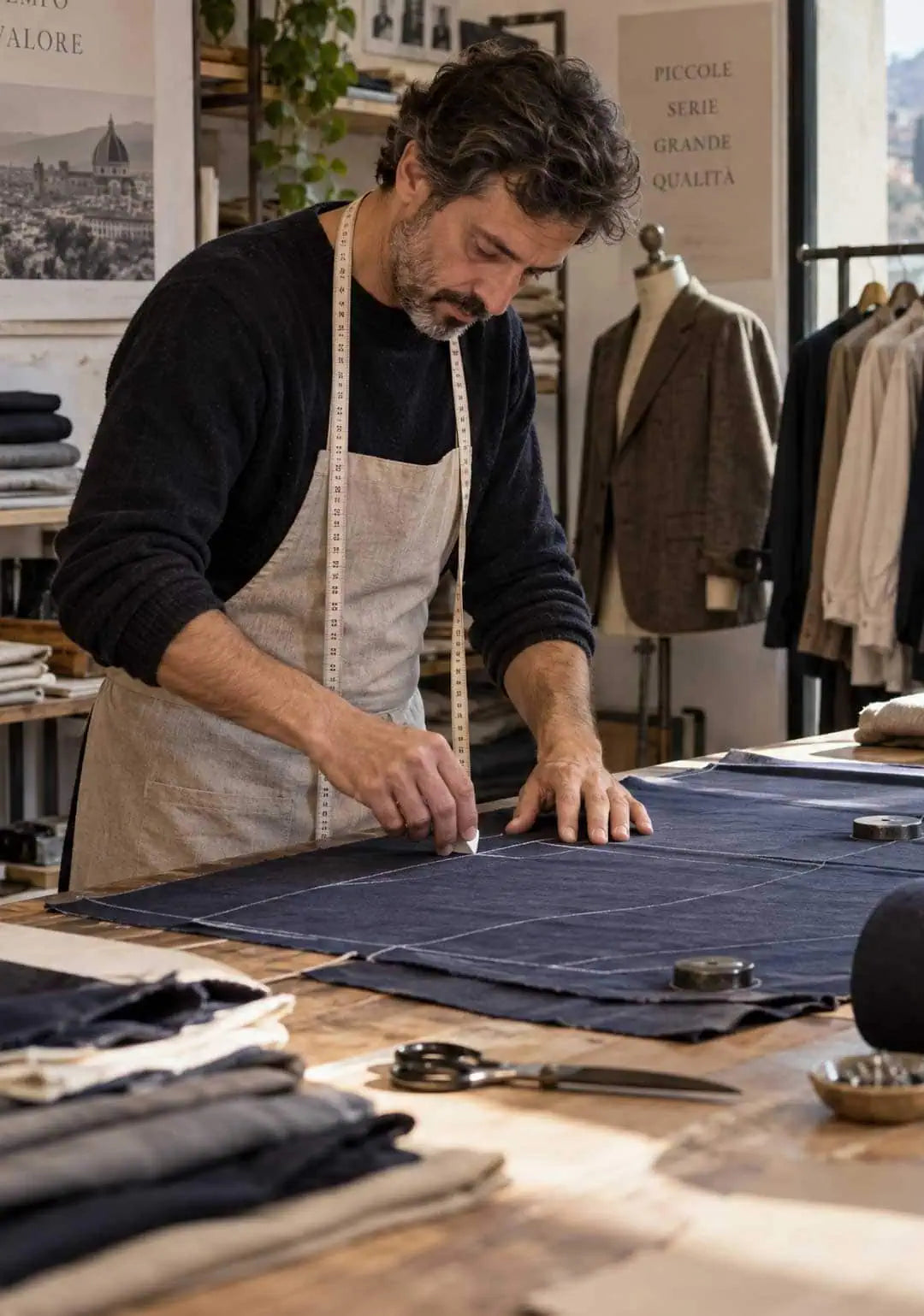
Deadstock fabrics deserve particular attention here. These are high-quality surplus textiles that already exist but would otherwise risk being discarded. Used thoughtfully in small-batch production, they create limited editions with substance: less demand for newly produced fabric, more character in every weave, and a piece that is not repeated at mass scale.
Check the lining as carefully as the outer fabric. A fully lined Korean collar jacket glides more easily over knitwear and usually holds its shape better. A lightly lined or unlined version may feel less bulky, which is useful if you expect to layer it under a larger coat. Neither is automatically better. The right choice depends on your climate, commute, and how you prefer to build outfits.
Styling Korean collar jackets in winter
The easiest formula begins with tonal layers. A charcoal Korean collar jacket over a black merino knit and deep gray trousers creates depth without visual noise. A cream or stone version over chocolate brown, navy, or washed black offers the same restraint with a brighter finish.
For women, pair a structured stand-collar jacket with a ribbed knit dress, opaque tights, and tall leather boots. The jacket’s straight lines balance the softness of knitwear. For a more tailored look, wear it with high-waisted pleated trousers and a fitted mock neck. Keep jewelry deliberate: sculptural earrings or a single substantial ring are enough.
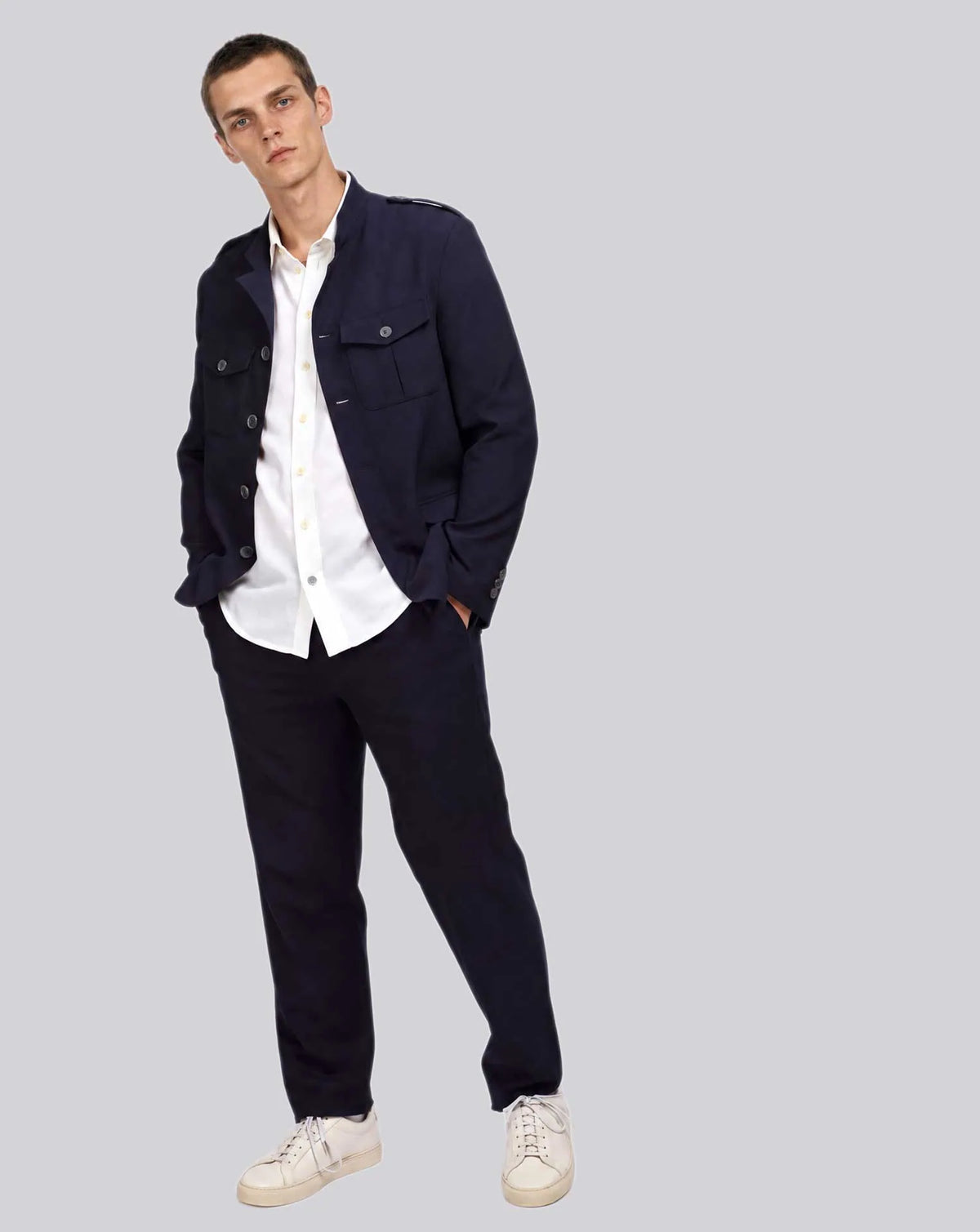
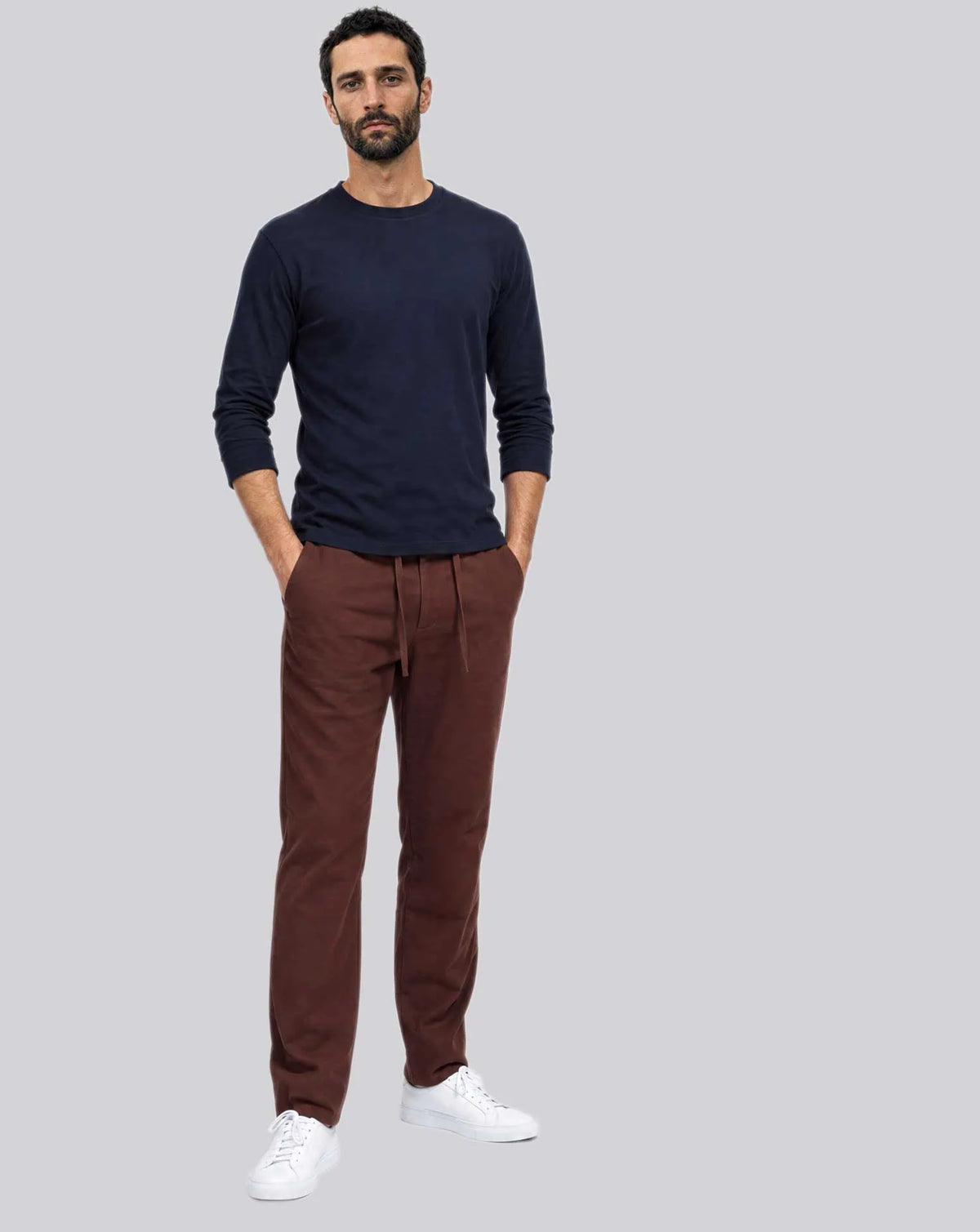
For men, a Korean collar jacket works exceptionally well with a fine-gauge turtleneck, straight wool pants, and polished boots. For a less formal version, use a heavyweight T-shirt or merino crewneck with dark denim and minimal sneakers. The jacket brings the outfit into focus without asking for a dress shirt and tie.
A scarf should sit around the collar, not fight it. Choose a narrow wool scarf or a soft brushed style that can tuck inside an overcoat. Avoid bulky knots directly under the neckline, where they can distort the jacket’s shape.
For an evening out, let the jacket replace the expected blazer. Wear a black stand-collar design with fluid pants and leather shoes, or over a silk top and tailored skirt. The result is composed rather than overdressed.
Build a winter look around the jacket
A Korean collar jacket is most useful when it works with what you already own. Start with a compact color palette: black, charcoal, midnight navy, tobacco, olive, cream, or deep burgundy. These shades allow the piece to move between work, dinner, travel, and weekend plans.
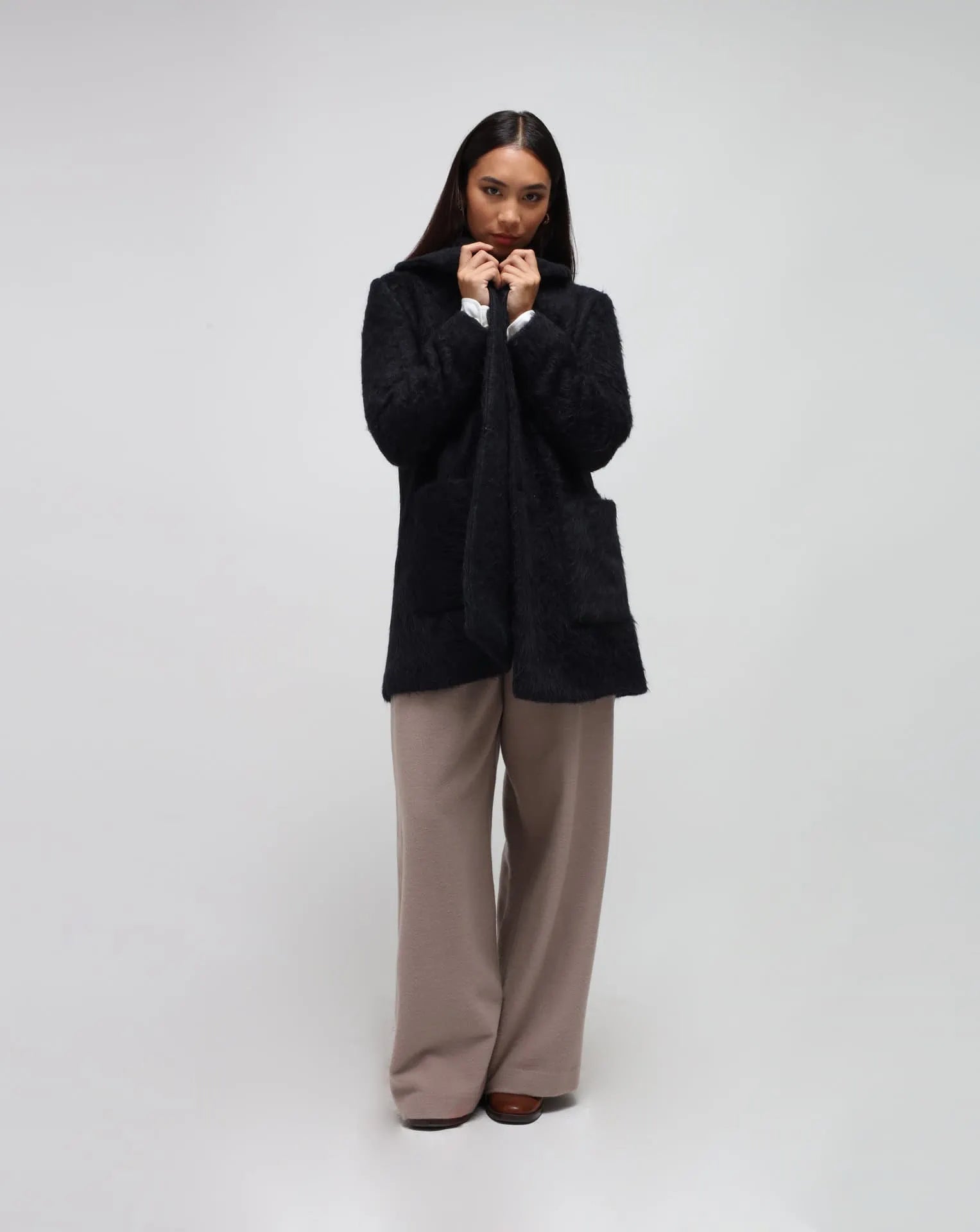
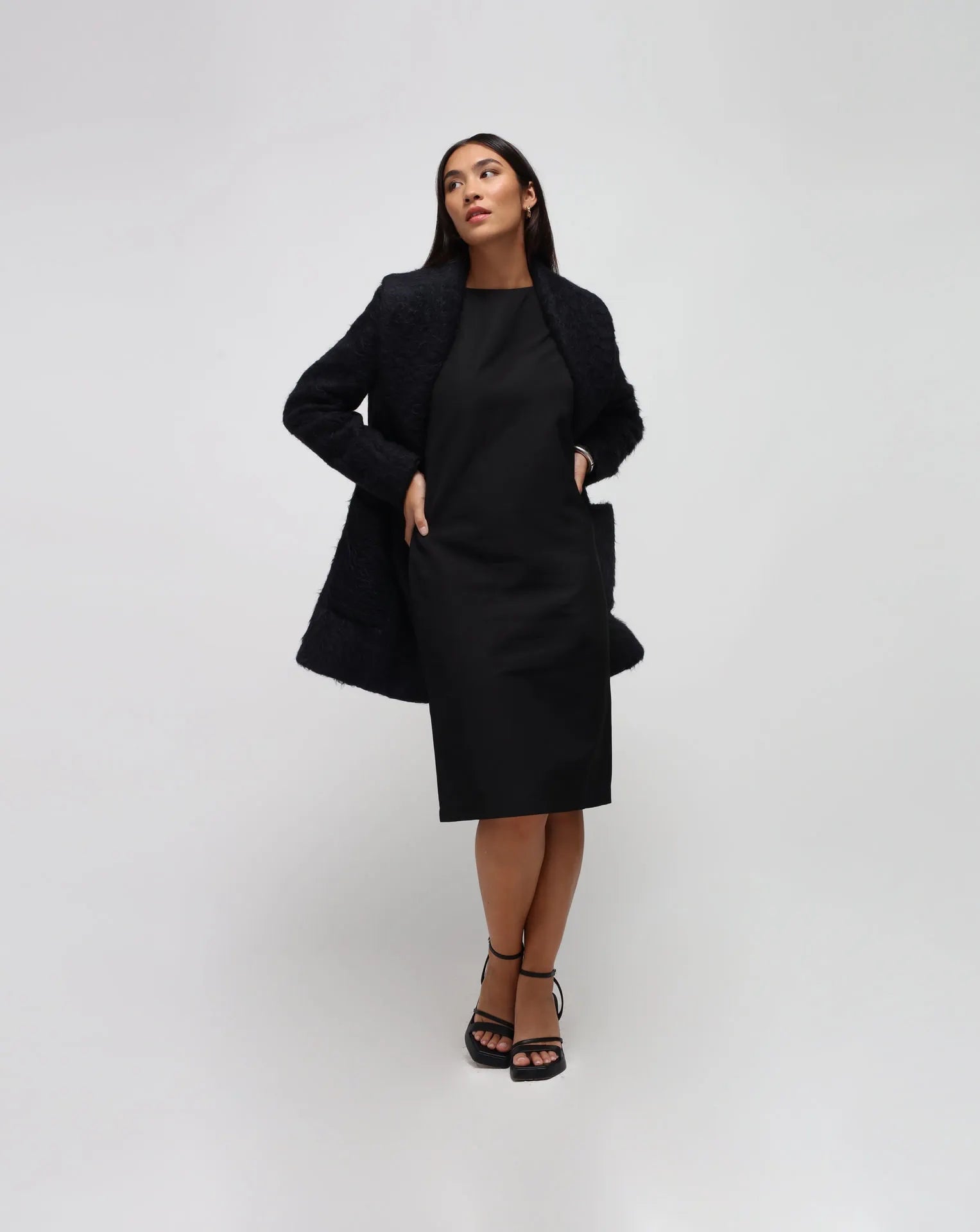
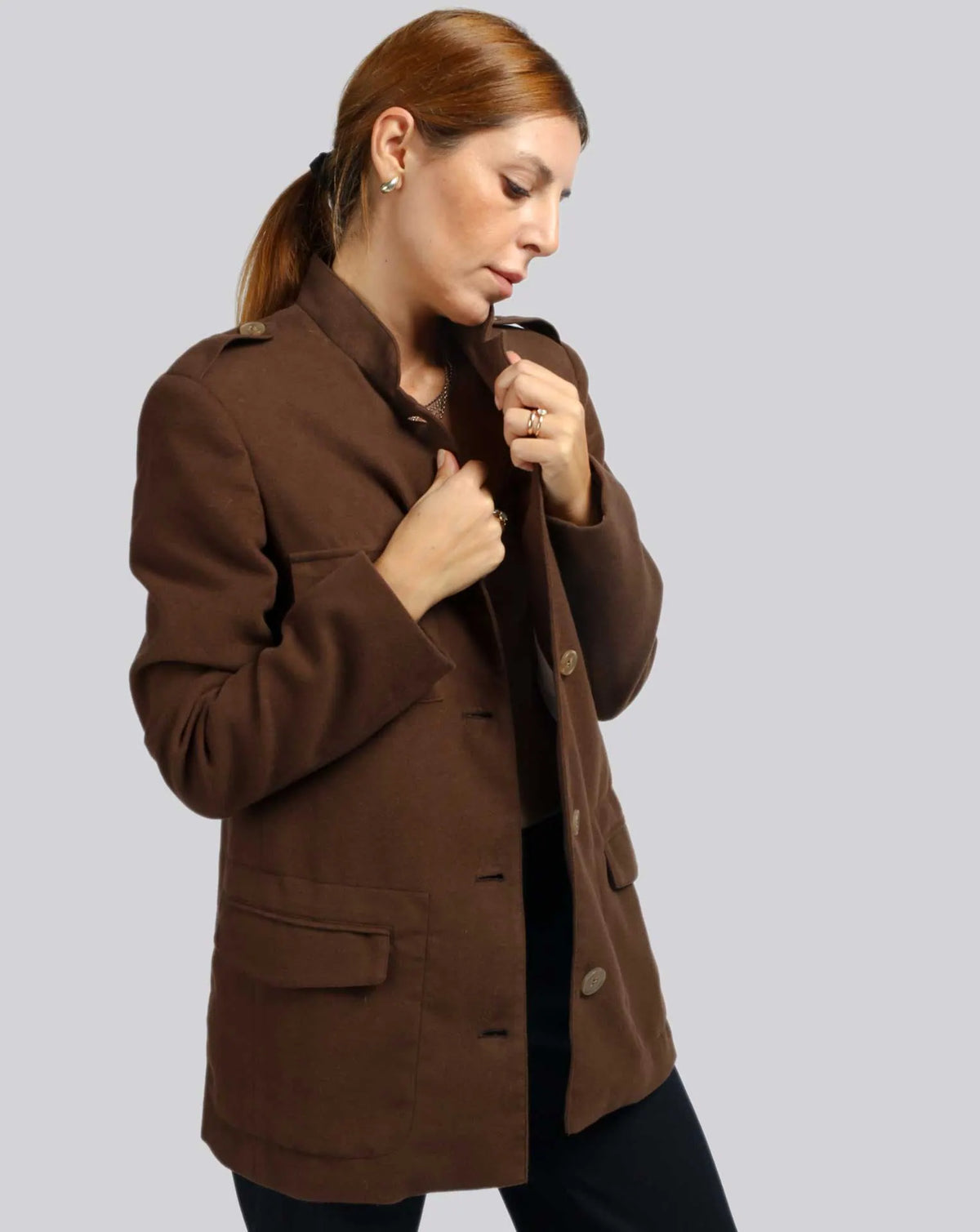
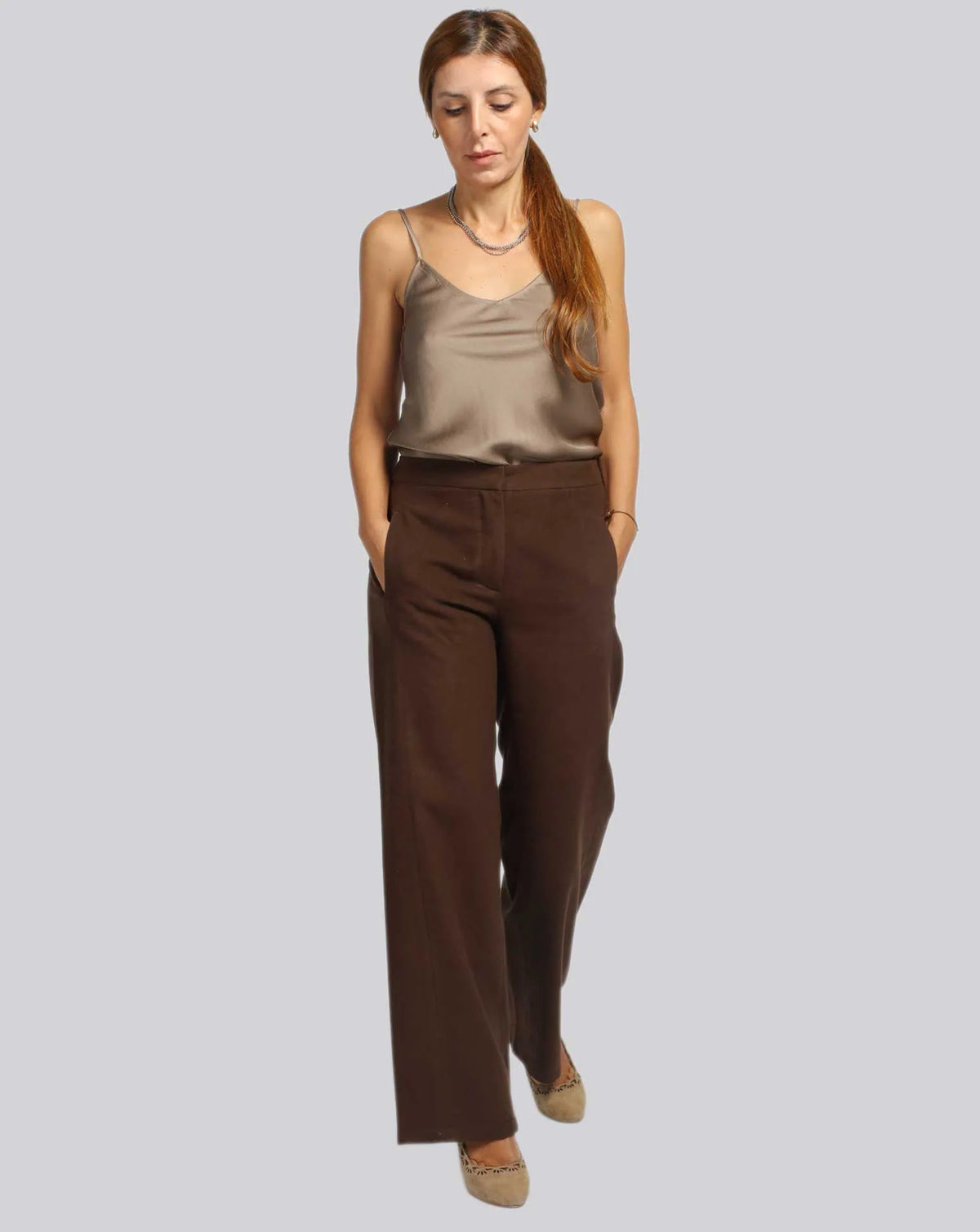
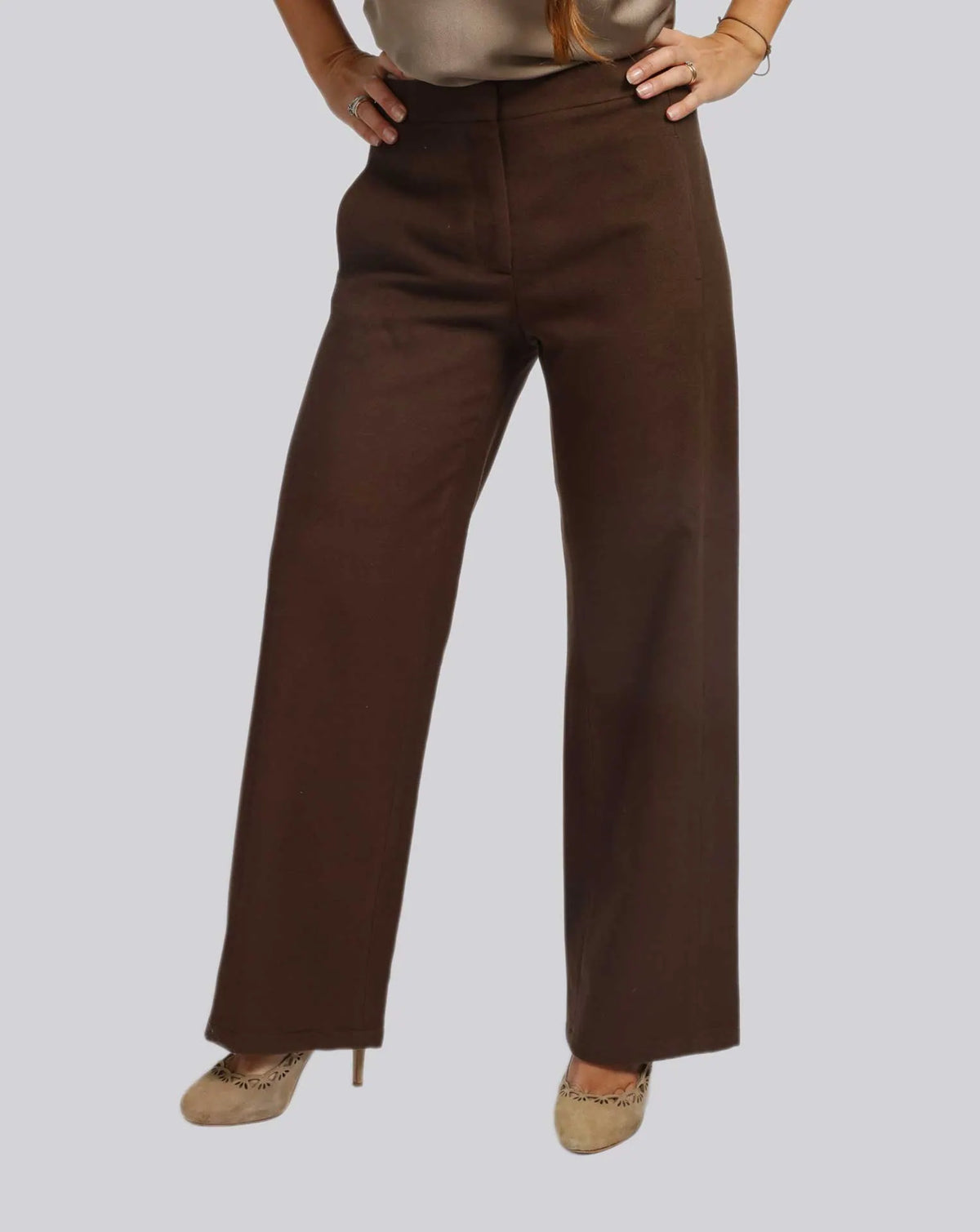
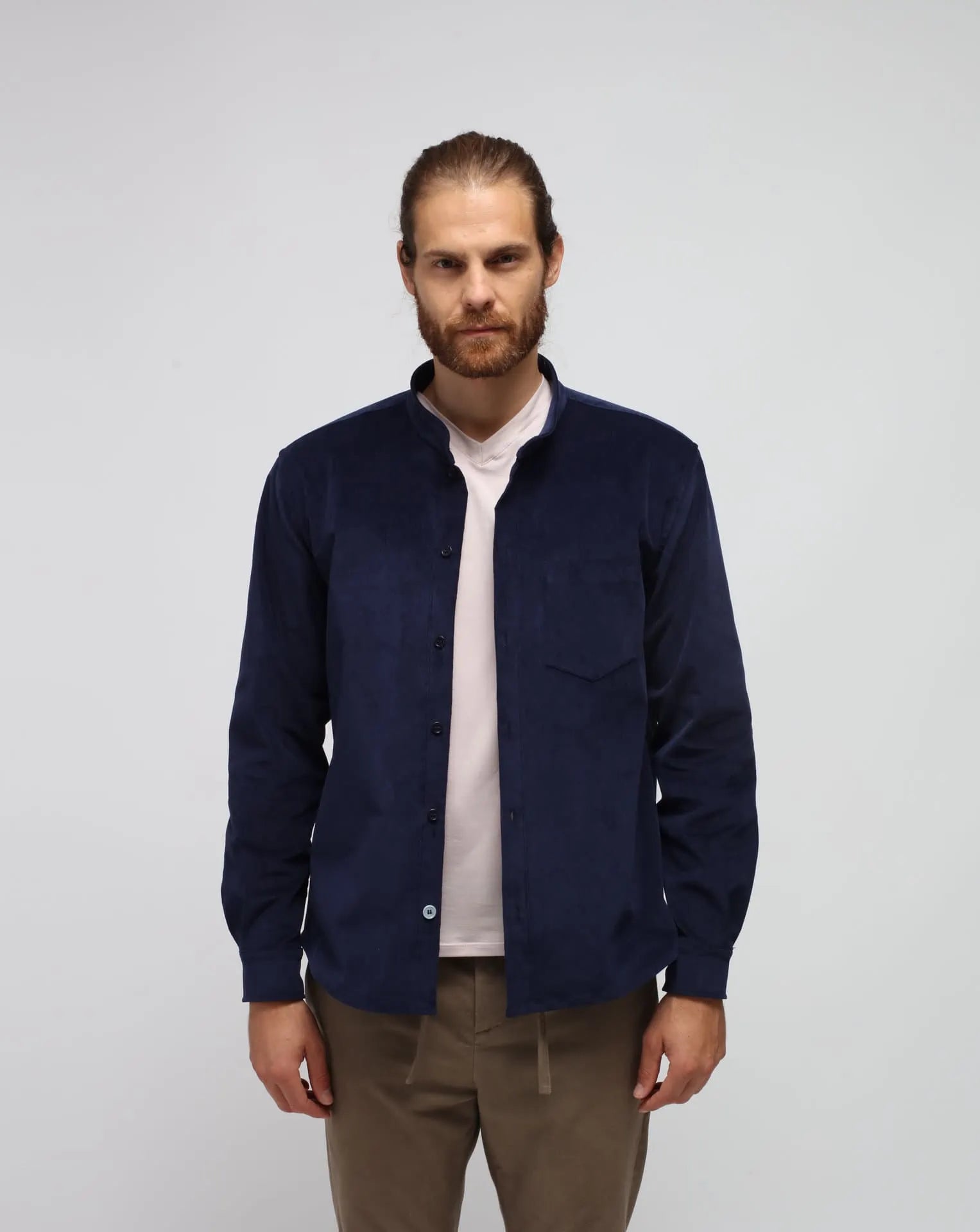
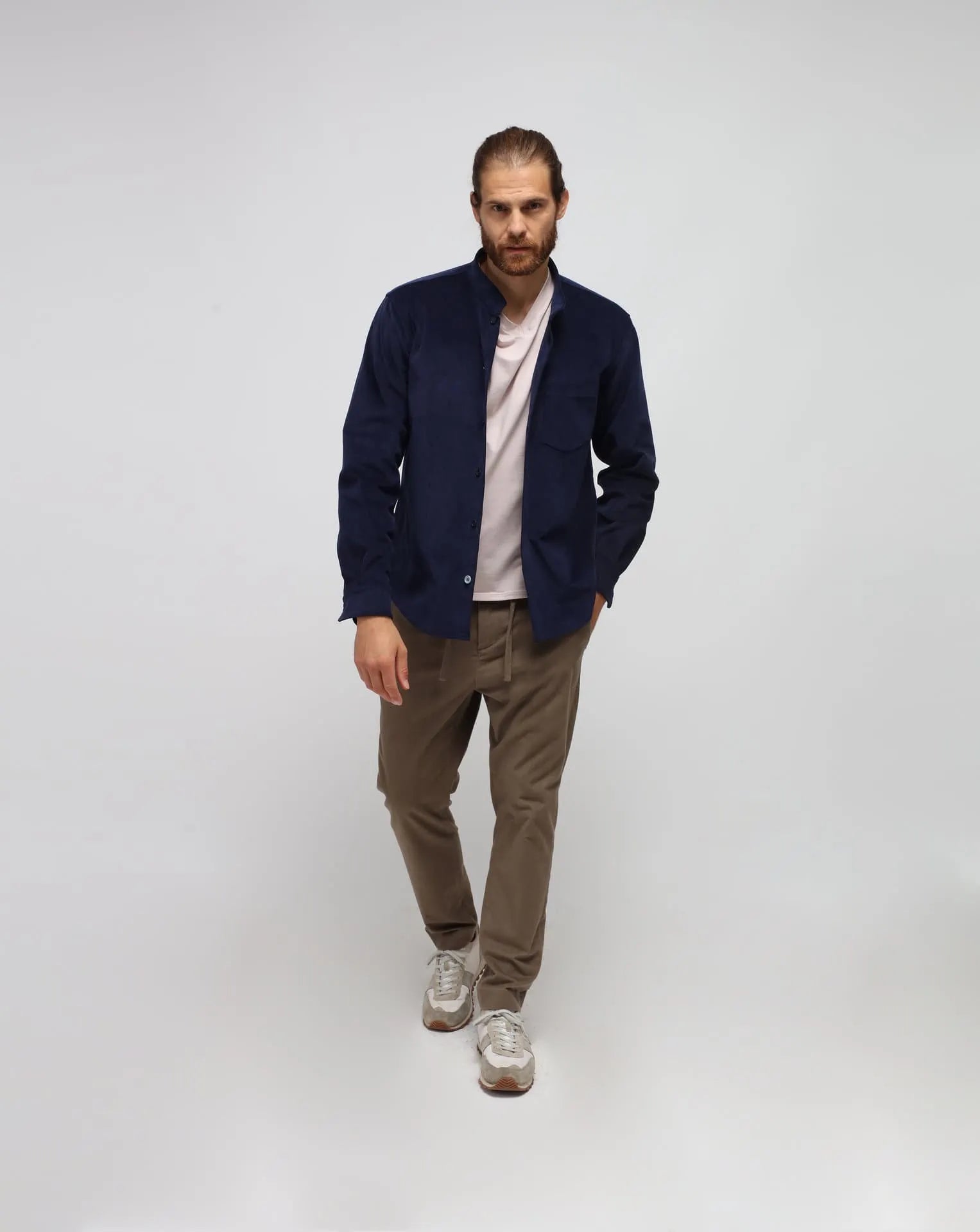
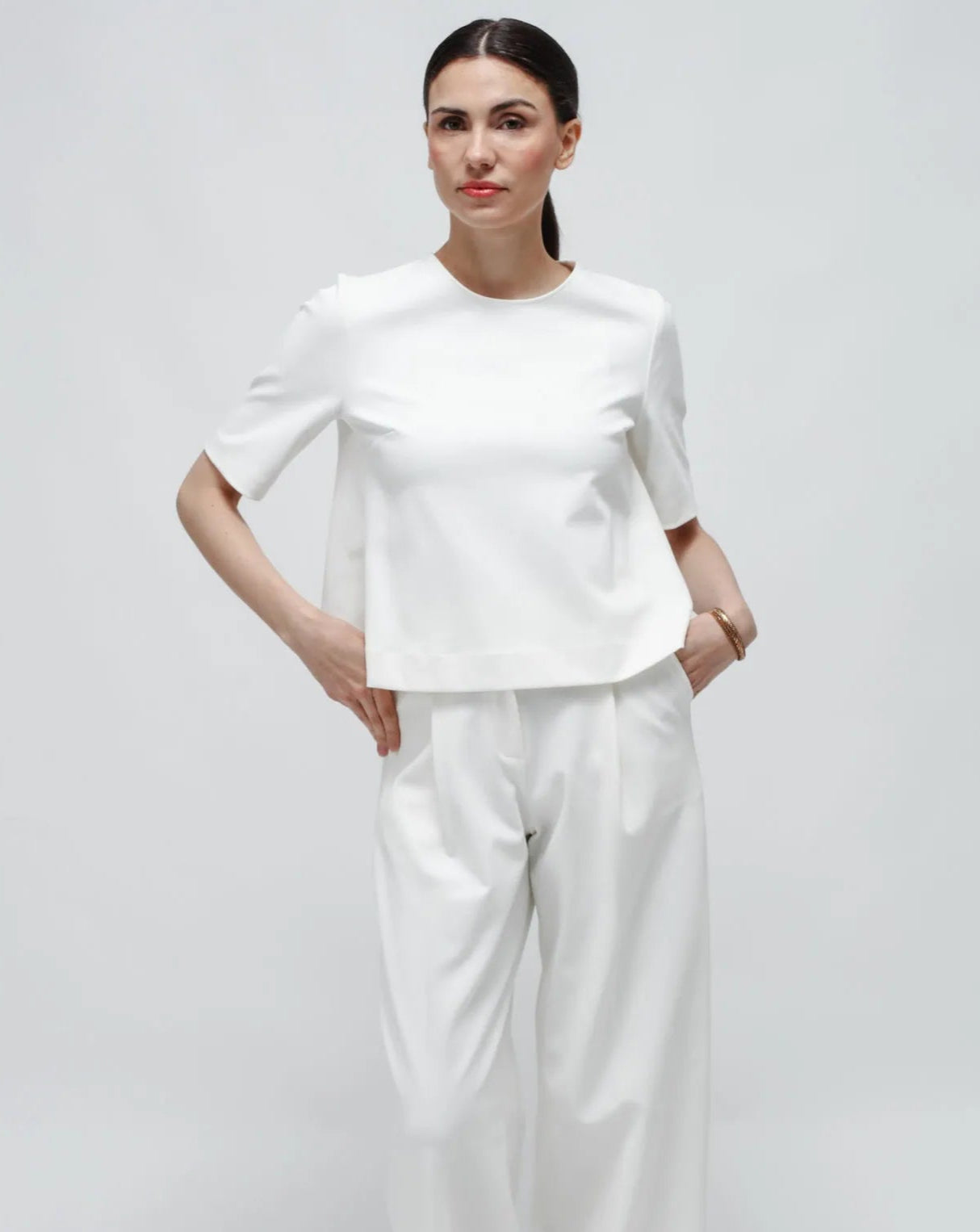
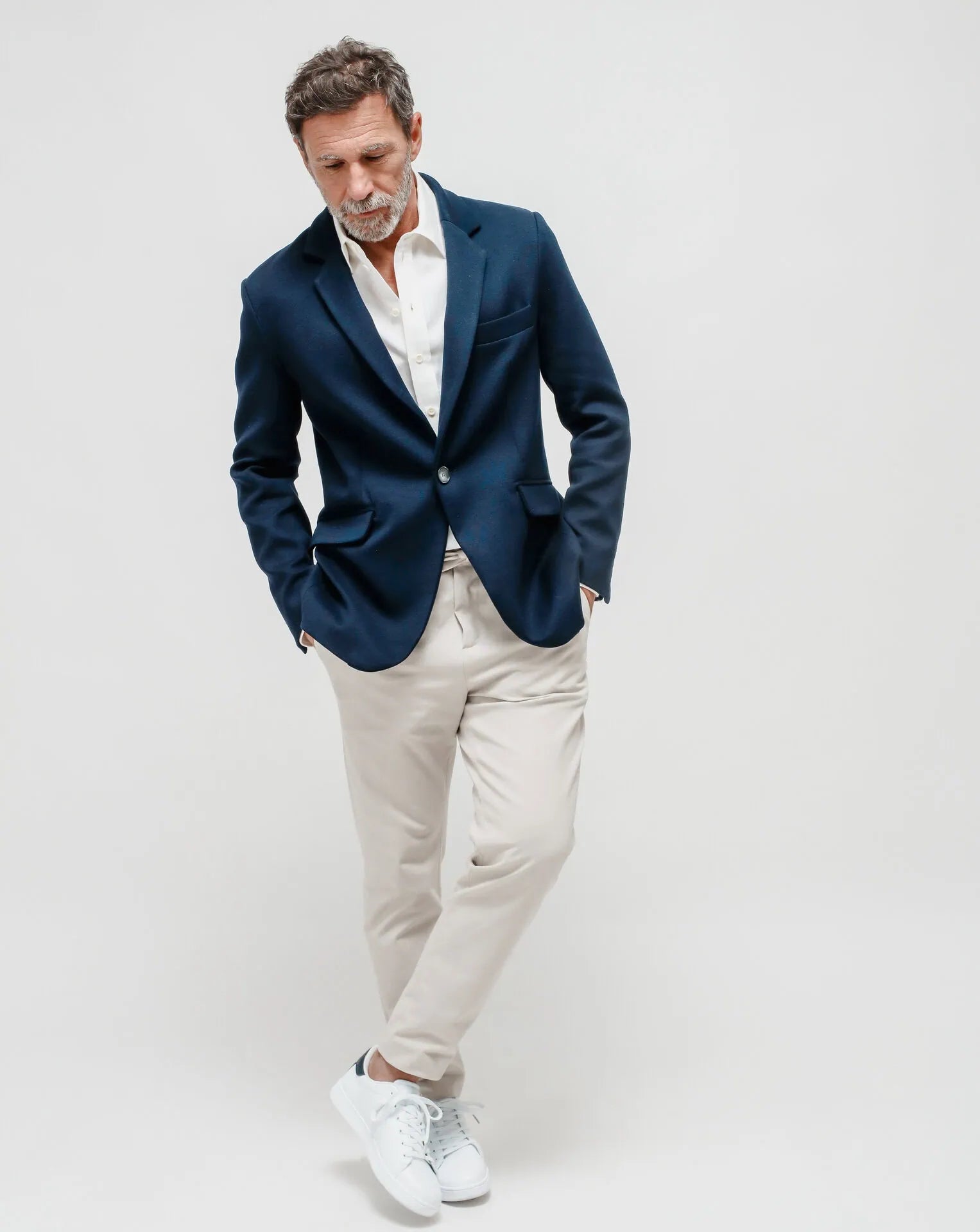
Women’s Korean Collar Moleskin Jacket. Style it with a fine knit, tailored wide-leg pants, and a long wool coat for cold city days. Men’s Korean Collar Jacket in Deadstock Wool. Pair it with a dark turtleneck, relaxed wool trousers, and a structured overcoat.
Care is part of the design
Structured collars stay sharper when jackets are cared for properly. Hang the piece on a broad, supportive hanger. Give it space in the closet so the collar is not crushed between heavier garments. Brush wool occasionally to remove surface dust, and spot clean small marks promptly with care appropriate to the fabric.
Dry cleaning has its place, particularly for tailored wool and lined garments, but it does not need to be the default after every wear. Air the jacket after use and clean it only when needed. This protects the fabric, reduces unnecessary chemical treatment, and helps a limited-edition piece remain part of your wardrobe for years.
A Korean collar jacket is not an answer to every occasion. It is a better answer when you want warmth, structure, and a clear silhouette without the familiar language of a lapel. Choose the fabric with care, fit it well, and let it become the layer that makes getting dressed feel more resolved.
FAQ
Q: Is a Korean collar the same as a Mandarin collar?
A: The terms are often used interchangeably for short stand collars. Construction varies by garment, but both describe a clean neckline that stands up rather than folding into lapels.
Q: Can a Korean collar jacket be worn for business casual settings?
A: Yes. In a refined wool fabric, it works well with tailored trousers, knitwear, and polished shoes. More traditional offices may still call for a classic lapel blazer for formal meetings.
Q: What should women wear under a Korean collar jacket?
A: Fine-gauge crewnecks, mock necks, silk tops, and fitted knit dresses all work well. Avoid oversized shirt collars that may crowd the neckline.
Q: What should men wear under a Korean collar jacket?
A: A merino crewneck, turtleneck, heavyweight T-shirt, or collarless knit creates the cleanest line. A simple shirt can work if its collar stays contained beneath the jacket.
Q: Are Korean collar jackets warm enough for winter?
A: A wool version can be warm as an indoor jacket or mid-layer. For freezing conditions, layer it beneath a substantial wool coat or insulated outerwear.
the World of H&L